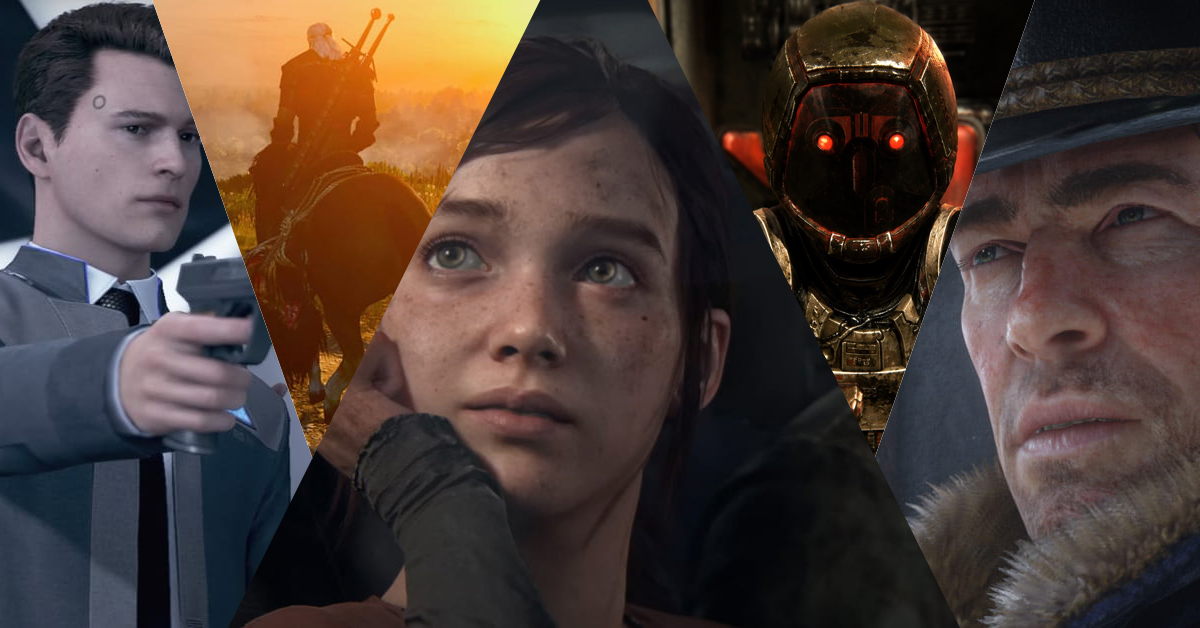

To me, gaming is the ultimate storytelling medium. Games don’t just tell us stories; they put us in the shoes of their protagonists. They make us feel, knock us down, and challenge us to get back up. Sometimes, they even put decisions in our hands that determine not only our own fate, but that of the people around us.
These are my picks for the 26 best story-driven games, and every single one has stayed with me because of its storytelling. Whether it’s an unforgettable overarching narrative, fascinating character development, exceptional side quests, meaningful choices, or the wildest plot twists, each of these games has left a lasting impression on me. And if you appreciate emotional storytelling that hits you right in the heart, I believe they’re experiences you shouldn’t miss.
The best story games at a glance
Not sure where to start? Here are my picks for different kinds of storytelling experiences:
| Category | Game |
| Best overall story | The Last of Us Part I & II |
| Best story-driven RPG | The Witcher 3: Wild Hunt |
| Best psychological horror | SOMA |
| Best choice-driven story | Detroit: Become Human |
| Best short narrative experience | What Remains of Edith Finch |
| Best hidden gem | Minds Beneath Us |
- The Last of Us Part I & II
- SOMA
- Red Dead Redemption 2
- Minds Beneath Us
- Baldur’s Gate 3
- Spec Ops: The Line
- Clair Obscur: Expedition 33
- Fallout: New Vegas
- What Remains of Edith Finch
- The Witcher 3: Wild Hunt
- Detroit: Become Human
- NieR: Automata
- The Blood of Dawnwalker
- Mass Effect trilogy
- Pentiment
- Cyberpunk 2077 (including Phantom Liberty)
- The Walking Dead
- Kingdom Come: Deliverance II
- Alan Wake 2
- Dragon Age: Origins
- Life is Strange
- Grand Theft Auto IV
- Persona 3 Reload
- Death Stranding
- Disco Elysium
- A Plague Tale: Requiem
The Last of Us Part I & II

Naughty Dog’s The Last of Us Part I & II may be filled with dangerous infected, but at the heart of the story lies the relationship between Joel and Ellie.
Ellie is immune to the infection that has torn society apart and turned much of humanity into bloodthirsty, fungus-infected creatures. Joel is tasked with smuggling her across a devastated America, and what begins as a dangerous assignment gradually becomes something far more personal.
Watching their relationship develop, and seeing where their journey ultimately leads, is nothing short of beautiful. You might want to keep some tissues nearby, because The Last of Us knows exactly how to hit you where it hurts, partly thanks to the incredibly strong voice acting throughout.
Part II may be more divisive, but I consider it just as much a masterpiece of storytelling. Its exploration of grief, revenge, and the consequences of our actions takes the series in a different direction, but one that stayed on my mind long after I finished it.
SOMA
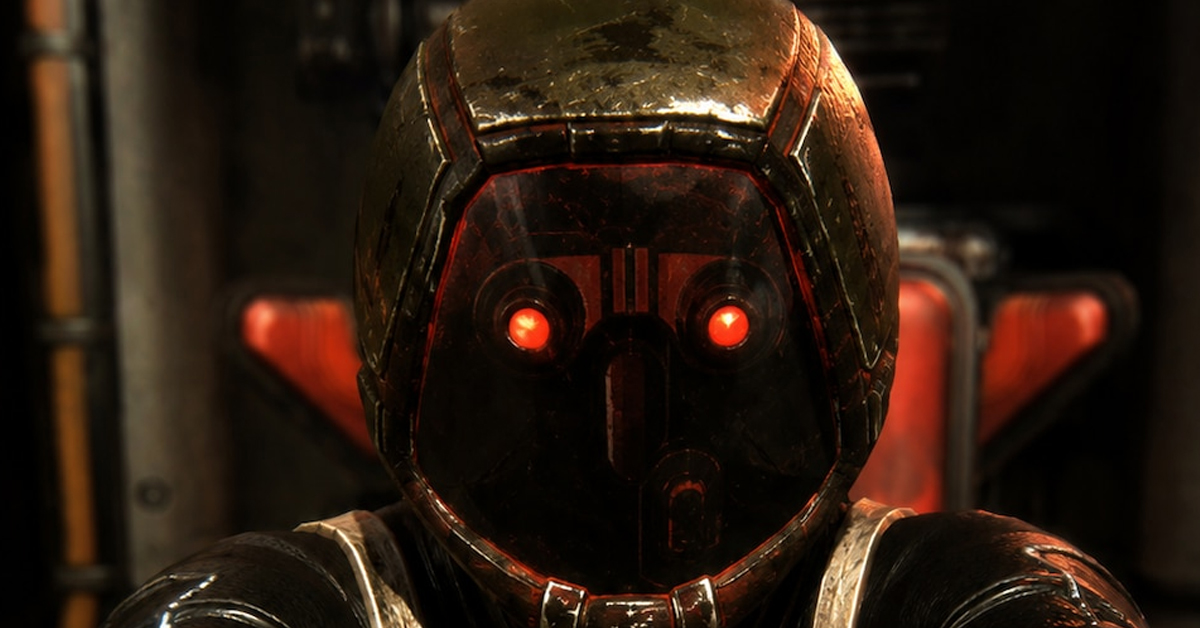
Some games on this list hit you right in the heart. Others find their way into your head, where they settle in for quite some time. SOMA belongs firmly in the second category. I played it back in 2015, yet I still find myself thinking about it regularly.
SOMA asks a fascinating question: what does it really mean to have an identity? The story follows Simon Jarrett, who undergoes an experimental brain scan, only to find himself in PATHOS-II, a mysterious underwater research facility. With much of the facility seemingly abandoned, dangerous creatures roaming its corridors, and machines behaving disturbingly like humans, Simon must piece together what happened and, more importantly, understand his own place in it all.
What initially feels like a terrifying survival horror experience gradually becomes something far more thought-provoking. SOMA challenges your understanding of consciousness, identity, and what it means to be human. And while its monsters might frighten you in the moment, it’s the questions the story leaves behind that make it so difficult to forget.
Red Dead Redemption 2
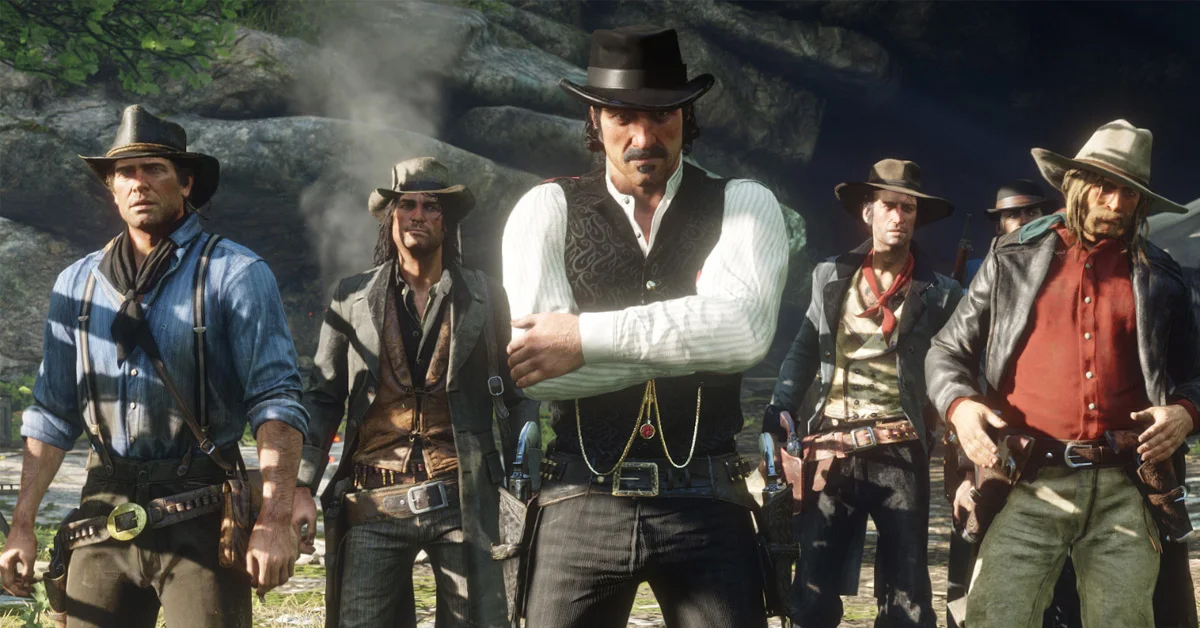
The overarching premise of Red Dead Redemption 2 might not immediately stand out. The game follows the Van der Linde gang, a group of outlaws whose place in society is slowly disappearing as the Wild West draws to a close. Following a botched robbery in Blackwater, the gang finds itself on the run.
But where the game truly excels is in the believability of its characters and world. Protagonist Arthur Morgan, my favorite video game character of all time, has what I consider to be one of the finest character arcs in gaming. The people you encounter feel remarkably human, while even the wildlife behaves in ways that could have been taken straight from the real world.
Red Dead Redemption 2 doesn’t need spectacular plot twists to leave an impression. It’s at its best in its quieter, more intimate moments, when the focus shifts to the individual members of the Van der Linde gang. It’s not so much a must-play as it is a must-experience.
Minds Beneath Us

From the Old West to the future, Minds Beneath Us takes you to a futuristic Asian city where living(!) human brains are used to provide computing power for AI systems.
You control a mysterious consciousness that takes over the body of Jason Dai, an ordinary man who remains somewhat aware that his actions are being manipulated. How this happened, and why, is a mystery to both Jason and the player.
Those questions keep the mystery moving, but it’s the uncomfortable relationship between Jason and the consciousness controlling him that makes the premise so compelling. You’re not simply deciding what happens to someone else; you’re making decisions while occupying his body. That gives the game’s questions about autonomy, identity, and the dangers of technology a much more personal edge.
Want to know more about Minds Beneath Us? Check out my spoiler-free review here.
Baldur’s Gate 3

Your custom-created character in Baldur’s Gate 3 isn’t exactly having the best time. After being infected with a mind flayer parasite (tadpole), you’re faced with the terrifying prospect of eventually turning into a mind flayer yourself.
After escaping a mind flayer ship, you quickly encounter others who share your predicament. Together, you set out to find a cure before it’s too late.
What makes the storytelling in Baldur’s Gate 3 so special is just how much control you have over it. Depending on your choices, its brilliantly written companions can become friends, lovers, or even enemies. Everyone has their own agenda, and it’s up to you whether you interfere with their plans or help them achieve their goals.
The turn-based tactical combat might take some getting used to for newcomers, but if you love making meaningful choices and exploring a game with enormous replay value, Baldur’s Gate 3 is a no-brainer. With or without tadpole.
Spec Ops: The Line
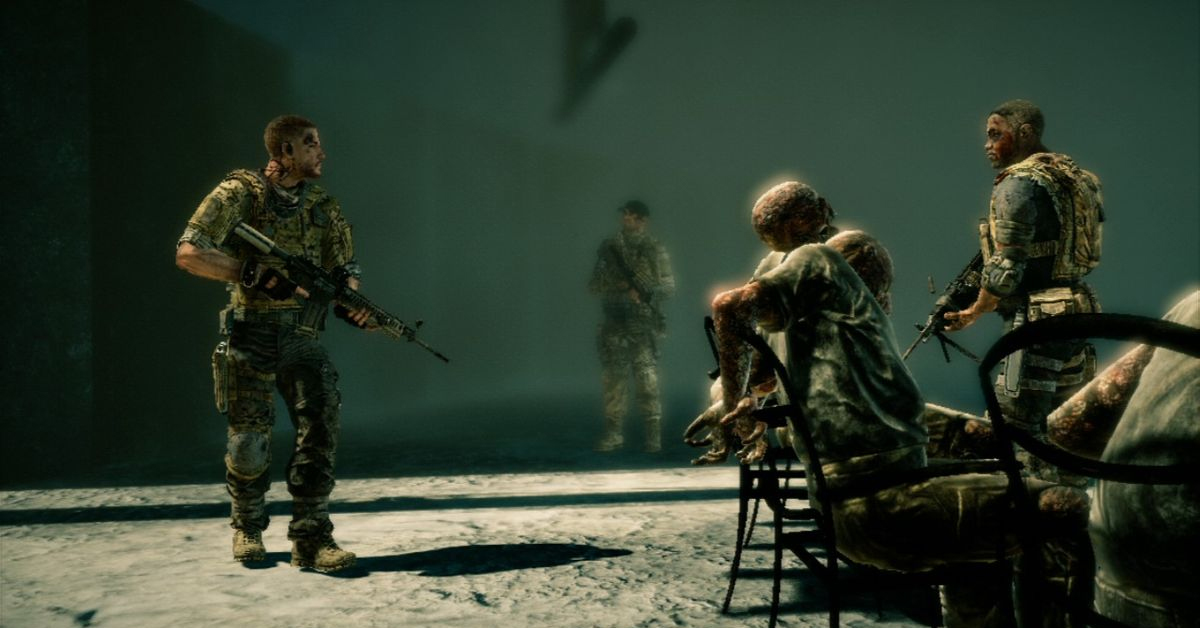
I’m not always a fan of war games. But Spec Ops: The Line is one that I still remember vividly, even after all these years. It’s not just about keeping yourself and your squad physically safe. The psychological toll of warfare is just as important, and that’s where Spec Ops sets itself apart.
You play as Captain Martin Walker, who leads a three-man Delta Force team into Dubai after a series of devastating sandstorms has left the city in ruins. Your mission is to locate Colonel John Konrad and his missing battalion, who stayed behind to help evacuate civilians. But Dubai has since descended into chaos, with armed factions fighting for control and civilians caught in the crossfire.
Spec Ops: The Line isn’t simply about mowing down enemies. It makes you question right and wrong. It confronts you with uncomfortable situations and makes you question not only Walker’s actions, but your own willingness to keep pushing forward. More than most war games, it challenges the idea that being the person holding the gun automatically makes you the hero.
Clair Obscur: Expedition 33

Clair Obscur: Expedition 33 doesn’t just excel in combat and soundtrack; its storytelling is equally outstanding. The game takes place in a world where a mysterious figure known as the Paintress paints a number on a monolith every year, counting down. Everyone who has reached that age subsequently vanishes into thin air during an event known as the Gommage.
Several expeditions have already set out to find a way to stop the Paintress, but not a single one has returned. Now, it’s up to you and your fellow members of Expedition 33 to put an end to the Gommage once and for all.
Needless to say, the stakes couldn’t be higher. Throughout your adventure, you’ll meet a variety of companions, each carrying their own story, and there’s a good chance you’ll grow incredibly attached to them. Conversations feel remarkably natural and emotional, with characters even interrupting each other rather than politely waiting for their turn to speak. Add some truly exceptional voice acting and several powerful plot twists, and you’ve got a story that’s difficult to forget.
Want to know more? Check out my full Clair Obscur: Expedition 33 review.
Fallout: New Vegas
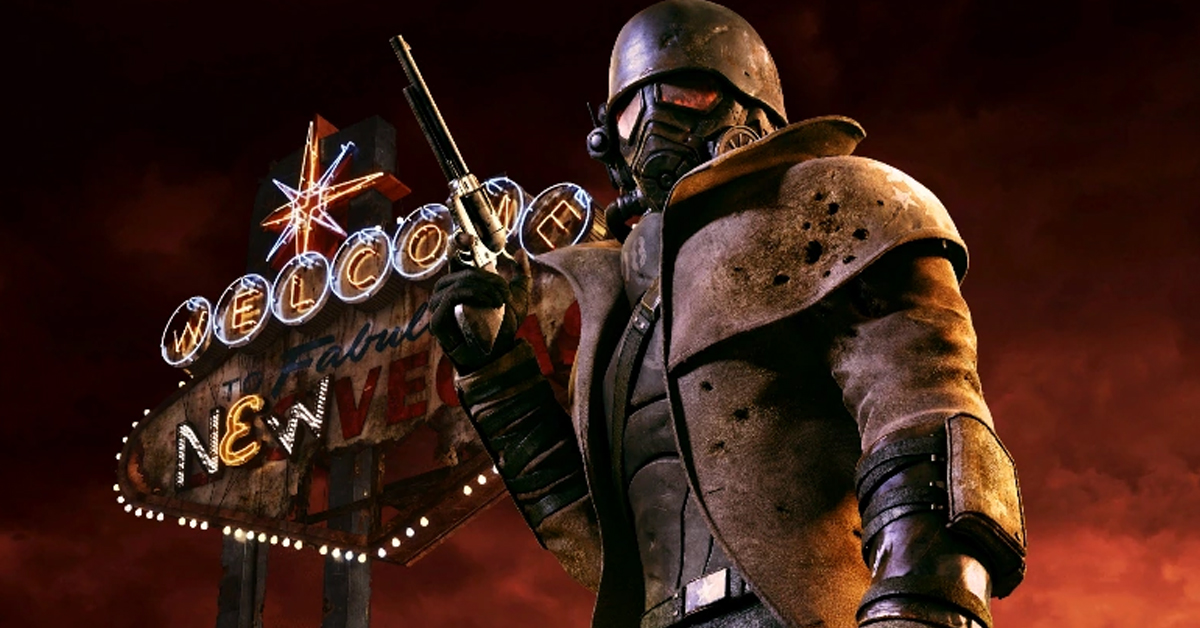
Getting shot in the head and left for dead isn’t exactly the ideal start to an adventure. But that’s precisely how Fallout: New Vegas introduces you to its post-apocalyptic wasteland. You play as a courier who survives an attempted murder and sets out to track down the man responsible, only to become entangled in a much larger conflict over the future of New Vegas and the surrounding Mojave Desert.
What makes New Vegas so special isn’t necessarily its overarching story, but the incredible freedom you have to shape it. Different factions have their own motivations, beliefs, and ideas about how the wasteland should be governed. And it’s up to you to decide who deserves your support, who gets in your way, and what kind of future you’re willing to fight for.
The writing is exceptional throughout, with memorable characters, fascinating side quests, and decisions that rarely come down to a simple choice between good and evil. It’s the kind of RPG where even a seemingly insignificant encounter can turn into a story worth remembering. And that’s exactly why Fallout: New Vegas deserves its place on this list.
What Remains of Edith Finch

Not every game needs dozens of hours to tell an unforgettable story. What Remains of Edith Finch proves that even an experience lasting just a few hours can stay with you for years.
You play as Edith Finch (who would’ve thought), who returns to the unusual family home where she grew up. The Finch family appears to be haunted by a mysterious curse, with family members meeting tragic ends generation after generation. As you explore the house, you gradually uncover more about their lives and the circumstances surrounding their deaths.
What makes What Remains of Edith Finch so special is the way these stories come to life. Each family member has their own chapter, featuring a unique gameplay style and presentation that perfectly complement the story being told. Some are heartbreaking, others downright bizarre, but every single one leaves an impression.
With a playtime of just two to three hours, What Remains of Edith Finch is by far the shortest games on this list. But don’t let that fool you: few games manage to evoke so many emotions in such a short amount of time.
The Witcher 3: Wild Hunt

From a small adventure to a huge one. Alongside Mass Effect 2, which you’ll find later on this list, The Witcher 3: Wild Hunt is my favorite game of all time. The stories told through both its main quest and countless side quests play a huge part in that.
You play as monster hunter Geralt of Rivia, who sets out to find his adopted daughter, Ciri. She’s being pursued by the mysterious Wild Hunt, a group of terrifying riders who will stop at nothing to capture her. His search takes Geralt across a vast, war-torn world, where political conflicts, dangerous monsters, and the personal stories of the people he encounters constantly intertwine.
Some of the side quests are so memorable that they could easily have served as the main storyline in another game. Even a seemingly straightforward monster contract can turn into a morally complicated tale, with characters who feel like people rather than quest dispensers. And the writing rarely offers you a comfortably obvious right answer.
If you’ve got the time, I’d highly recommend starting with the first game, though. It’s a little rough around the edges these days, but when it comes to storytelling, all three games are worth experiencing.
Detroit: Become Human

Detroit: Become Human is one of the best choose-your-own-adventure games out there. It takes place in the near future, where androids have become an integral part of society. You experience the stories of three different androids: Kara, a domestic assistant; Markus, a caregiver; and Connor, an android designed to assist the police with investigations.
Although saying they’ve found their place in society might be a bit of a stretch. These artificial beings, increasingly showing signs of consciousness, aren’t exactly accepted by everyone, and that has far-reaching consequences.
Your decisions can take the three androids’ stories in all sorts of directions. There’s an incredible amount of branching paths, meaning no two playthroughs have to be the same. But there’s one thing every playthrough will have in common: Detroit: Become Human knows exactly how to hit you where it hurts emotionally.
Looking for more games like Detroit: Become Human? Be sure to stop by this 13 Must-Play Games Similar to Detroit: Become Human list as well.
NieR: Automata

At first glance, NieR: Automata might seem like just another spectacular action game, but that’s only part of the story. There’s much more to it than that, with a thought-provoking narrative told through multiple perspectives and endings.
Once again, androids take center stage. Humanity has fled to the moon after aliens invaded Earth with an army of machines. Android soldiers 2B and 9S are sent to reclaim the planet, but during their missions, they discover that the machines aren’t nearly as mindless as they initially seem.
NieR: Automata raises questions about consciousness, identity, and the meaning of existence. It’s one of those games that stays with you long after the credits have rolled. And don’t make the mistake of stopping when those credits roll for the first time. There’s a lot more to come.
The Blood of Dawnwalker
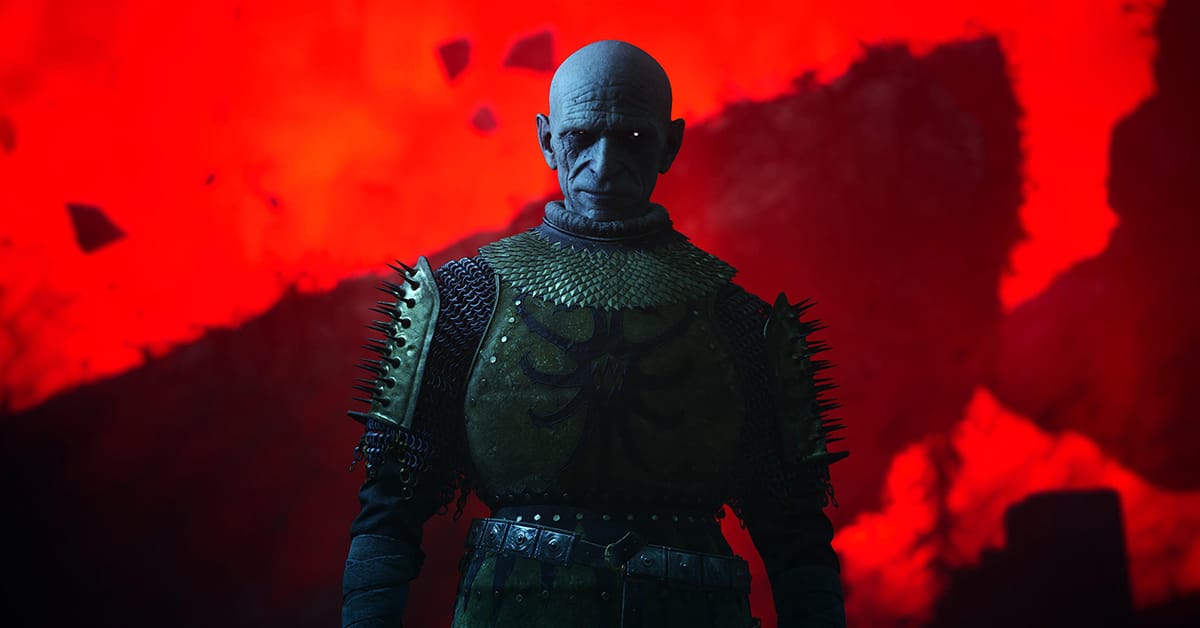
The Blood of Dawnwalker has a lot in common with The Witcher 3: Wild Hunt, which appeared earlier on this list. Developed by some of the same people, it also stands out for its exceptionally well-written side quests, which are every bit as compelling as the main story itself. And once again, your choices allow you to shape how events unfold.
You play as Coen, a young man in 14th-century Europe who unwillingly becomes a Dawnwalker: human by day, vampire by night.
When a group of vampires seizes control of the region and takes his family captive, Coen sets out on a desperate mission to save them. He has just thirty days to accomplish his goal (and so do you, thanks to the game’s interesting time mechanic).
What I especially love is how the side quests make the region feel like a place full of people with problems of their own, rather than a backdrop for Coen’s mission. Even when you step away from the search for his family, the stories you uncover feel worth your time. Add compelling characters, potential romances, and consequences that can reach far beyond a single quest, and there’s plenty here for anyone who plays RPGs for the writing.
The Blood of Dawnwalker has been one of my gaming highlights of 2026. I gave it a 9/10 in my full review.
Mass Effect trilogy
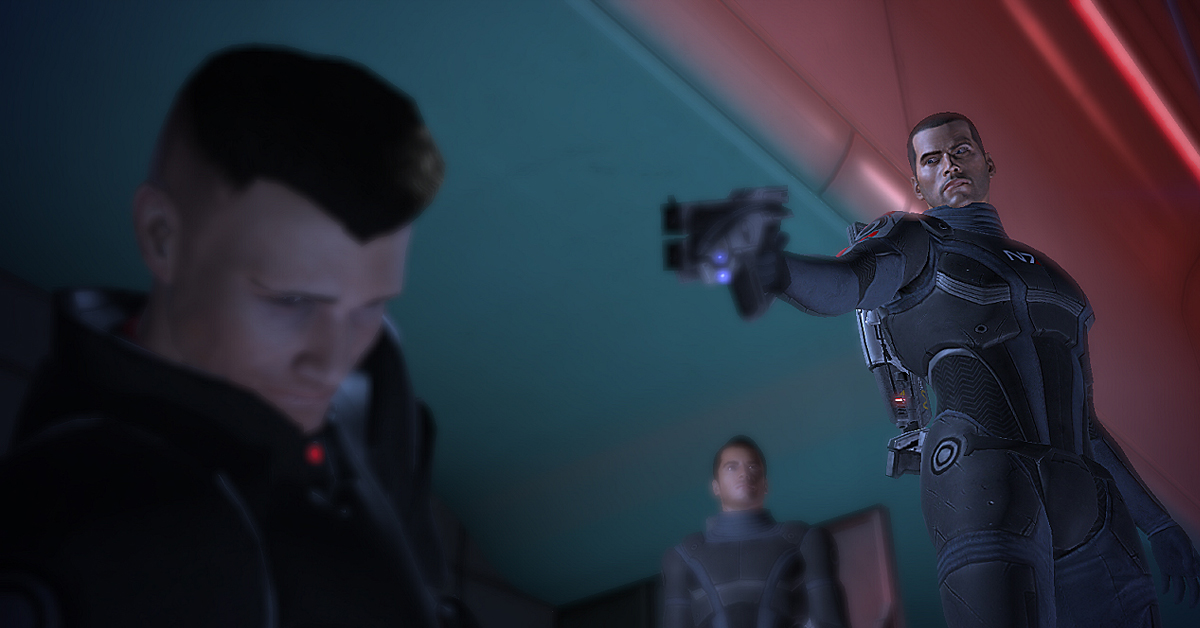
Of course, no list like this would be complete without what I consider the greatest trilogy in gaming. In this epic sci-fi adventure, you follow Commander Shepard and their memorable crew. Humanity is part of a vast galactic community filled with alien civilizations. When Shepard discovers that an ancient threat known as the Reapers is about to return and wipe out all advanced life in the Milky Way, it’s up to you to unite the galaxy.
Over the course of three games, you’ll make countless decisions that determine not only the fate of Shepard and their crew, but potentially that of the entire galaxy. No pressure.
What makes the trilogy even more special is the bond you build with your crew along the way. Characters like Garrus, Tali, Liara, and Wrex become so much more than companions on your missions. Through conversations, personal quests, friendships, and potential romances, you really get to know them, making the consequences of your decisions hit that much harder.
In my opinion, this is a trilogy that absolutely everyone should experience. You might have to push through the first game a little, as its gameplay has aged the most, but if you’re here for the story, you really shouldn’t skip it. Trust me, it’ll be worth it.
Pentiment
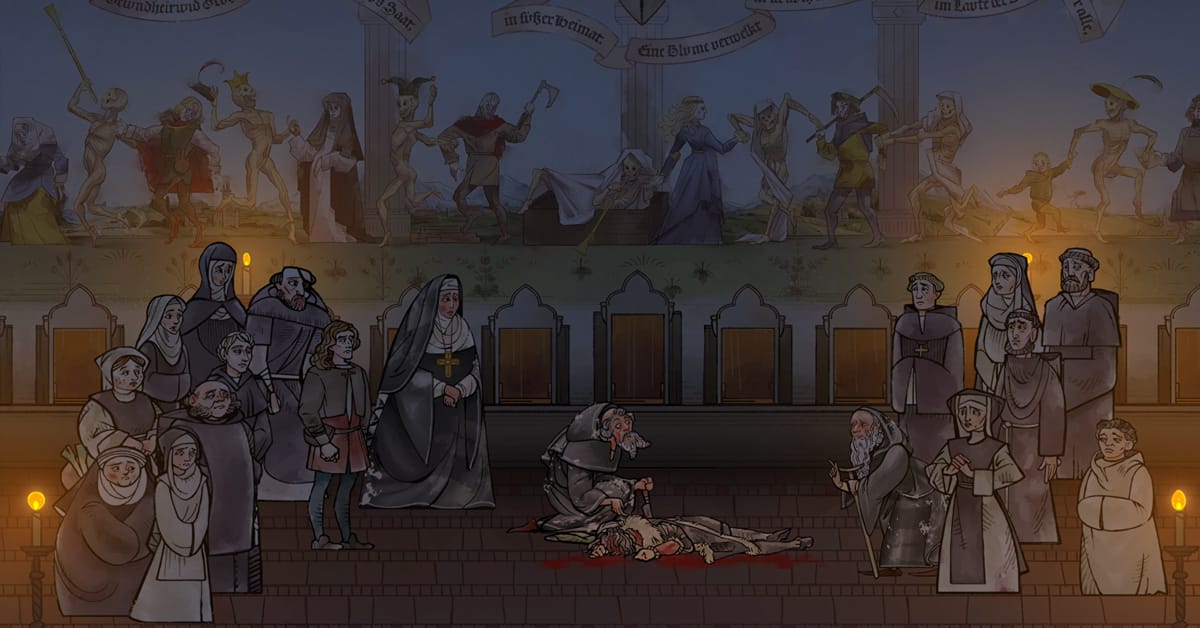
In Pentiment, you play as Andreas Maler, an artist working on manuscripts at an abbey in 16th-century Bavaria. When a murder takes place and someone close to him becomes a suspect, Andreas decides to investigate the crime himself. What begins as a murder mystery grows into a story spanning several decades.
Because the story unfolds over such a long period, you get to see not only how Andreas’s own life changes, but also how the lives of the people around him evolve. Choices play a major role in Pentiment, too, and you have a significant influence on how those lives unfold.
The mystery itself is incredibly intriguing as well. There are plenty of leads for Andreas to follow, but nowhere near enough time to investigate them all. This forces you to set your own priorities, meaning you won’t get to see everything in a single playthrough.
Conversations and character developments feel remarkably realistic, unfolding at a natural pace. And that pace isn’t particularly fast. Pentiment is a slow burn, so be prepared for that.
Cyberpunk 2077 (including Phantom Liberty)
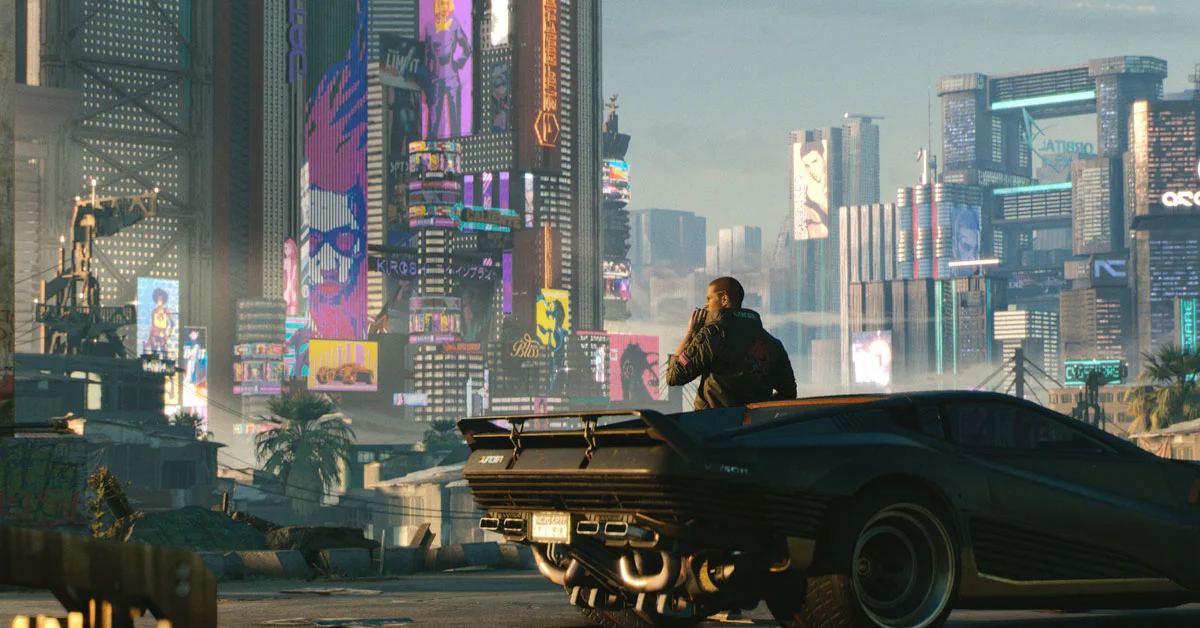
In Cyberpunk 2077, you play as mercenary V, but the futuristic metropolis of Night City is arguably the real protagonist. Megacorporations rule the streets, and crime is an everyday occurrence.
After a job goes horribly wrong, V ends up with an experimental chip in their head, containing the digital consciousness of Johnny Silverhand, a deceased rock star and terrorist (where did he find the time?).
Slowly but surely, the chip begins overwriting V’s consciousness, sending you on a race against time to find a way to survive. Along the way, you’ll meet countless colorful characters, each with their own compelling storylines. And while V’s predicament gives the main story a sense of urgency, it’s often the smaller, more personal stories scattered throughout Night City that make the biggest impression.
Different backgrounds, each with their own unique prologue and dialogue options, a city packed with varied and memorable side quests, spectacular action, and plenty of possibilities for creating your own unique builds. Cyberpunk 2077 has it all.
The Walking Dead

Speaking of choices, Telltale is one of the masters of the choose-your-own-adventure genre, and there’s no way I could leave The Walking Dead off this list.
In The Walking Dead, you follow Lee Everett, a man on his way to prison when a zombie outbreak turns the world upside down. As everything around him descends into chaos, he meets Clementine, a young girl who has been separated from her parents. Lee takes her under his wing, and together they try to survive in a world where it’s often hard to tell who’s more dangerous: the remaining humans or the zombies.
The game is filled with interesting characters you gradually get to know better. Just like in the TV series, there’s one question that keeps coming up: how far are you willing to go to survive? At the heart of it all is the relationship between Lee and Clementine. Prepare yourself for an emotional rollercoaster.
The general consensus is that the first season is the strongest, but personally, I think every single one of them is well worth playing.
Kingdom Come: Deliverance II

No zombies, no superpowers, no androids. Kingdom Come: Deliverance II takes a more authentic, realistic approach, making you feel as though you’ve stepped into a time machine and traveled back to Bohemia in 1403.
You play as Henry of Skalitz, the son of a blacksmith who, following the events of the first game, once again finds himself caught up in the political conflicts of medieval Bohemia.
Together with his friend Hans Capon, he’s sent on a diplomatic mission. But when something like that happens at the beginning of a game, you already know things probably aren’t going to go smoothly. And sure enough, one thing leads to another, and Henry soon finds himself caught in a power struggle between rival nobles and those with their eyes on the throne.
What I particularly enjoy is how believable Henry’s place in this world feels. He isn’t some all-powerful chosen one, and the people around him don’t exist just to admire him. Will you play him as a smooth talker who can charm his way out of just about any situation? Or would you rather rely on your sword and a little intimidation? Either way, his journey feels grounded in the world around him.
If you really want to experience the entire story from the beginning, I’d recommend starting with the first Kingdom Come: Deliverance. The sequel improves on it in pretty much every way, but the original is absolutely worth playing too, and every bit as immersive.
STILL not convinced? Check out my full review, where I gave Kingdom Come: Deliverance II a 9.5/10.
Alan Wake 2

Admittedly, I did hesitate for a moment about including Alan Wake 2 on this list. After all, it’s a Remedy game, and if you’re familiar with their work, you’ll know that their stories, unlike most of the games on this list, are anything but straightforward. The Remedyverse, the shared universe in which their games take place, can be pretty confusing.
But then again, that’s also part of the appeal. Even when I wasn’t entirely sure what was going on, I couldn’t wait to find out what would happen next.
In Alan Wake 2, you follow two protagonists: FBI agent Saga Anderson and… you’ll never guess, Alan Wake. Saga travels to the town of Bright Falls to investigate a series of mysterious murders. Meanwhile, writer Alan Wake has been trapped in the Dark Place for thirteen years, a dark, nightmarish dimension where fiction and reality intertwine.
As Saga digs deeper into the mystery, Alan tries to find a way to escape his imprisonment through his own stories. Slowly but surely, their storylines become increasingly intertwined.
Prepare yourself for a game that not only delivers a compelling narrative, but also knows exactly how to make the hairs on the back of your neck stand up. The atmosphere is so incredibly strong that it almost wouldn’t have needed any enemies to actually scare you.
Alan Wake 2 was one of my favorite games of 2023, earning a 9/10 in my full review.
Dragon Age: Origins
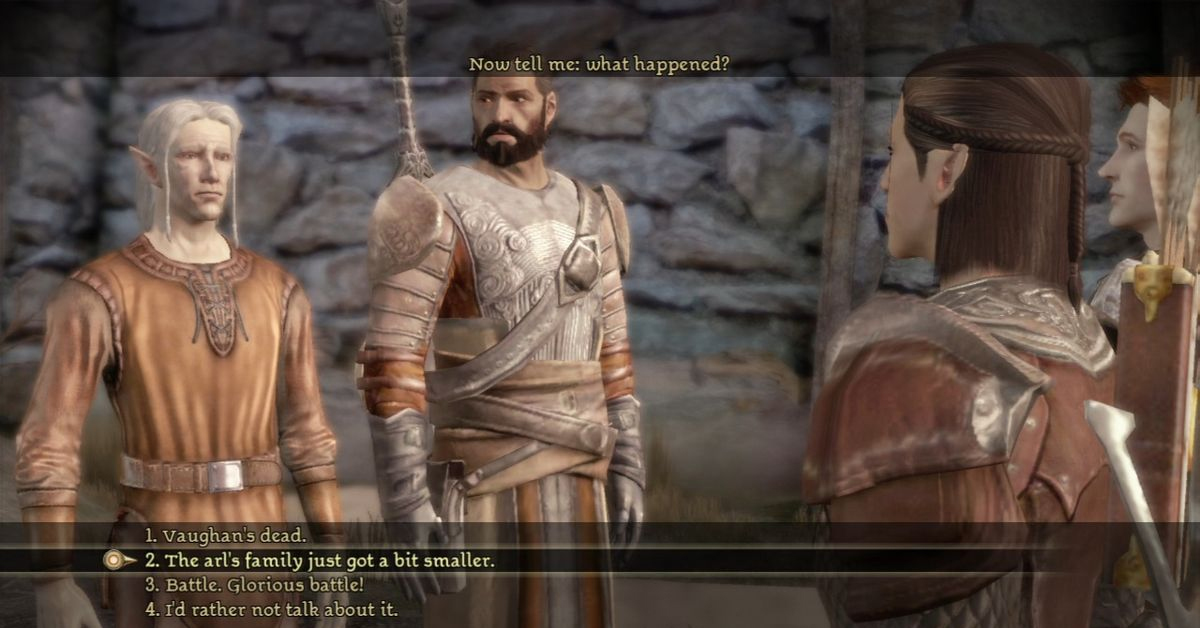
Dragon Age has always been one of my favorite franchises, largely thanks to what I consider by far its strongest entry: Origins. The game was released back in 2009, but its dark atmosphere, gritty characters, and memorable storylines have stayed with me ever since.
In Dragon Age: Origins, you play as a Grey Warden, a member of an ancient order tasked with protecting the kingdom of Ferelden from the monstrous Darkspawn. With a new Blight looming, it’s up to you to gather allies and unite the different peoples of Ferelden against a common enemy. No easy task, considering the kingdom is torn apart by betrayal and countless political conflicts.
Memorable characters like the witch Morrigan and the knight Alistair are just two examples of a cast filled with compelling personal storylines. Who will you befriend or romance, and how will you shape the future of Ferelden? Origins tells a story you really shouldn’t miss. Unfortunately, its graphics and gameplay haven’t exactly aged like fine wine, so be prepared for that.
Life is Strange

It’s impressive how a game can be so cringeworthy at times, like whenever the characters start throwing around some truly awful teenage slang, yet still be so incredibly powerful.
Life is Strange is an emotional journey centered around the friendship between Max and Chloe. You play as Max Caulfield, a young photography student who returns to her hometown of Arcadia Bay after several years away. When she discovers that she can rewind time, she gains the ability to change events and reconsider her decisions.
Meanwhile, she reunites with her old friend Chloe Price, who is searching for her missing friend Rachel Amber. Together, they become entangled in an increasingly dark mystery, while Max discovers that changing the past doesn’t always have the consequences she intended.
How will you use your powers, and what will you prioritize? Life is Strange confronts you with difficult choices, but what stayed with me most was the friendship at the center of it all. Beneath the awkward slang is a genuinely affecting story about growing up, losing touch, and trying to hold on to the people who matter to you.
Already played Life is Strange and looking for something similar? Check out my list of 16 games like Life is Strange.
Grand Theft Auto IV
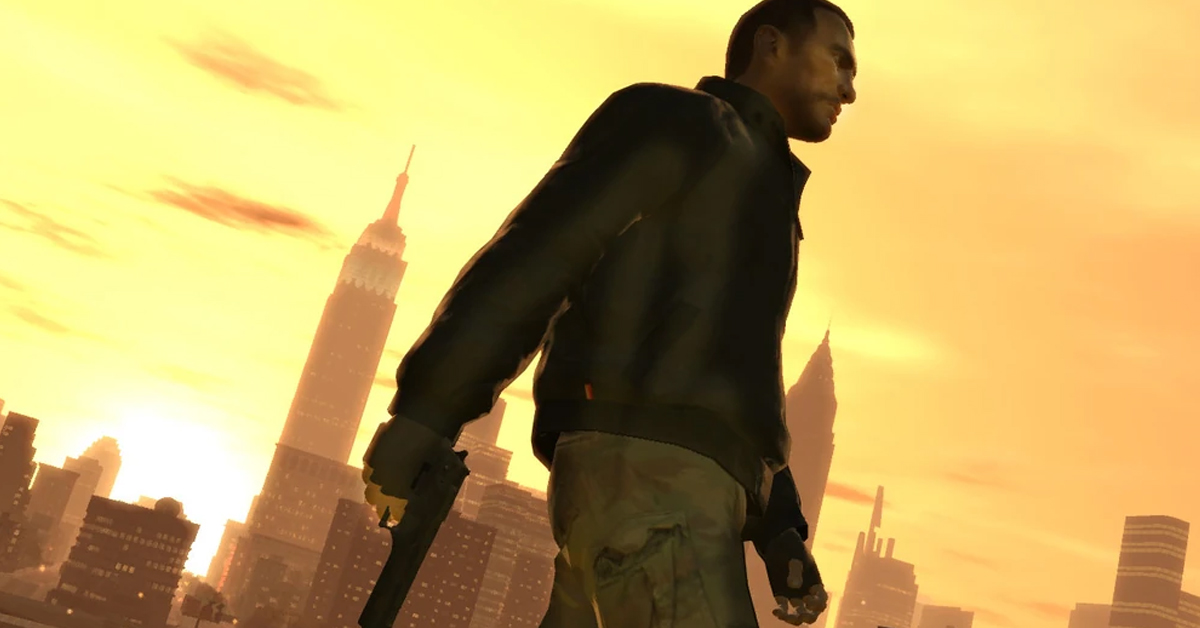
I’ve always associated Grand Theft Auto with chaos and having a ton of fun. Its characters are often over the top, and the stories don’t always leave much of an impression on me. But Grand Theft Auto IV took a step back, opting for a more down-to-earth, gritty approach, making it the exception to the rule for me.
Protagonist Niko Bellic, who I consider the best GTA protagonist we’ve seen so far, arrives in Liberty City as a war veteran from Eastern Europe, after his cousin Roman promised him the world. Once he gets there, however, the American Dream turns out to be far less glamorous than he was led to believe.
Roman is drowning in debt, and Niko soon finds himself caught up in the city’s criminal underworld. But that’s not entirely Roman’s fault. As it turns out, Niko also came to America to track down someone who betrayed him years ago.
Grand Theft Auto IV is a story about revenge, loyalty, and the darker side of the American Dream. But more importantly, it raises the question of whether Niko can ever truly leave his traumatic wartime past behind. These are the kinds of serious themes the franchise isn’t exactly known for, and they’re what make this entry its strongest in my eyes, at least when it comes to storytelling.
Persona 3 Reload

The Persona games offer sprawling, story-driven adventures that can easily keep you busy for a hundred hours, and Persona 3, 4, and 5 are all worth every minute. For this list, though, I’ve chosen Persona 3 Reload. The third game tells a slightly more serious and darker story than the other two, and as you might have figured out by now, those tend to be the stories that resonate with me the most.
In Persona 3 Reload, you play as a high school student who, after moving to Tatsumi Port Island, discovers that a mysterious extra hour exists every night: the Dark Hour. During this hour, ordinary people transform into coffins, and dangerous creatures known as Shadows emerge. Together with a group of fellow students known as SEES, he sets out to unravel the mystery behind the Dark Hour and put an end to the threat posed by the Shadows.
Amid all that chaos, you also try to live a perfectly ordinary student life, and this part of the game is every bit as impactful. In the Persona games, it’s often the relationships you build that affect me the most. You choose which people to spend time with, gradually strengthening those bonds. Along the way, you see beautiful friendships develop and get to know a diverse cast of characters, each dealing with their own personal struggles. And that’s what makes Persona 3 Reload especially powerful: beneath its supernatural mystery, it’s a story about mortality, loss, and what we choose to do with the time we have.
Death Stranding
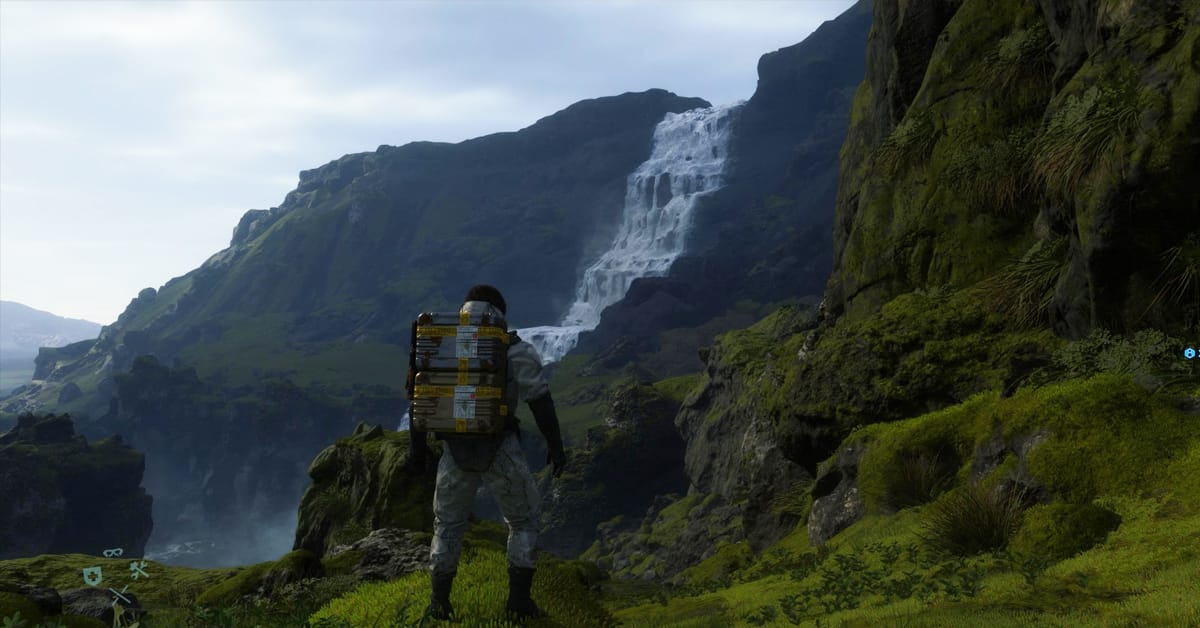
Death Stranding falls into the same category as Alan Wake 2: a game that makes a confusing first impression, thanks to the… let’s call it creative mind of developer Hideo Kojima. In fact, I had to play through the game twice before I really understood how everything fit together. But once it all clicked, it hit me hard emotionally.
In Death Stranding, you play as Sam Porter Bridges, a courier in a post-apocalyptic America devastated by a mysterious event known as the Death Stranding. The remaining population lives largely isolated in underground cities and shelters, while supernatural creatures known as BTs make traveling through the outside world incredibly dangerous.
Sam is tasked with traveling across the country and reconnecting its scattered communities through a communications network. This mission to reunite America frequently touches on themes of loneliness, loss, and the importance of human connection.
That last theme is reinforced by the fact that you can use tools left behind by other porters online, while making your own available to them in return. You’ll never physically encounter other players, but you’ll always be aware that others have walked the same path before you. And it’s especially fun when you come across a ladder left behind by a friend.
Disco Elysium

Better put on your reading glasses, because Disco Elysium is packed with text. Fortunately, it’s some incredibly entertaining text. Just like this article, by the way. But I digress.
In Disco Elysium, you play as a detective who wakes up in a hotel room with a massive hangover, without the slightest idea of who he is or how he got there. He doesn’t get much time to recover, though, because there’s a murder to solve. Together with his new partner, Kim Kitsuragi, he investigates the death of a man found hanging from a tree behind the hotel.
During your investigation, you’ll encounter all sorts of characters, many of them wonderfully eccentric. Including yourself, because you’ll regularly find yourself having conversations with your own mind. Your skills each have a voice of their own, constantly interfering with your thoughts, conversations, and decisions. Even a simple conversation can spiral completely out of control, depending on how you develop your detective and which voices you decide to listen to.
What makes Disco Elysium so special is that you largely get to decide what kind of detective you want to be. A brilliant investigator who’ll stop at nothing to uncover the truth? Or a walking disaster who’s struggling to get his own life together? Your choices don’t just determine how others respond to you, but also how your protagonist sees himself and the world around him.
Beneath all the bizarre humor and absurd situations lies a surprisingly human story about regret, addiction, political beliefs, and the struggle to put yourself back together. Disco Elysium can have you laughing out loud one moment, only to bring you crashing back down to earth with a painfully honest conversation the next.
A Plague Tale: Requiem

If there’s one game that proves you don’t need long to tell an unforgettable story, it’s A Plague Tale: Requiem. This sequel to A Plague Tale: Innocence takes you on a journey through medieval France that’s as beautiful as it is heartbreaking.
Once again, you follow Amicia and her younger brother Hugo, who are trying to build a new life after the events of the first game. However, Hugo carries a mysterious curse that grants him extraordinary powers, but can also unleash a deadly plague of rats. When his powers spiral out of control once more, the siblings are forced to flee, setting out in search of a way to cure Hugo.
It’s the bond between Amicia and Hugo that makes this story so special. Amicia is willing to sacrifice absolutely everything to protect her little brother, but throughout their journey, it becomes increasingly clear just how much of a toll that takes on her. Requiem doesn’t shy away from the darker sides of that love, repeatedly raising the question of just how far you should be willing to go to save someone.
Add a gorgeous world, outstanding performances, and some truly heartbreaking moments, and you’ve got a game you won’t soon forget. It’s an emotional rollercoaster that, in my opinion, you absolutely shouldn’t miss.
Want to know why this game left such a lasting impression on me? Check out my full review of A Plague Tale: Requiem.
Final thoughts
What I love about these games is how differently they approach storytelling. Some kept me hooked with mysteries I desperately wanted to solve. Others gave me characters I still think about years later, or decisions I wish I could take back. And a few managed to do all of that at once.
I’m sure I’ve left out some of your favorites, and I’d love to hear about them! Which video game story has stayed with you the longest? Let me know in the comments below, and maybe I’ll play it next!