

I thought the first Control, released in 2019, was a pretty good game. I was a little less enthusiastic about it than most people, mainly because the constantly respawning enemies quickly made me grow tired of the combat. But there was one fantastic moment: the now-iconic Ashtray Maze sequence.
Going into Control Resonant, I was curious to see what kind of memorable moment Remedy would come up with this time. What would be that one special sequence that would go down in the history books, like they had already managed with Control and Alan Wake II’s We Sing moment?
The biggest compliment I can give Control Resonant is that, this time, there wasn’t really one particular moment that stood above the rest. Throughout my roughly 45-hour playthrough, I went from one audiovisual highlight to the next. Mind-blowing sections followed each other in rapid succession, and every new environment I entered somehow managed to make my jaw drop all over again. If I were to make a list of my gaming highlights of the year, Resonant would probably occupy multiple spots in the top three.
But is the gameplay experience itself just as impressive? Find out in this spoiler-free review.
The biggest challenge of this review: explaining what the story is about exactly

To me, Remedy’s storylines are a bit like listening to someone speak a foreign language. Most of the time, I’m staring blankly at the screen while imaginary question marks float around my head. Every now and then, I understand a sentence here and there because some of the words sound familiar, but that’s usually about as far as I get.
After the first Control, I did some research to get a better understanding of its paranormal world. That helped somewhat, although Resonant once again bombarded me with terms I had never heard before.
What even I managed to understand is that Resonant takes place after the events of Control and follows former protagonist Jesse’s brother, Dylan. Control players will know that he was taken by the Federal Bureau of Control as a child and spent years being held and studied inside The Oldest House. As if that wasn’t bad enough, he was later possessed by the Hiss and eventually ended up in a coma for several years.
Because things would otherwise be a little too peaceful, Dylan wakes up from that coma in Resonant. Jesse has disappeared without a trace, while Manhattan is being ravaged by paranormal forces that are literally warping the city and turning it upside down. It’s up to you to explore the city, find your sister, and figure out what the hell is going on.
The warped Manhattan, and how you navigate it, is the absolute highlight of the game
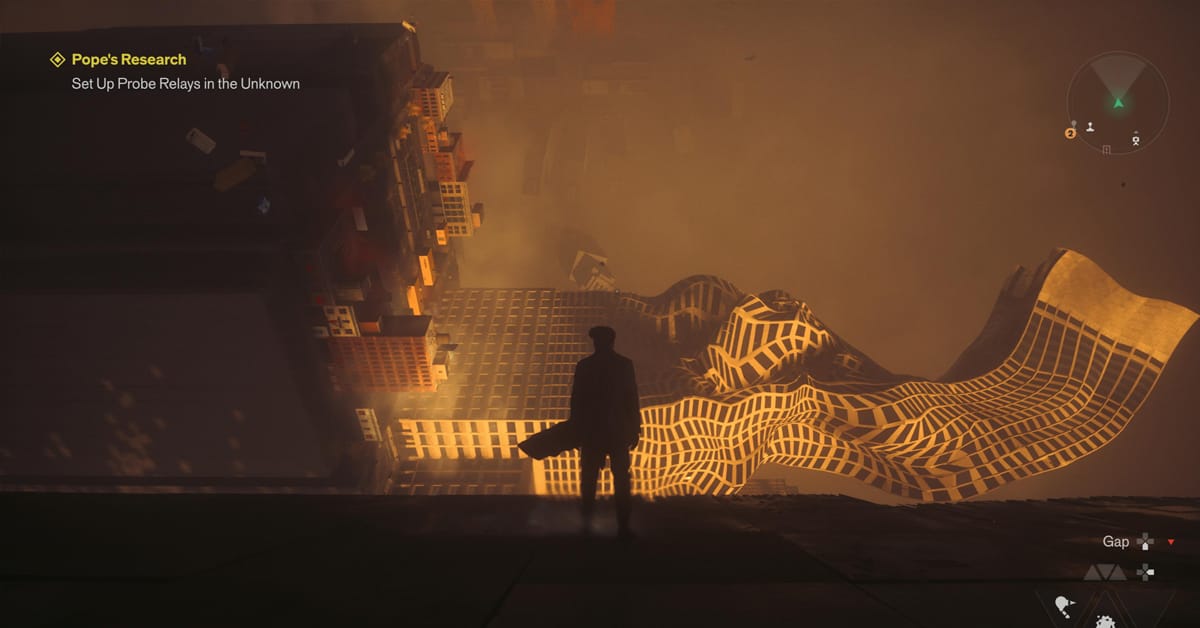
Resonant’s Manhattan is one of the most remarkable game worlds I’ve had the pleasure of exploring in recent years. On the one hand, it’s recognizable. You walk through the streets of New York and see the yellow taxis, steam rising from manholes, restaurants, and laundromats. But on the other hand, you’re surrounded by completely warped skyscrapers, and it feels like an extra version of Manhattan has somehow been layered on top of the one you’re standing in.
The game essentially contains multiple Manhattans that have been blended together into one strange mix. And the most impressive part is that, not long after unlocking the gravity shift traversal ability, you can switch between these worlds with the press of a button. The entire world then rotates around you and adjusts to your new perspective.
“I kept wondering how the developers had managed to build this world and connect everything so seamlessly.”
The first time this happened, during a section that at least matched the Ashtray Maze for me, I almost fell out of my chair. Backed by an incredible soundtrack, I shifted my way through a massive apartment complex turned completely upside down. It’s a moment that will stick with me for a long time.
My admiration for how navigating Resonant’s unique world worked stayed with me all the way until the credits rolled. I kept wondering how the developers had managed to build this world and connect everything so seamlessly. How it could remain a logical and navigable whole from all those different perspectives. Just how difficult must this have been to develop?
Not just impressive to look at, but rewarding to explore
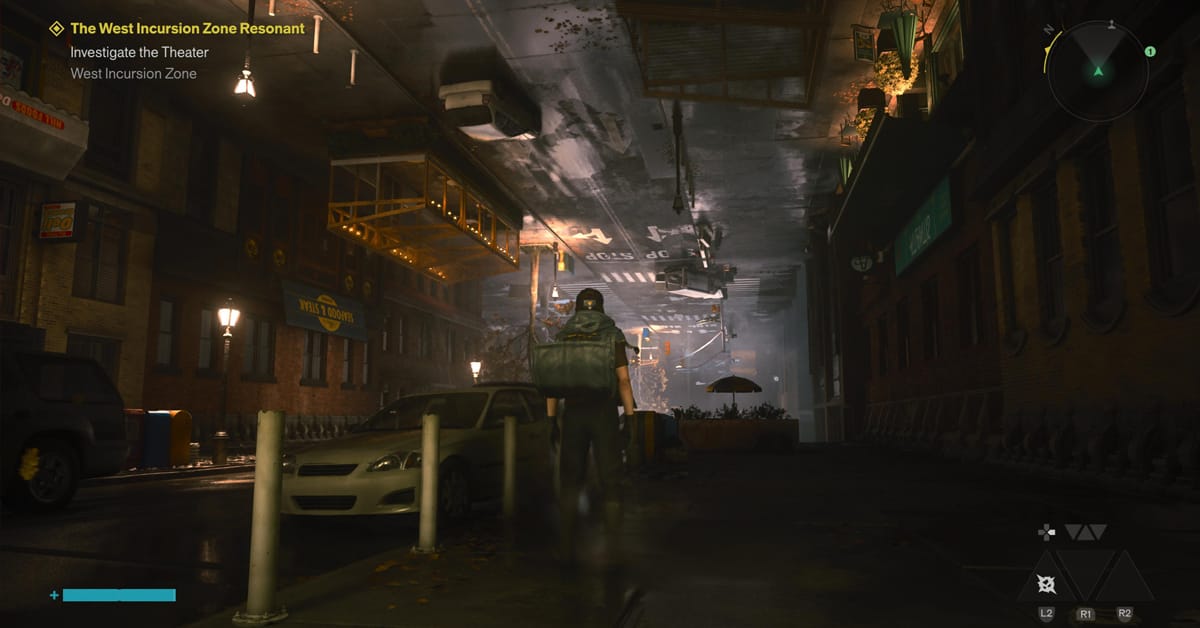
And it’s more than just a technical miracle. I didn’t only want to explore this world because of how impressively it was put together, but also because there was always something to discover. The side quests are once again more than worth your time. Sometimes you’re clearly sent out to complete one, but others can be discovered organically simply by stumbling across them in the world.
These side quests often provide useful lore that tells you more about the characters and the world around you. They’re also frequently interesting self-contained stories that can genuinely surprise you, like a mysterious taxi dimension or a suspicious karaoke party.
While exploring, you’ll also find materials and events that make Dylan stronger. And that turned out to be necessary for more than one reason.
Control Resonant’s Manhattan is like a rollercoaster, and that’s how I experienced the combat too
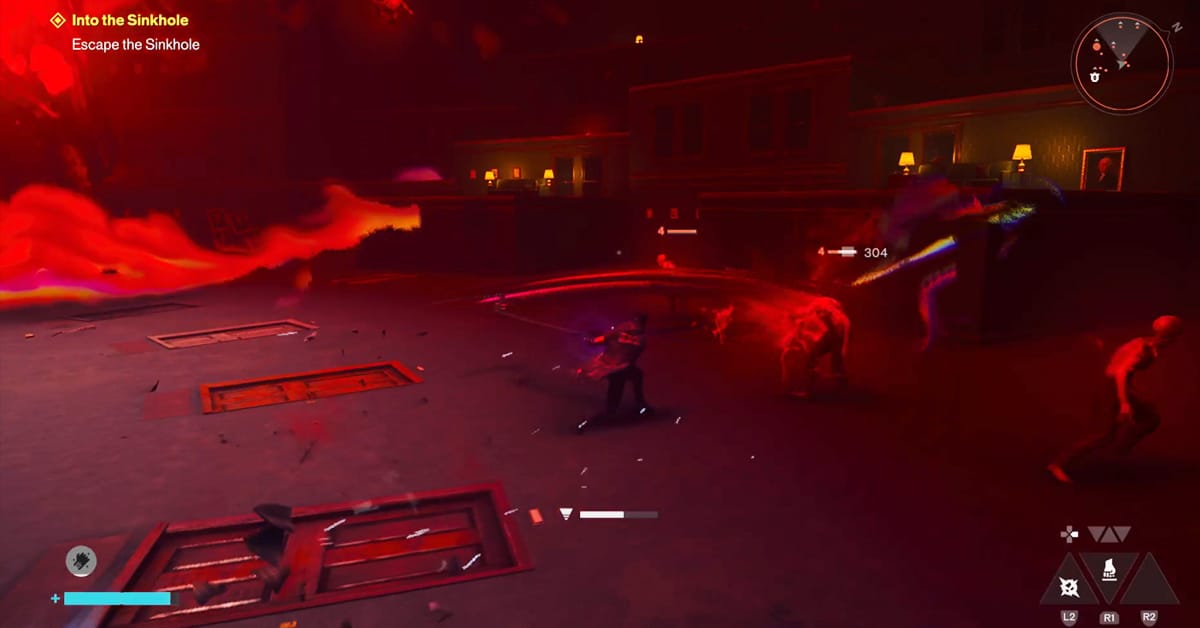
I’m writing this review one day after finishing Resonant, and I can still feel it in my fingers. It’s an action-adventure RPG, and the word action deserves to be underlined.
During the opening hours, I thought I already had my opinion on the combat figured out. Like with its predecessor, I wasn’t exactly blown away. There are no constantly respawning waves of enemies this time around, but there are damage sponges. Combat encounters generally pit you against bigger, stronger Hiss alongside an army of smaller, weaker ones. That second group keeps coming back until you take care of the big daddies, but once you do, you at least won’t have to deal with the exact same invasion in that spot again for a while.
And those bigger enemies can take a ridiculous number of hits from Dylan’s weapon, the Aberrant, especially during the opening hours. It got to the point where I started avoiding combat whenever I could instead of actively seeking it out. In my experience, fights mostly consisted of constantly pressing the primary and secondary attack buttons, with the occasional dodge thrown in between.
“The more of these abilities you collect, the more Dylan starts to feel like a true force of nature.”
Thankfully, you unlock powerful special abilities by defeating Resonants, which essentially function as boss fights. For every Resonant you take down, you get to choose between two special skills. Once I had collected a few of those, I started appreciating the combat a lot more during the game’s lengthy middle stretch.
The biggest click came after I unlocked the Inferno skill, which allowed me to rapidly fire waves of flames at enemies. Not only did that feel fantastic, it also proved extremely effective at fixing my biggest frustration: enemy health bars suddenly started disappearing a lot faster.
Other abilities include summoning mold allies, something I’m personally capable of too, although mine mostly appear in the fridge, performing a ground slam, or creating a shield. The more of these abilities you collect, the more Dylan starts to feel like a true force of nature. It gives the combat a substantial boost and helps keep it fresh for longer. I ended up enjoying the combat throughout most of the middle portion of the game, before eventually starting to feel a little combat fatigue again toward the end.
You can build Dylan however you like, and it feels great when your setup comes together
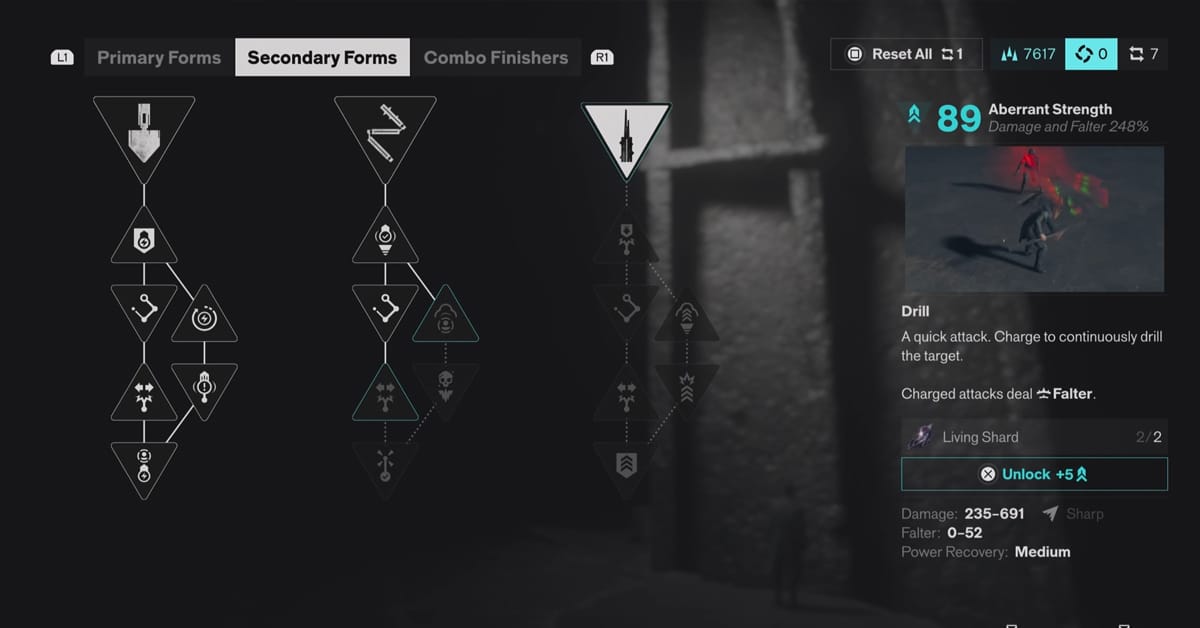
Dylan’s weapon can switch between three primary and three secondary forms. Personally, I went with the crowd control offered by the Glaive, combined with the heavy hits of the hammer’s Crush. But you can also switch to other combinations, such as the faster Strike paired with the piercing Drill.
Every weapon, both primary and secondary, has its own tree that you can upgrade with the right materials for extra perks and damage. There’s also a combo finisher tree that helps you end your combos in style.
One interesting design choice is that it’s actually worth upgrading trees for weapons you don’t even use. I stuck with the same weapon combination throughout the entire game and never really felt the need to change, but investing in the other weapon trees still increased my damage and Falter output, which lets you stun enemies.
On top of that, there’s a Talent Tree that upgrades Dylan himself rather than his weapons. You invest Talent Points here, which you earn by completing quests and events, and for example by raising the level of certain districts, which in turn happens by taking out enemies.
Depending on which Resonant skills you’ve collected, you can steer Dylan’s build in a particular direction. I had picked up several summon abilities, and through the Talent Tree I could make those summons deal extra damage and drop health when they were taken out.
I also chose an upgrade that gave me a 30% chance to gain health from a perfect dodge, one that allowed me to summon more allies, and another that reduced incoming damage by 5% for every summon I had on the field. Altogether, that gave me several ways to keep restoring health during combat, to the point where I was barely dying anymore by the endgame. Building out Dylan’s abilities was definitely satisfying. But what about his personal development?
Dylan is an interesting protagonist who you can shape to some extent, both on the outside and within
Dylan has the difficult task of following in the footsteps of his sister Jesse. Her determination and entertaining inner monologues made her one of the highlights of Control for me. Dylan, meanwhile, was mostly known to us as the Hiss-possessed crazy guy.
That immediately gives him an incredibly interesting background, with Control already having done plenty of groundwork. We know the guy has been through a lot. First he was effectively “kidnapped” by the Federal Bureau of Control at a young age, and later he was possessed by the very enemy we spent the first game endlessly fighting.
And while under the Hiss’s influence, he did some… questionable things. Dylan was responsible for countless deaths, and unsurprisingly, people don’t exactly let him forget it. Most people you walk past have something unpleasant to say about you. There’s a constant sense of distrust around him, reinforced by the implant at the back of his head that can be activated with the push of a button to take him out of action.
“Control Resonant regularly gives you dialogue choices, allowing you to decide how Dylan interacts with others.”
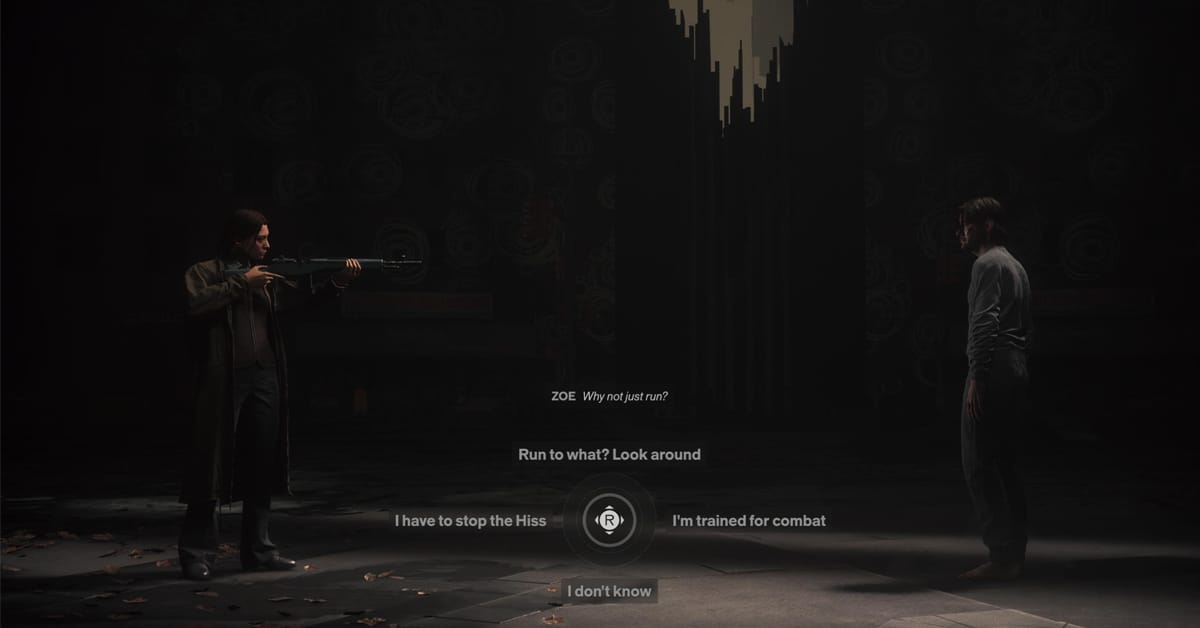
Dylan feels much the same way about himself. He can’t, and doesn’t want to, forgive himself for what he has done. Despite being the best weapon the FBC has to offer, he carries himself with a surprising amount of humility. Although you can influence that side of him to some extent. Control Resonant regularly gives you dialogue choices, allowing you to decide how Dylan interacts with others. But no matter what you choose, things often feel slightly awkward. Resonant never lets you forget that Dylan never really learned how to deal with other people.
It’s interesting to watch Dylan slowly come out of his shell over the course of the game and build relationships with others. His interactions with his handler, Zoe, were among my favorite moments in particular. The two have an interesting dynamic, and I always looked forward to their conversations.
And it isn’t just Dylan’s personality that you can shape to some extent. There’s also a fair amount of customization. You can change his hair, facial hair, clothes, including both his top and base layers, and accessories to make him look the way you want.
Despite Jesse and Dylan being excellent protagonists, I still find Dr. Darling the most interesting part of the series
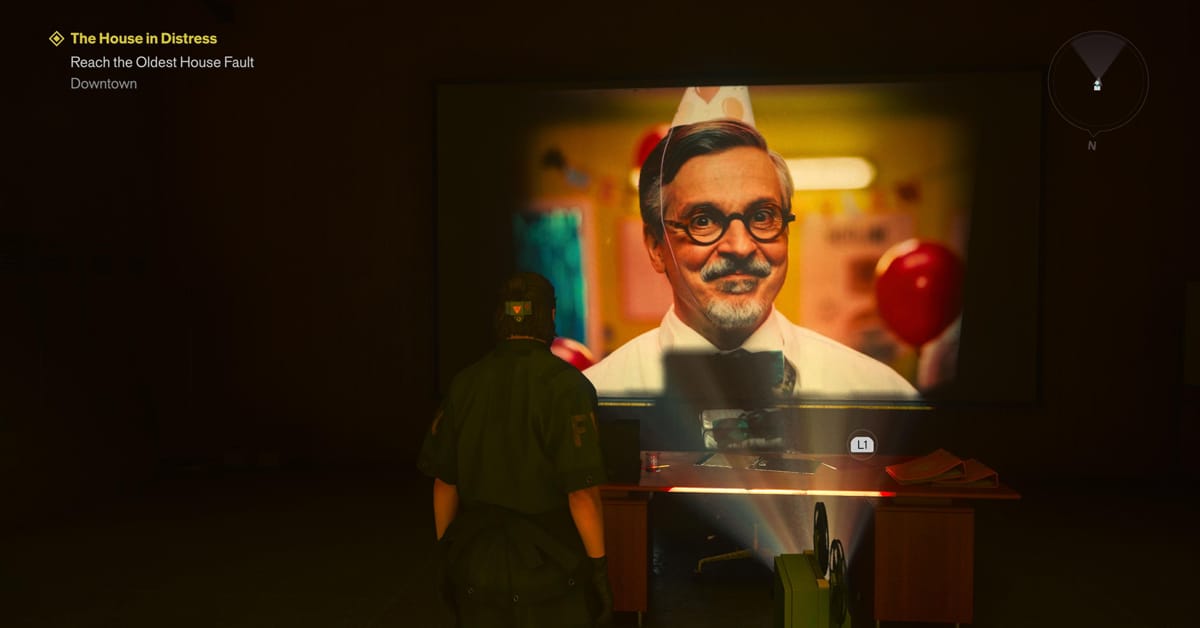
Dr. Darling, the FBC’s Head of Research who “guided” Dylan during his childhood to help him reach his potential, has become a recurring presence throughout Remedy’s games. His recorded videos already appeared in Control, then in Alan Wake II, and now once again in Resonant. These videos show him explaining events in live action, and this time they mainly focus on the way he viewed and guided Dylan.
Matthew Porretta’s performance, who also happens to be the voice of Alan Wake, as the passionate and obsessive scientist keeps me glued to the screen every time. Through Dr. Darling, we get a lot of insight into how the FBC ran the Prime Candidate Program, which Dylan spent his childhood in.
We hear about the methods used to push Dylan to his limits and essentially “squeeze” powers out of him. About how the future of the FBC supposedly depended on him, and what Dylan was like as a young boy. The FBC took his life away from him, and I found it incredibly interesting to learn more about everything that happened during those earlier years.
Those are the moments when Control Resonant becomes a little less confusing and zooms in on more personal stories. These scenes, along with the ones that reveal more about Jesse and Dylan’s relationship, were easily among my favorite moments and even gave me goosebumps several times.
The Control universe regularly loses me in its overwhelming paranormal terminology and events. But whenever it goes back to basics, leaves all those terms behind, and makes things genuinely about human emotions, it always manages to hit the right notes.
Some Loose Scraps
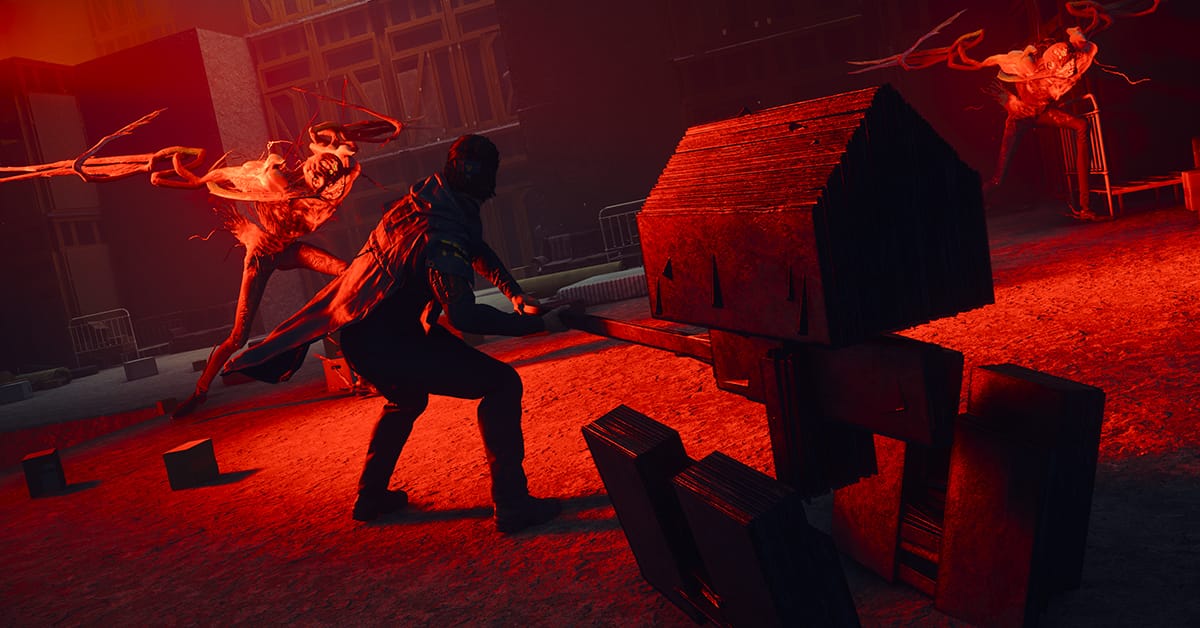
- Hopefully Dylan has a smaller hammer at home, because imagine accidentally smashing your finger with this thing.
- Are all objects in the Control universe this light? Chairs and other objects practically launch into space when you gently walk past them.
- At one point I solved two puzzles without having any idea what I was doing. Those are the best kind.
- I’ve never been high, but I think Control Resonant got me pretty damn close to the experience.
- If you played this game while high, would the two somehow cancel each other out? Would it just feel like a normal game?
- This game left me in A.W.E. quite a few times. Get it?
- Frankie Kevich, who plays Dylan’s handler Zoe, also voices Sofia in Fire Emblem: Fortune’s Weave.
Conclusion
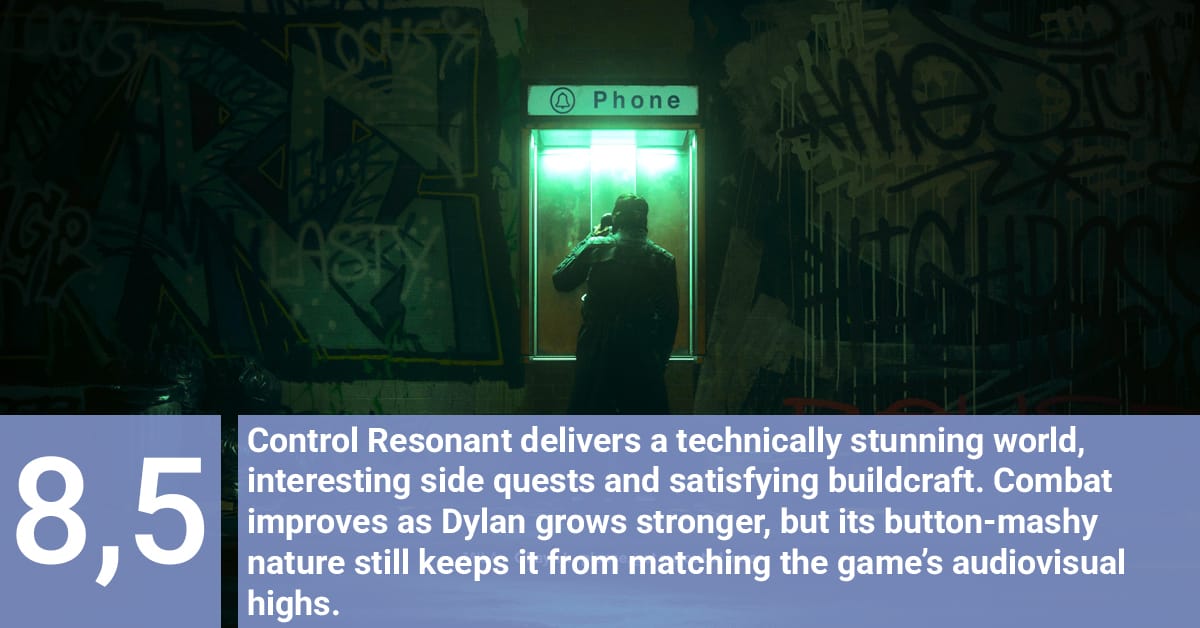
Control Resonant is an audiovisual spectacle that takes “never let them know your next move” extremely seriously. Its warped Manhattan is one of the most technically impressive game worlds I have ever navigated. Exploring it is consistently rewarding, sometimes in the form of excellent side quests, and other times through materials that help you upgrade Dylan’s skills.
Damage-spongy enemies frustrated me during the opening hours, but the combat opens up once you unlock several Resonant skills. Combined with strong skill trees that let you put together a satisfying build, that made me appreciate the combat a lot more throughout the middle portion of the game. Still, I ultimately found it a little too button-mashy for a game that relies this heavily on combat.
The shift to Dylan as protagonist gives Resonant an interesting new perspective. The narrative works best when all the paranormal terminology takes a step back and more personal stories and relationships, like the one between Dylan and Jesse, take the lead.
Resonant may not have completely won me over on Remedy’s combat, but it absolutely delivered the kind of unforgettable moments I was hoping for.
Reviewed on: Playstation 5
Score: 8.5/10