
The Blood of Dawnwalker scared me during its intense prologue. Not because of the bloodsucking antics of vampire Brencis and his buddies, but because it introduces time slots as a resource. Having to choose between side quests and knowing you simply won’t be able to do them all because every quest costs in-game time and that time is finite? An absolute no-go.
Whenever I play an RPG, I methodically clear out every side quest before I even think about touching the main story. Tough luck for the woman in distress, she can wait a little longer. Let me play a hundred rounds of Gwent, romance every woman with a pulse, collect the coolest armor sets, and then we’ll see about what comes next.
The Blood of Dawnwalker’s prologue sets the tone, but the rest of the game doesn’t quite follow through on it
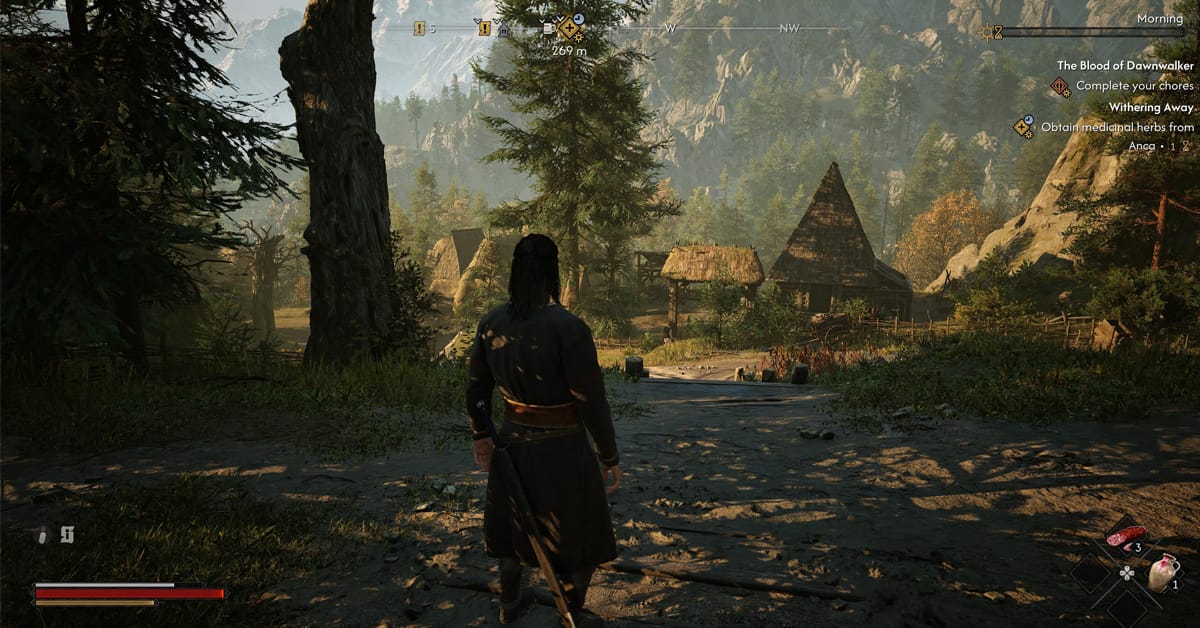
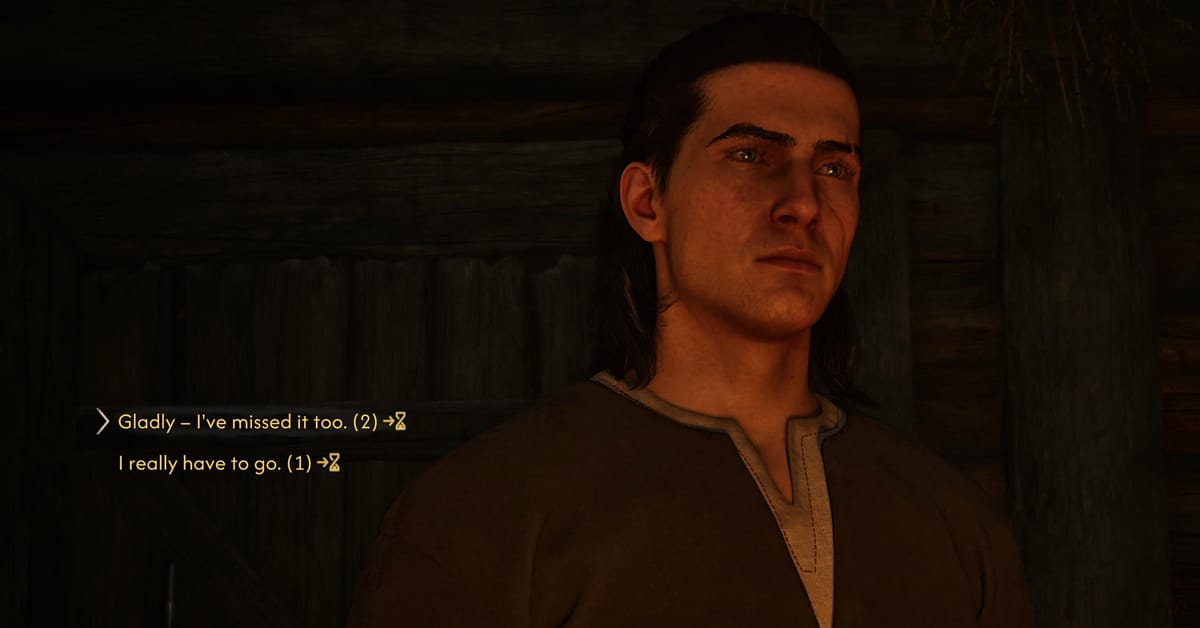
The Blood of Dawnwalker has no interest in indulging that kind of behaviour. Especially not during the prologue, which introduces its time-slot system in a way that immediately stressed me out. You get eight time slots to spend however you like. Several quests are available right away, with more to unlock, and every quest chips away at that total by one (or sometimes several) slots.
As if that wasn’t stressful enough, some of these quests also come with time pressure. Rebel Wolves makes it clear with a blue clock icon that time is running out, and the quest-giver dialogue doesn’t exactly leave much room for doubt either. Everything feels important, everything feels urgent, and everything sounds like it could have serious consequences if you wait too long.
And even though I felt a certain sense of unease, with that familiar FOMO creeping in whenever I thought about the quests I might not be able to finish in time, I also respected the design choice. It felt different. It felt original, and it added to the game’s storytelling. Everything you do has to matter and contribute to your ultimate goal: freeing your family from Brencis’ grasp.
Towards the end of the prologue, that respect briefly turned into frustration when I decided to spend my final time slot catching a grave robber and returning an old woman’s grandson’s silver cross. I solved the mystery, the shameless thief gave me the cross back, and all I had to do was return it to her. That was the exact moment the game decided I had done enough. I had enough time slots to solve the mystery, but not enough to actually give the cross back.
Sorry, grandma. Your grandson’s cross will have a lovely little spot in my inventory for the rest of my playthrough, but you’re out of luck.
What’s interesting is that the prologue kept influencing the way I played for hours afterwards. Even when the game itself had already become much more forgiving with time, I still treated every time slot as if it could be my last. At some point, the scarcity existed less in the game itself and more in my head.
The clock turned out to be far less merciless than I expected
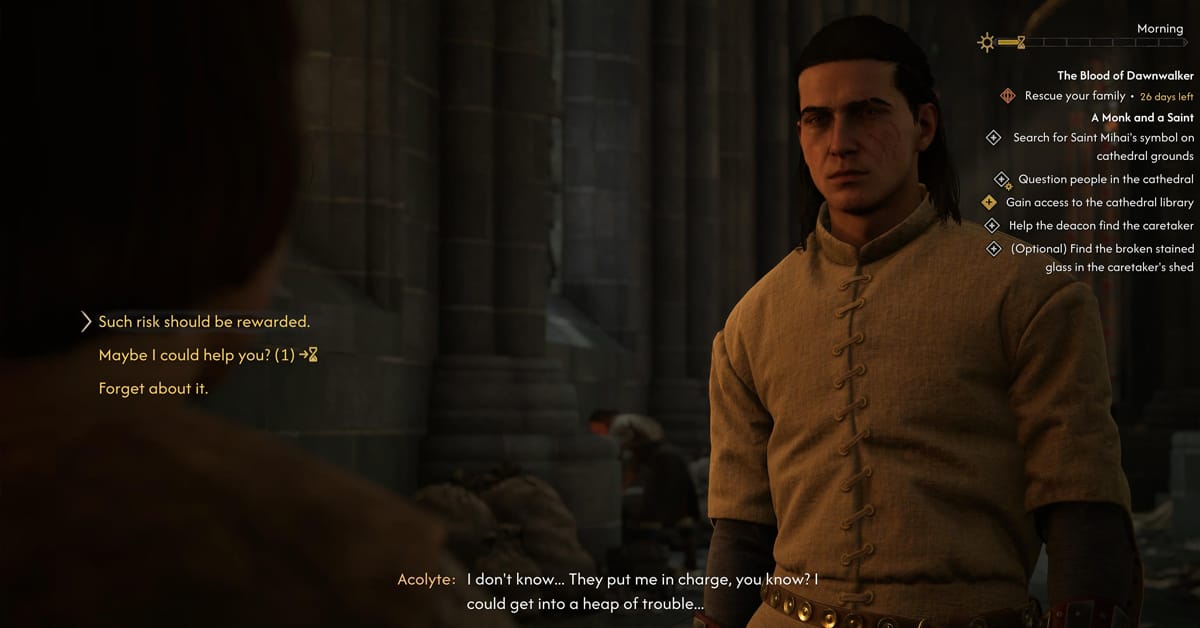
So I thought I had been warned. The Blood of Dawnwalker was going to constantly force me to choose between my priorities. It would make me decide whose lives mattered most. Do I search for the local armorer’s missing daughter, or is it more important to go after one of Brencis’ evil lieutenants because that might bring me closer to my family?
But the prologue had made me build the whole thing up into something much bigger in my head than it actually turned out to be. The stress I felt during those opening hours eventually vanished like vampires in sunlight. In the dozens of hours that followed, there were barely any blue clock icons to be seen. I could pick up and complete almost every quest whenever I wanted.
I was still a little cautious at first, because it took me a while to realise just how generous the game actually is with your time. At the time of writing, I still have 12 days left until the deadline. I’ve already completed a huge number of (fantastically written) quests. There are barely any quest icons left on the map. The ones I do still have are mostly the more generic kind, which I don’t exactly feel a strong urge to complete.
“The real scarcity had disappeared, but the feeling of scarcity lingered for a long time.”
And the strange thing is… on the one hand, that has taken a weight off my shoulders. I no longer need to sit on 40+ perk points (because yes, even upgrading your skills costs time slots), and I barely have to think about how I spend my time anymore.
But those 40+ unused perk points also show just how much my experience with the prologue was still influencing the way I played. Even when I had already started to suspect that I had more than enough time, I kept putting off upgrades. Not because the game was actually forcing me to choose, but because it had already taught me that every time slot was valuable. The real scarcity had disappeared, but the feeling of scarcity lingered for a long time.
Only much later did that final bit of caution disappear too. Once I fully understood just how much time the game was giving me, that carefulness turned into almost complete indifference. I take whatever I can get now, whether a quest costs three slots or six. I’m not falling for that anymore. Nice, right?
What I feared most during my first few days with the game is exactly what I ended up wanting more of
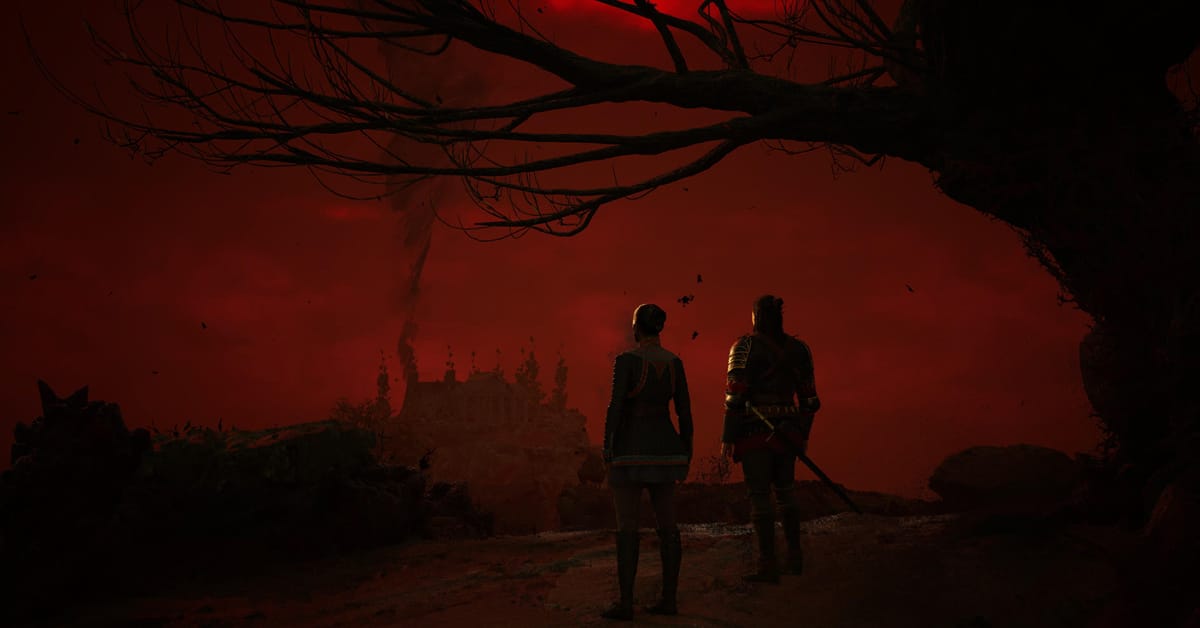
Strangely enough, the thing I was most worried about during my first few days with the game is exactly what I ended up wanting more of. The prologue put me on constant alert. Everything felt like it was hanging in the balance. I felt as if every choice I made could mean the difference between someone living or dying (and that was actually true surprisingly often).
I rarely got that same feeling during the main game. Of course, you still have plenty of influence within the quests themselves, and your choices absolutely matter. But it is no longer a case of either A or B. Now, it can be both A and B. And that takes away exactly what made the prologue so exciting. Not the clock itself, but the idea that every choice automatically meant sacrificing something else.
The fact that this is no longer really an issue for most of the game is great for my peace of mind. It takes the pressure off, but that comes with both advantages and disadvantages.
Even though the thought alone already stresses me out, I hope a sequel to The Blood of Dawnwalker leans into this idea much more heavily. The mechanic that made me tense, and sometimes even annoyed me, ended up being the mechanic I wanted more of. Quite the comeback story.