
*A review code for Sovereign Tower was provided.
Every once in a while, a game comes along that, on paper, ticks almost every box for you. Sovereign Tower, from indie developer Wild Wits, is one of those games for me. I love making decisions in games, and in Sovereign Tower, you hardly do anything else.
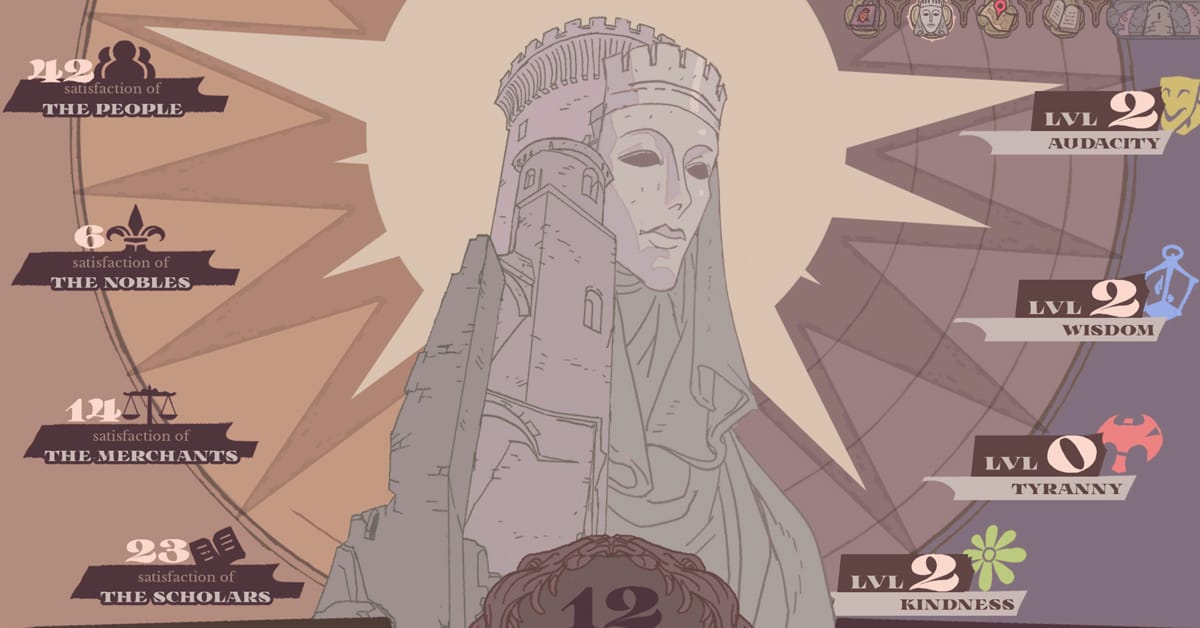
Together with a colorful cast of knights at your disposal, you manage your own kingdom. Through the decisions you make, you try to keep different factions such as the People, Scholars, and Nobles happy (or deliberately don’t), choose the right knight for the right fantastical job, and constantly face the consequences of your choices.
And what if you don’t like those consequences? Then you can use the special power of the demon hiding in your crypt to travel back in time. Better yet, you retain the information you’ve learned since then, allowing you to approach things differently the second time around.
This review contains no spoilers.
Update: After publishing this review, I interviewed Wild Wits Creative and Art Director Gobert about Sovereign Tower’s Demon Power, hidden Knights and branching storylines. Read the full Sovereign Tower developer interview here.
A Mysterious Figure in a Mysterious Tower
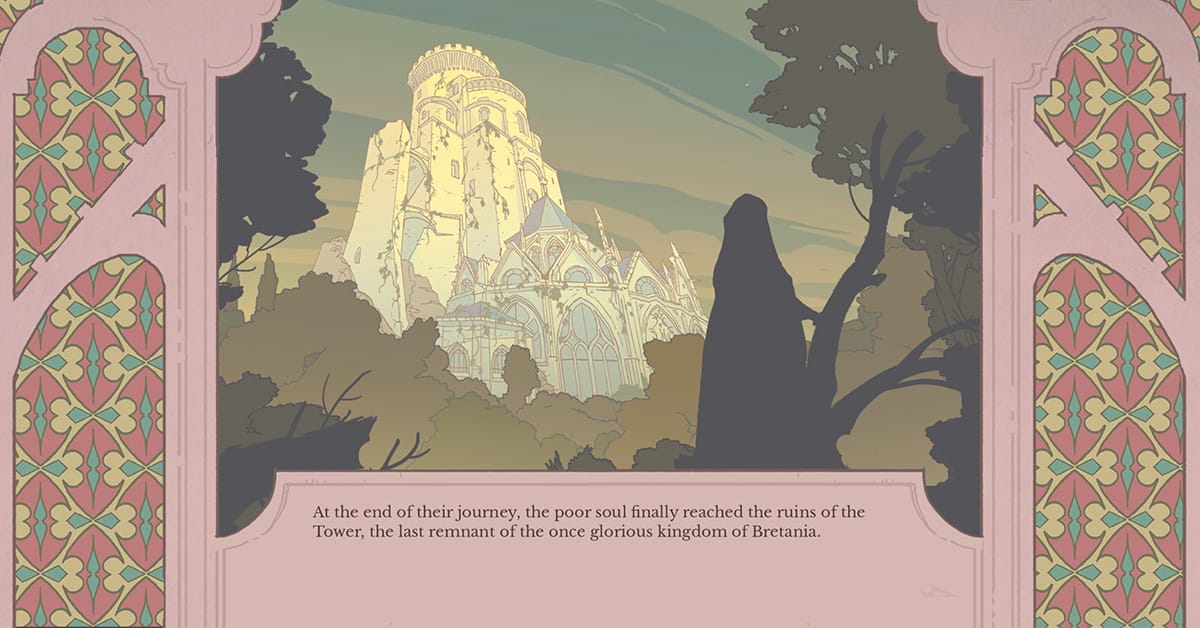
The game begins with a short introduction showing how our protagonist, a wandering leper, stumbles upon the mysterious Sovereign Tower. This magical tower grants unparalleled power and an inexhaustible source of magic to its knights. More importantly, it allows the Sovereign to foresee the future.
The doors of the tower had been closed for 100 years, but they open for our protagonist. Just like that, he is embraced as the new Sovereign, leaving it up to you to restore Bretania to its former glory and protect it from the looming threat of the bloodthirsty Empire… and hundreds of other threats.
From that moment on, much like anyone with a regular job, you settle into the daily grind. Each day is considered a Cycle and follows the same basic routine. You start with an ‘Audience’, during which all kinds of people from all kinds of backgrounds line up to present you with their problems. Afterwards, you take your seat at the Round Table, where you try to match the quests you’ve been given with the skills of your knights as effectively as possible.
In between, you can prepare your knights, each of whom you’ll get to know quite well, by selecting their equipment, preparing them a meal, or simply having a chat with them.
The following days, you find out how your chosen knights fared, while another handful of subjects is inevitably waiting for you to make new decisions on their behalf.
It’s an incredibly addictive loop. I constantly wanted to find out how my choices would play out and what bizarre requests would land on my desk next.
Quests Keep Coming, and How You Handle Them Shapes Your Reputation as Sovereign
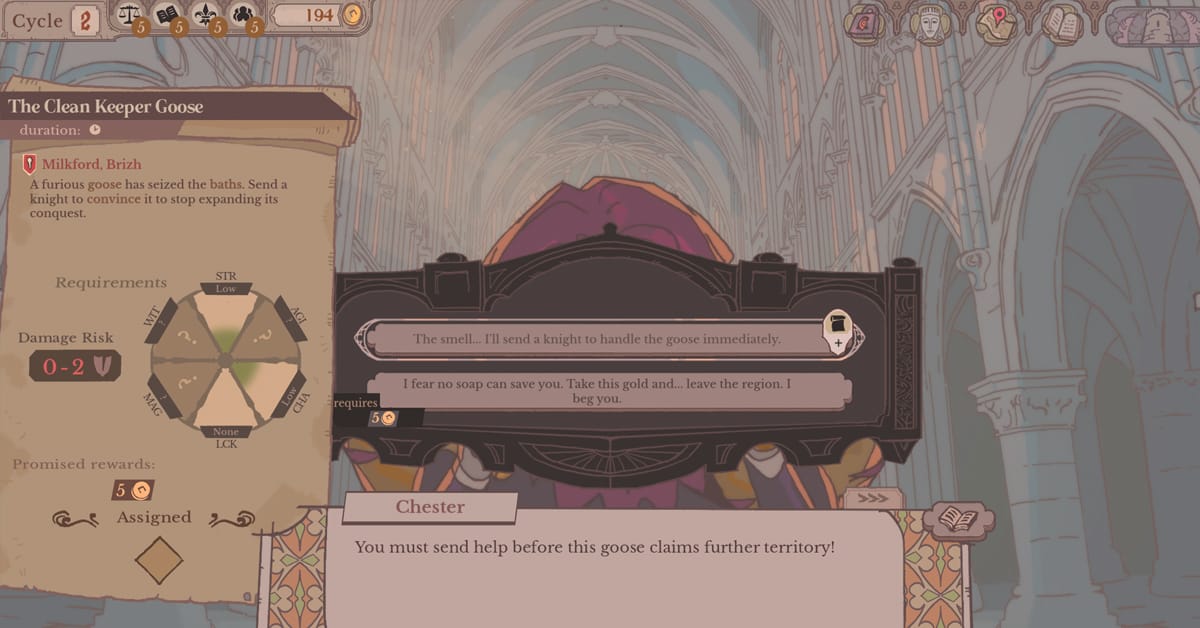
Sovereign Tower is like trying to mop the floor with the tap still running. For every quest you solve, several new ones will be waiting for you the next day. During the Audience, you’ll have all sorts of responsibilities to deal with. To sum it up, your workload consists of a main quest, emergency quests, side quests, and countless contracts.
The main quest represents an overarching threat that you’ll face in every Act. Each of these threats comes with a deadline spanning several Cycles. To successfully deal with it, you might, for example, have seven Cycles to meet a number of requirements. These could include reaching a minimum affinity level with the Merchants and Scholars, having enough money in your treasury, and securing a certain number of allied countries. On top of that, your knights still need to be strong enough to complete the mission.
Through dialogue choices, you have some influence over what those requirements will ultimately look like.
Emergency quests are fairly self-explanatory. These are quests with a specific deadline. If a forest is on fire or a city is under attack, you can’t exactly ignore the problem for several Cycles. Because of these deadlines, it’s always important to keep an eye on which knights you have available. The last thing you want is for your most suitable knight to be busy with another quest, leaving you with nothing but unsuitable candidates when the deadline arrives.
The ‘regular’ quests, which you can essentially consider side quests, are also brought to you by your people. Unlike the more standard contracts, these can have a significant impact on how your reign unfolds.
These quests are often part of longer storylines. They can lead to discovering new knights to recruit, or powerful relics and mounts that can give your knights a significant boost to their skills.
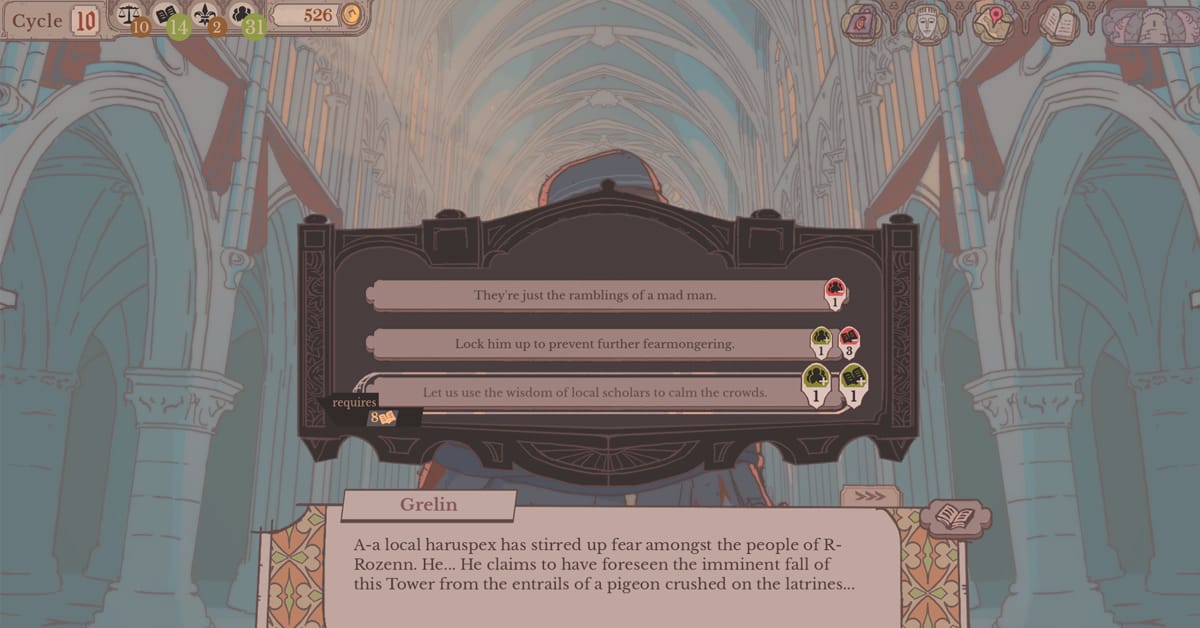
Contracts are delivered by a courier and are generally more self-contained. They provide a constant stream of jobs that can reward you in all kinds of ways. The interface always shows how well you’re progressing towards the requirements of your main quest, so it makes sense to prioritize contracts with rewards that bring you closer to those goals. If you need to improve your affinity with the Nobles, for example, you’d be wise to take on jobs that benefit them.
In between all these quests, you’ll sometimes have to make decisions on the spot during the Audience. Your people present you with immediate dilemmas, and it’s up to you to decide how to handle them. These choices often force you to pick sides between the different factions. One option might lower your affinity with the Nobles while increasing your standing with the People.
The personality of your Sovereign (Kind, Tyrannic, Smart, or Audacious), which is shaped by the things you say, can sometimes unlock an additional option that benefits everyone.
Which Knight Will Become Your Favorite?
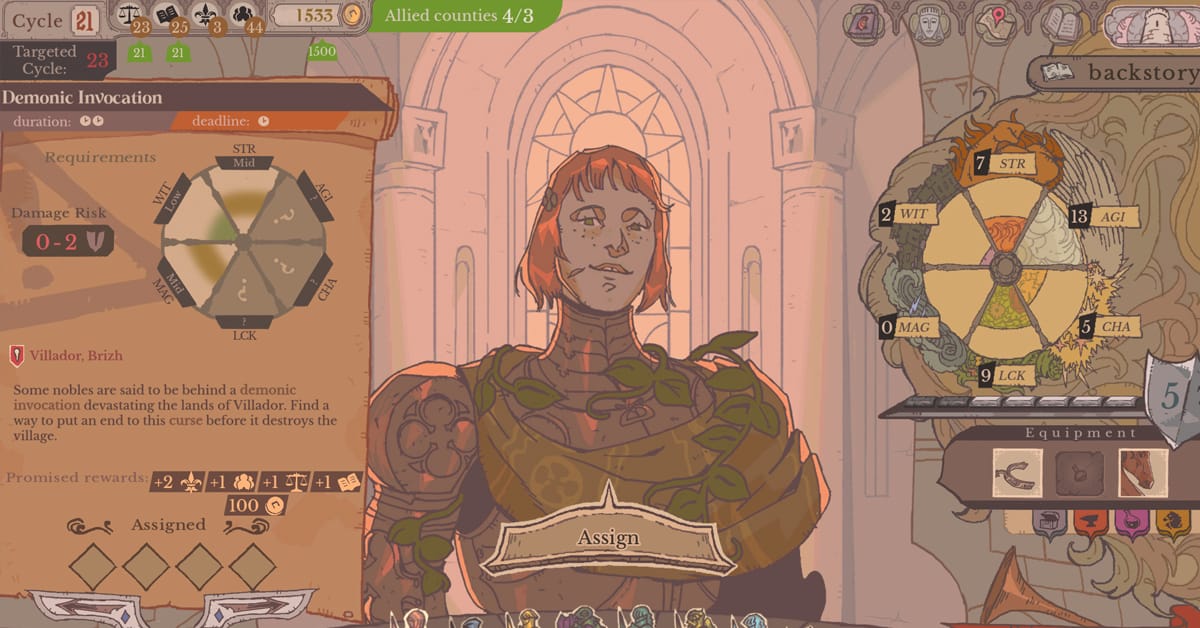
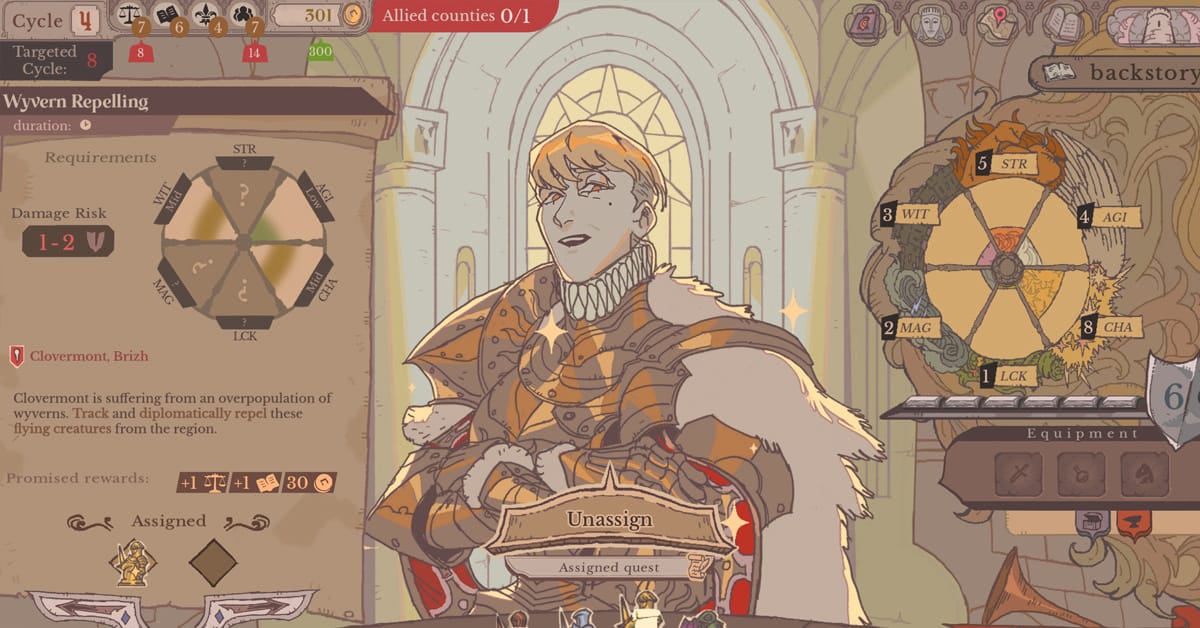
Once you’ve heard out your people and gathered a handful of quests, it’s time to send your Knights out into the world. Every Knight has six skills: Strength, Agility, Charisma, Luck, Magic, and Wits. On top of that, they have hidden characteristics that you’ll gradually discover. Knight Angelica, for example, is an Animal Lover, while Goberto is Clumsy.
If this system reminds you of Dispatch, you’re absolutely right. In my Dispatch review, I already mentioned that I’d love to see more games with similar gameplay, and with Sovereign Tower, Wild Wits basically said: ‘Hold my beer.’
Your quests are presented clearly and provide hints about what type of Knight would be best suited for the job. They might tell you that a quest requires someone strong or clever, while quest descriptions also emphasize terms such as ‘Investigate’ or ‘In the Woods’. Knowing your Knights inside and out gives you a major advantage here. If you know that a particular Knight hates the woods, for example, you can avoid sending them on that quest and potentially getting an unexpectedly bad outcome.
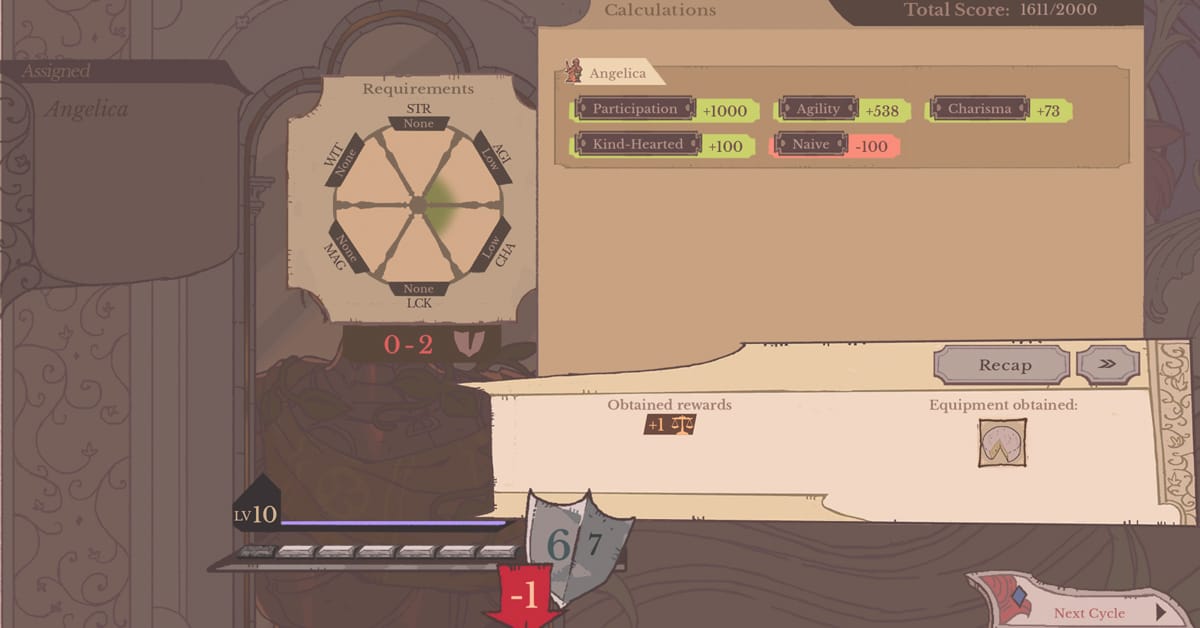
I learned that lesson the hard way during my very first Cycle. I sent Goberto on a quest that involved working at great heights, completely unaware that he was Clumsy. He fell to his death, and in Sovereign Tower, dead really does mean dead. Fortunately, I could use the Demon Power to turn back time, make the right choice, and keep Goberto alive.
Quests are fairly manageable at first (despite my immediate failure), but the difficulty ramps up carefully as you progress. Later quests can require as many as four or five Knights, whose combined skills need to complement each other well enough to meet increasingly demanding requirements and successfully complete the mission.
Completing quests earns your Knights XP, which you can use to level up their skills. Every Knight starts with their own particular strengths and weaknesses, but from there, it’s up to you to shape their development. These become important decisions when trying to build the strongest team possible.
“Sovereign Tower makes you genuinely care about your Knights, and that goes far beyond how good they are at ticking quests off your to-do list.”
It’s also worth keeping your Knights’ personal preferences in mind because, yes, your Knights have their own affinity with the Sovereign and are happier with certain quests than others. As an Animal Lover, Angelica won’t exactly appreciate being sent out to hunt a wild animal.
One of my Knights eventually became one of my best mages, despite the fact that she wasn’t particularly happy whenever I sent her on quests involving magic. It’s therefore worth keeping an eye on both their skills and preferences when deciding how to develop them. After all, you can’t reset their skill trees.
Eventually, you’ll undoubtedly end up with one Knight you trust more than anyone else. In my case, it was a warrior who excelled in Strength and Wits. He was an absolute beast, dealing with one threat after another that endangered my reign, whether human or otherwise. Sovereign Tower makes you genuinely care about your Knights, and that goes far beyond how good they are at ticking quests off your to-do list.
Most of My Knights Still Had Secrets Left for Me After My First Playthrough
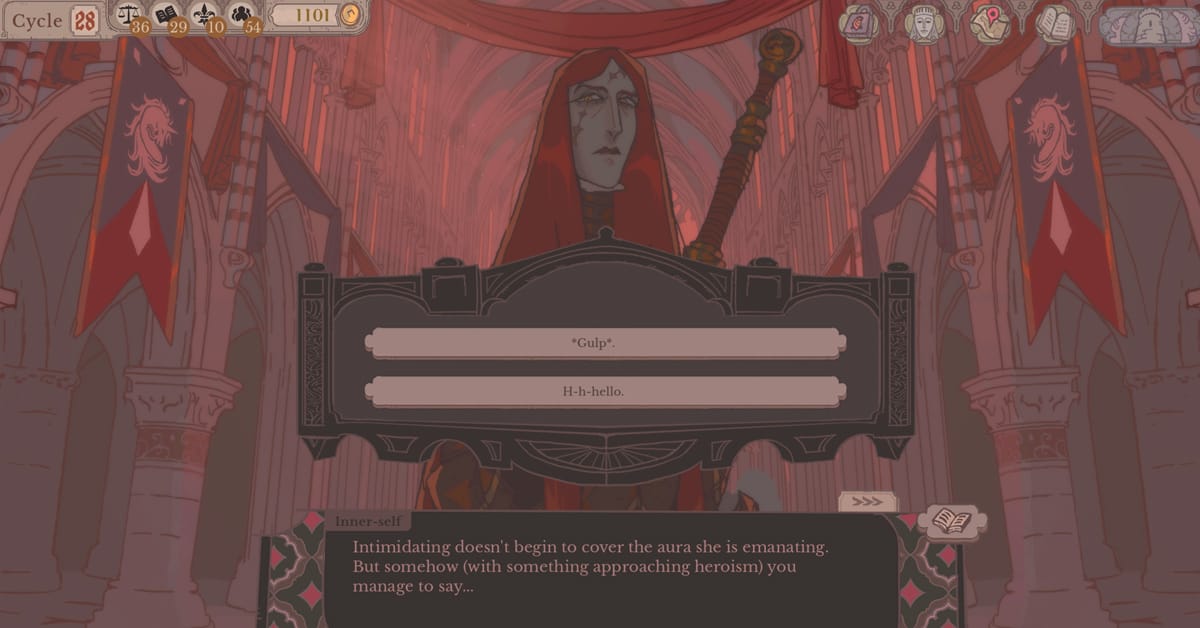
In between all the violence, diplomacy, and intrigue, strangers become friends… or enemies. At certain points, you can watch conversations unfold between two of your Knights, or strike up a conversation with them yourself. Your choices affect the relationship you build with them and yes… you can even romance many of your servants.
This system goes beyond simply talking to them and telling them what you think they want to hear. Sometimes, their personal stories lead to special quests that require you to accommodate their wishes. This might mean losing access to a Knight for several Cycles while they pursue a personal goal.
It can even lead to complete transformations that not only give the Knight in question a significant skill boost, but can also dramatically affect their personality.
Every Knight is a joy to get to know thanks to the consistently entertaining writing. There isn’t a generic character among them, with everyone in Sovereign Tower having their own quirks. One is rather fond of themselves (and money), another joins you purely out of boredom, while rumors suggest that yet another might have a demon living inside her.
Conversations are often bizarre, funny, or just genuinely interesting. Even the responses you can choose from regularly put a smile on my face.
Each Act limits the number of Knights you can have in your service. If you manage to find every Knight in the game, which is by no means guaranteed in a single playthrough, you’ll eventually have to decide who deserves a seat at your table.
When the credits rolled and I got one of those classic summaries showing what became of my kingdom and Knights (I’m a sucker for those), it quickly became clear that there were still plenty of secrets I hadn’t discovered. In fact, I got the distinct impression that one of the Knights under my command had been hiding a particularly dark secret that I never fully uncovered.
I was also caught off guard by an ending that didn’t entirely seem to match the Sovereign I thought I had shaped. In my eyes, I had been a kind-hearted ruler, loved by the People and generally merciful. Yet the ending suddenly presented me with a detail that seemed to suggest otherwise. I’m very curious to know what caused it, and I wish the ending had communicated this more clearly instead of leaving me guessing. Perhaps a second playthrough will reveal the real answer.
Either way, Sovereign Tower has tremendous replay value, with different choices capable of making a genuine difference. You can even see this within a single playthrough when you decide to turn back time.
The Demon Power to Turn Back Time Has Plenty of Potential, but It Comes With Some Drawbacks
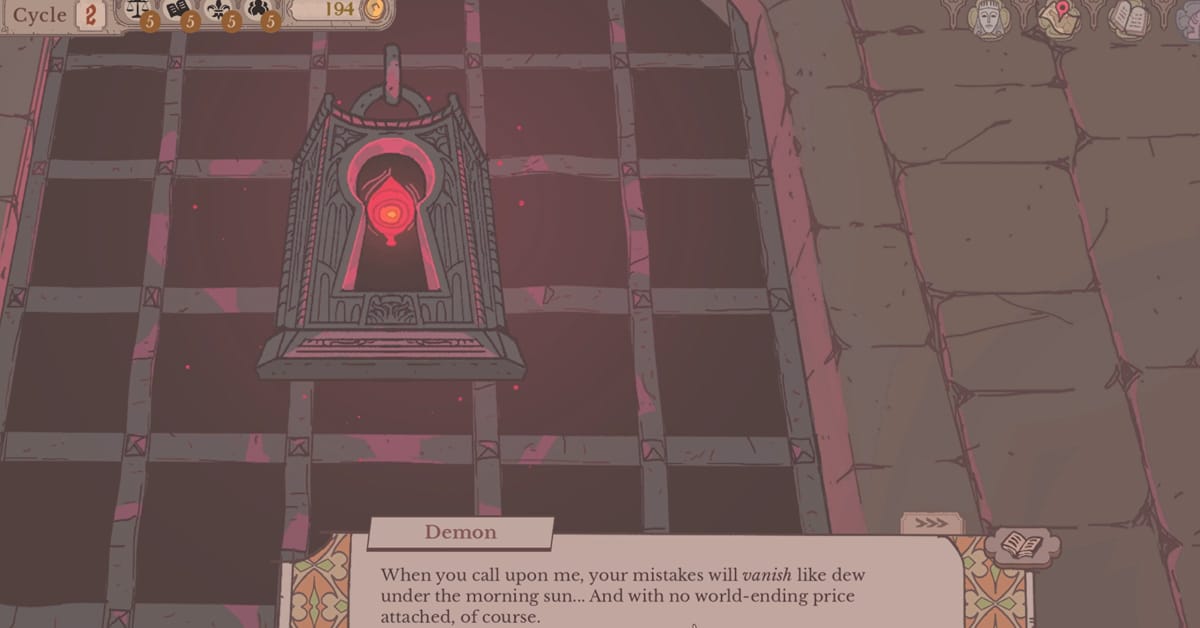
Within each Act (which always ends with a main quest), you can turn back time at any point and approach things differently. You can’t go all the way back from Act 3 to Act 1, for example, as the power is limited to your current Act.
It’s an incredibly useful ability, and at one point it saved me from certain doom. I had failed to build up enough affinity with the Merchants before the deadline and hadn’t gathered enough money, causing me to automatically fail the quest. I went back several Cycles and started making different choices.
Suddenly, I had to make tougher decisions and turn down requests to keep more money in my treasury. I had to sacrifice some of my popularity with the People to appease the Merchants instead, and started prioritizing quests and contracts that would reward me with Merchant bonuses and, more importantly, additional funds.
This was all made considerably easier by the fact that my Sovereign retained all the knowledge he had gained during the Cycles I erased. He could recognize murder plots before they had even begun, and new options suddenly became available based on information I technically shouldn’t have known yet. As a result, I was properly prepared for the deadline the second time around and could deal with my enemy without any trouble.
It’s entirely up to you when you decide to use this power. It becomes a necessity when you fail a main quest, but you can also choose to go back just a single Cycle to send a different Knight on a quest you previously failed.
Every now and then, I found myself doing this repeatedly, which exposes one of the drawbacks of the Demon Power. Turning back time can open up new options, but for the most part, you’ll also have to sit through conversations you’ve already seen, often playing out in exactly the same way. You can fast-forward through the dialogue, but it can still feel like a bit of a waste of time, especially when essentially nothing has changed.
A Few Rough Edges Still Need to Be Smoothed Out
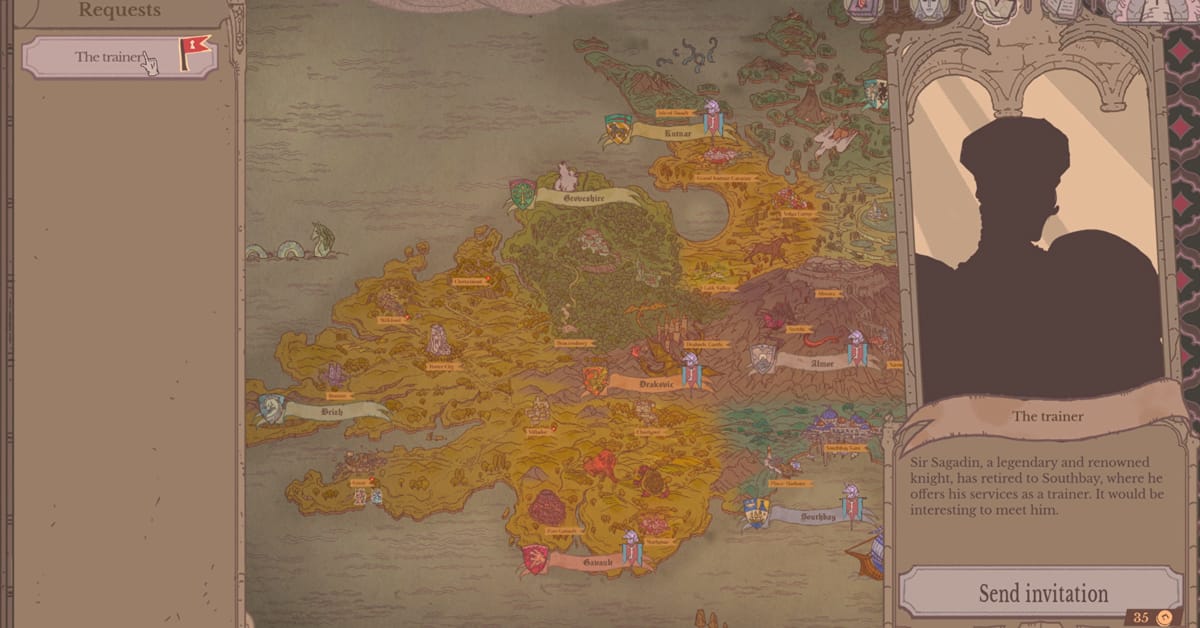
Another issue that occasionally caused a small hiccup in an otherwise remarkably well-oiled machine was the Map functionality. The Map allows you to invite certain characters to the Tower, such as Knights you previously dismissed or other people of interest. However, the option to actually invite them often failed to load correctly. I sometimes had to leave the Map and reopen it several times before the option finally appeared.
It also wasn’t always easy to keep track of how long my Knights would remain occupied with a quest. Every quest tells you how many Cycles it takes to complete, but various pieces of equipment and mounts can speed up the process. Send a Knight out on horseback, for example, and a quest that would normally take four Cycles might only take three.
The problem is that when you go through your quests again during the next Cycle, you can’t see exactly how many Cycles your other Knights will remain unavailable. This becomes increasingly difficult to keep track of once you’re juggling ten Knights and several quests at the same time. A simple overview showing how long everyone will remain occupied would therefore have been very useful.
The Calm and Clear Interface Ensures Sovereign Tower Never Becomes Overwhelming
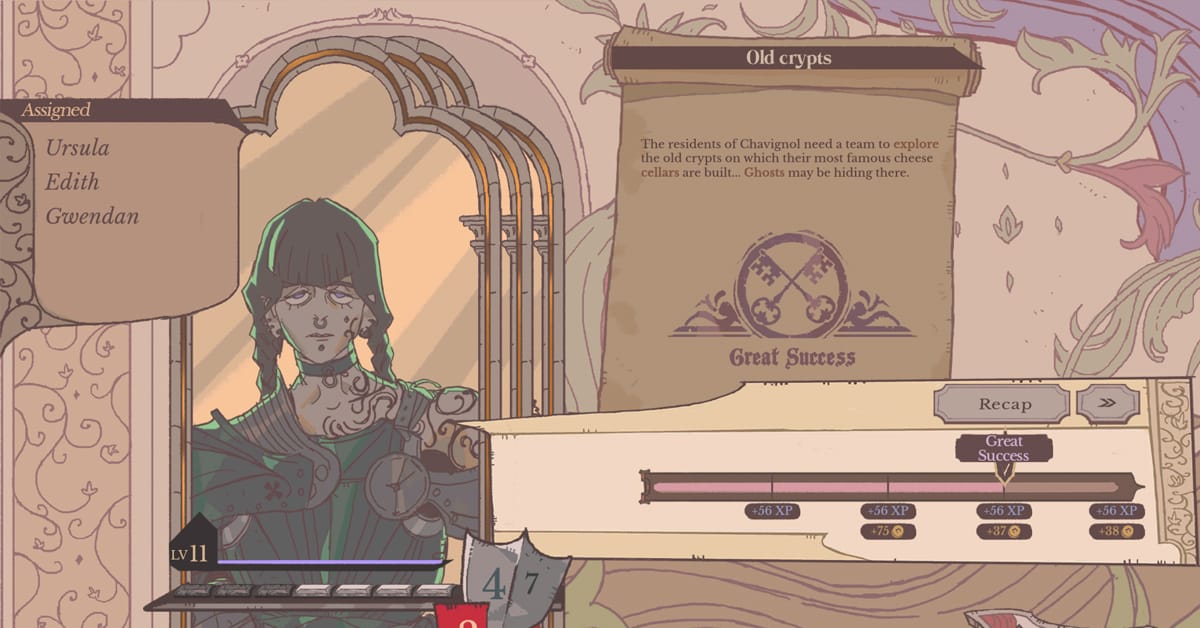
All of the above might sound a little overwhelming, and I haven’t even covered certain mechanics, such as the ability to have your Knights investigated to learn more about them. Or the fact that you regularly need to repair their armor to keep them alive from quest to quest, which can get rather expensive.
But before I head any further down the rabbit hole, I’ll spare you the many other things you need to keep an eye on. Hopefully, by now you have a pretty good idea of what Sovereign Tower is all about. And if all of this sounds horribly complicated, I can put those fears to rest. Aside from the issues mentioned above, the game has an excellent, uncluttered interface. New information is introduced gradually and always explained briefly but clearly. Unlike… you know… this review.
Your Knights have skills and personality traits, but never so many that things become difficult to keep track of. Before long, you’ll know exactly what each Knight brings to the table, where potential problems might arise, and how best to handle them.
“Creating a game that constantly tracks your actions and asks you to balance so many things at once, while somehow remaining this clear and manageable, is seriously impressive.”
The effect your decisions will have on the different factions is always clearly communicated beforehand, and keeping track of everything is incredibly easy. Your standing with each faction and the amount of money in your treasury are always visible on the interface.
The game also makes your life easier wherever it can. Your Tower contains several locations, including the Forge, which you can visit whenever you want to purchase equipment for your Knights. However, shortcuts at the Round Table, where you assign your Knights to quests, allow you to buy that same equipment without having to visit the Forge first. It’s a small example, but one that shows Wild Wits has thoroughly tested its own game and understands where it can make the player’s life a little easier.
As a result, even though I definitely felt the stress of managing a kingdom at times, I never felt overwhelmed or buried under mountains of data. Creating a game that constantly tracks your actions and asks you to balance so many things at once, while somehow remaining this clear and manageable, is seriously impressive.
Some Loose Scraps
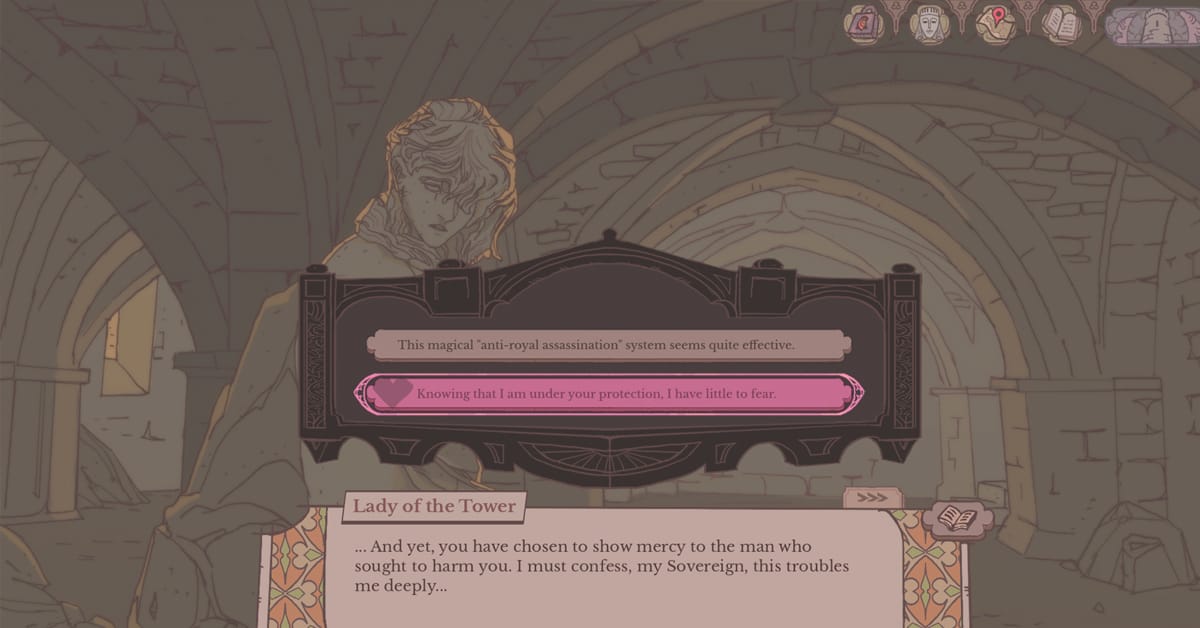
- Sovereign Tower has a gorgeous art style. The character designs are impressive and wonderfully varied.
- The soundtrack also elevates the experience. The background music fits the medieval fantasy setting perfectly.
- I’ve mostly talked about your Knights, but you also have Servants, such as a Smith and… a statue. And yes, you can even romance the statue.
- Developer Wild Wits also made Crown Gambit. It’s a deckbuilder, but similarly revolves around politics and making choices.
- Yet another banger from a French developer. What are they putting in l’eau over there?
- Wild Wits describes the game as a ‘Round Table management RPG’. That would have saved me a lot of words…
- The more I see about this game online, the more I realize just how much I apparently missed.
- Yet another game where my experience doesn’t come close to matching HowLongToBeat. It says Sovereign Tower takes seven hours to finish. My playthrough took twenty. Then again, I’m a slow reader… if I had to read my own review, I’d need three days.
Conclusion
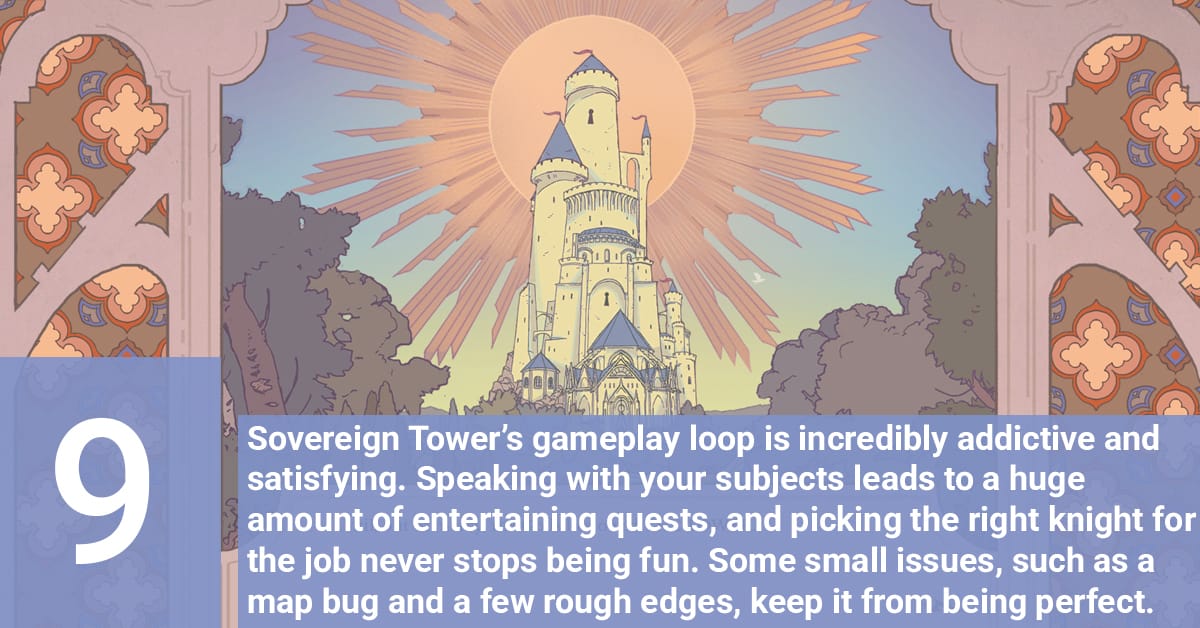
I started this review by saying that, on paper, this game seemed tailor-made for me. Now that I’ve finished Sovereign Tower, I’m happy to say the paper was right.
The writing remained entertaining throughout, always clear and never long-winded, whether I was reading quest descriptions or going through dialogue.
Choosing the right Knights for the right job remained fun throughout the entire playthrough, while the difficulty gradually increased along the way. This matched the steady growth of my Knights perfectly, keeping the experience well balanced from beginning to end.
Successfully completing quests always brought me closer to my goals or rewarded me with money, relics, or items that would make future quests easier. As a result, even though the core gameplay loop remains largely the same, Sovereign Tower managed to keep me invested for the full twenty hours.
The charming art style and colorful cast of unique personalities you encounter along the way complete the package. There are still a few rough edges that could use some polishing, but nothing that Wild Wits couldn’t smooth out with a few updates.
Sovereign Tower is a must-play for anyone who loves making difficult decisions… and is willing to face the consequences.
Reviewed on: PC
Score: 9/10