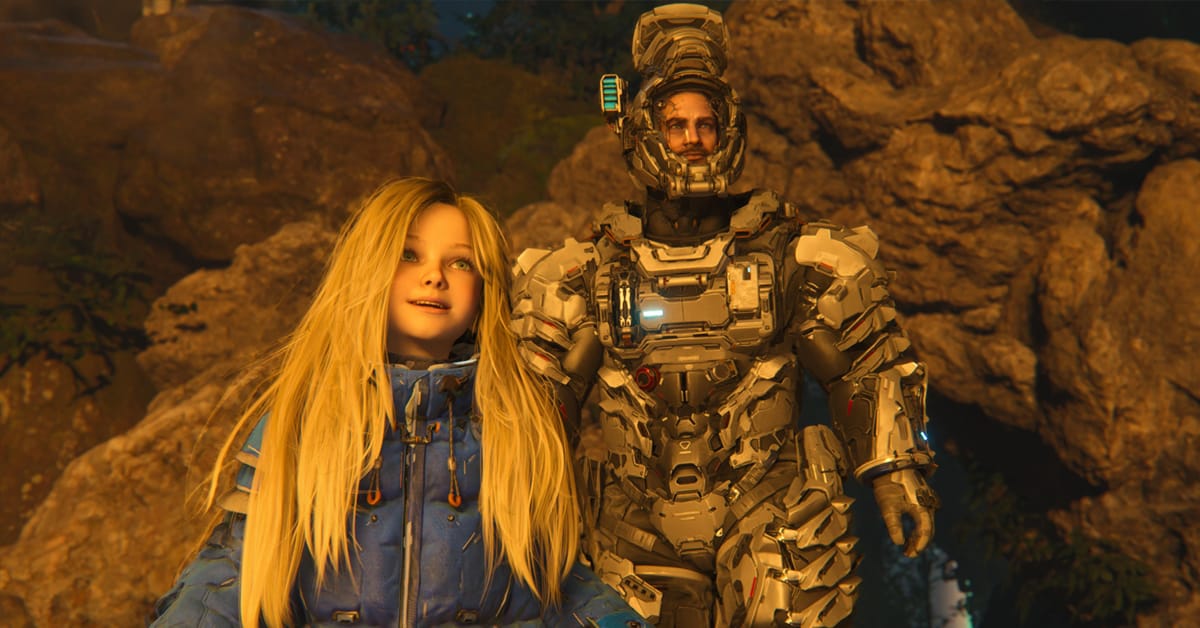
When I first saw the Pragmata trailer, I thought: this is going to be The Last of Us in space. It didn’t take long for me to realize that escorting a little girl as a middle-aged man is about the only thing the two games have in common. Don’t expect an incredibly deep or emotional story from Pragmata, but its original blend of shooting and hacking more than makes up for it.
This review contains no spoilers.
Hugh, We Have a Problem
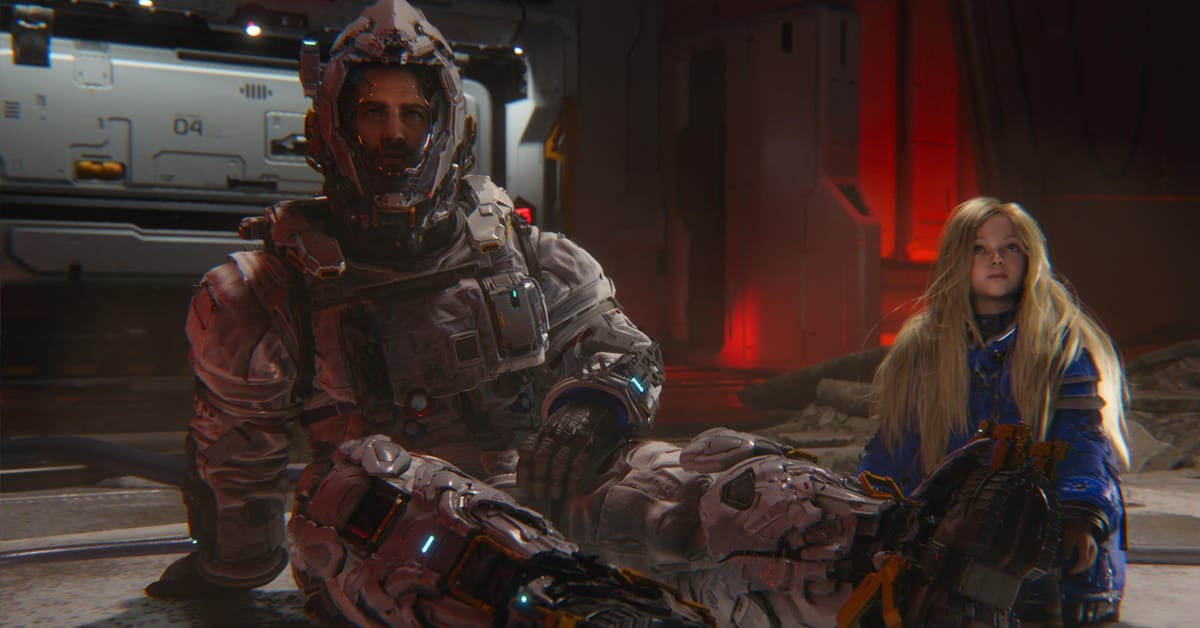
When a lunar research station suddenly goes offline, Hugh Williams and his team are sent to the moon to investigate what happened. A violent moonquake quickly turns the mission into a disaster, leaving Hugh as the sole survivor on a station where the AI system has suddenly become hostile.
Android girl Diana rescues Hugh from the chaos, patches him up, and joins him in an escape attempt that forces the duo to battle countless rogue robots along the way.
Through scattered notes and logs, you slowly uncover more about the moon, the androids, and the events that led to the station becoming such a hostile environment. The story touches on familiar sci-fi themes like AI consciousness, but none of it feels particularly groundbreaking or original. Pragmata is primarily carried by the relationship between Hugh and Diana.
And that relationship leans heavily into pure cuteness.
The two quickly form a close bond and share so many charming moments throughout the game’s roughly 20-hour runtime that, according to this article, it ended up giving many players baby fever.
I don’t have children myself, but Diana’s behavior comes surprisingly close to how I imagine having a daughter would feel. Her playfulness, curiosity, enthusiasm, and overall personality are presented incredibly convincingly by Capcom.
As Hugh, I constantly felt the need to keep her safe, happy, and protected all the way through to the end of our mission.
Or maybe it was the other way around?
Multitasking at Its Finest
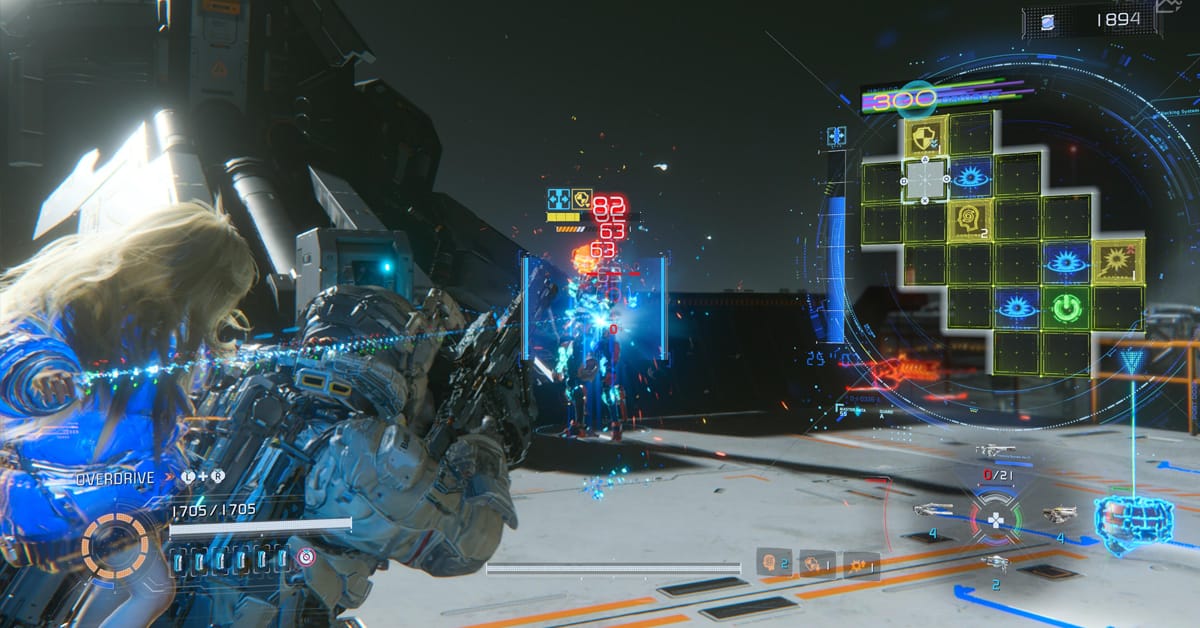
The gaming industry is overflowing with shooters, and there are plenty of games that let you hack systems as well. But how often do you do both at the same time? Pragmata proves that the combination can work surprisingly well. Every combat encounter forces you to focus on your positioning, aiming, and hacking simultaneously.
While aiming Hugh’s weapon at an enemy, a hacking sequence appears on the right side of the screen that you must complete as Diana. You aim using the left analog stick, while the face buttons are used to navigate through the hacking grid.
The goal is to reach the endpoint: a green highlighted tile. Successfully completing the sequence leaves enemies vulnerable to damage from Hugh’s weapons. Diana can also equip various hack mods that grant additional effects when you pass through them during a hack. A “Confuse” mod, for example, temporarily turns enemies against nearby robots, while a “Freeze” mod immobilizes targets for a short time.
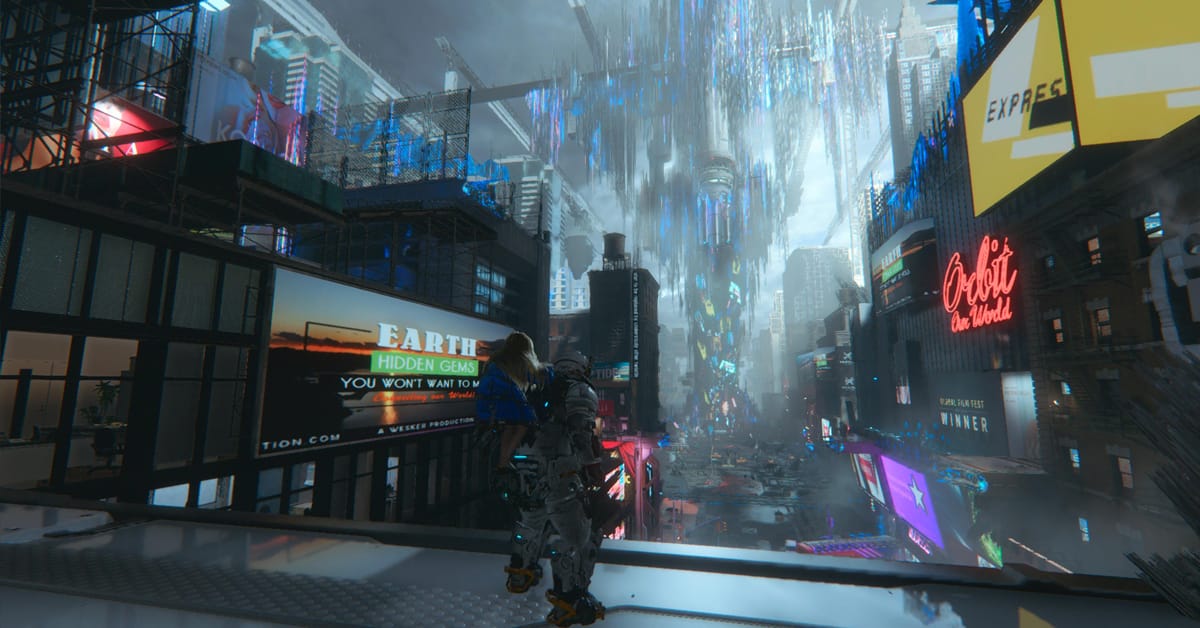
Taking damage resets the sequence entirely, forcing you to start over. That means you constantly need to stay alert while hacking and dodge incoming attacks from hostile robots. Hugh’s thrusters make this possible, allowing you to dash in multiple directions during combat.
The first enemies go down quickly, but as the game progresses you’ll encounter increasingly intimidating robots that are both harder to hack and far more dangerous in combat.
Pragmata constantly throws new enemy variants at you and loves overwhelming you with multiple threats at once. It’s common to find yourself juggling damage output while simultaneously dodging laser fire from flying robots and rushing attacks from larger enemies.
Combat truly feels like teamwork between Hugh and Diana. The core mechanic of hacking enemies before opening fire stays satisfying for a long time, although it does begin to lose some of its novelty during the final hours. The increasingly bullet sponge-like enemies certainly don’t help in that regard.
A Hug(h)e Arsenal of Weapons
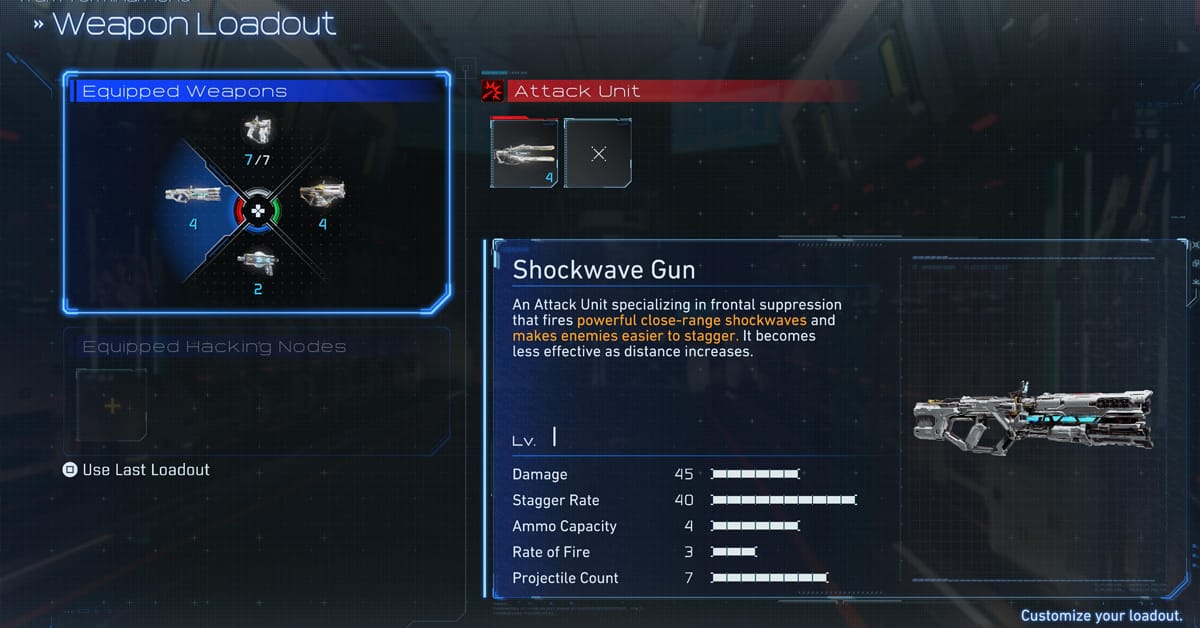
Hugh has access to a wide arsenal of weapons to eventually deal with all those bullet sponges. You start with the standard Grip Gun, which has unlimited ammo but can overheat if fired too aggressively, rewarding more controlled shots instead.
Before long, you’ll unlock weapons like the Shockwave Gun, the Charge Piercer, and the Riot Blaster. The Shockwave Gun functions as a devastating shotgun-style weapon, while the Charge Piercer requires time to charge up but can unleash massive damage and pierce through multiple enemies at once when fully powered.
For crowd control, there’s the Riot Blaster: an AoE weapon capable of knocking several robots to the ground at the same time.
The game also features defensive tools like the Decoy Generator, which projects a hologram of Hugh to distract enemies, and the Impact Barrier, which functions as a temporary shield.
Thanks to the variety of weapons and gadgets, different players will naturally gravitate toward different playstyles. Personally, I relied heavily on the Shockwave Gun for devastating close-range damage and frequently used the Decoy Generator whenever I needed some breathing room during chaotic encounters.
Pragmata Gives You Enough Tools and Upgrades to Shape Your Own Playstyle
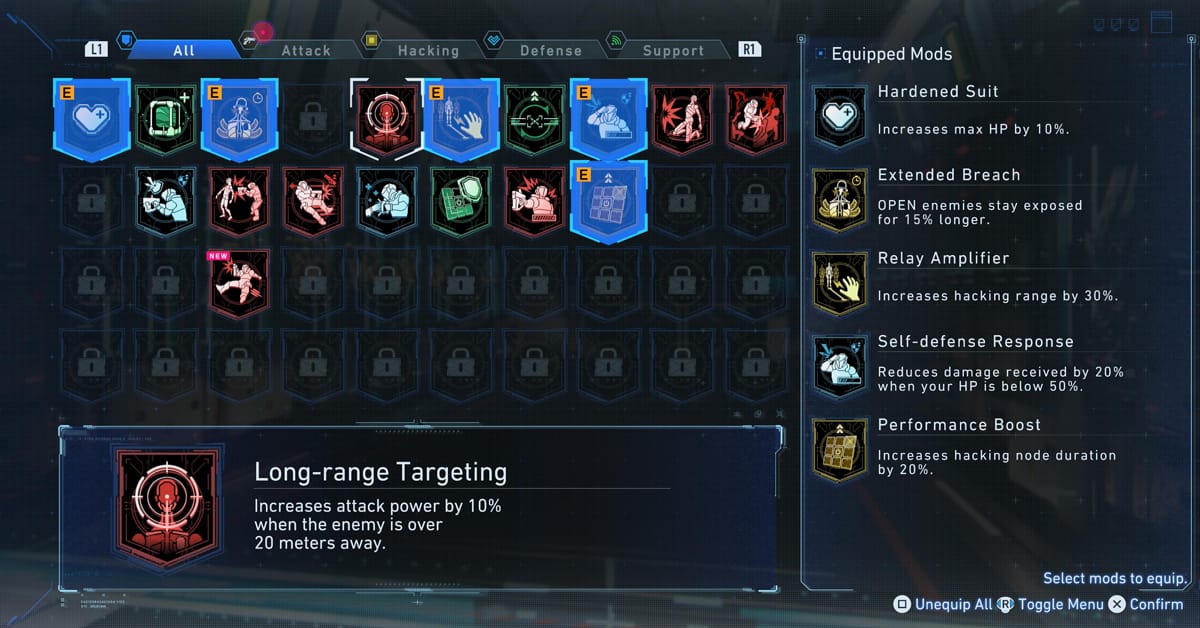
There are plenty of effective alternatives, though. You can also build around overheating enemies as quickly as possible, stunning them before finishing them off with stylish executions.
As you progress, you continuously unlock new weapons and can upgrade them in your Shelter to improve things like damage output or ammo capacity. Between Diana’s hacking mods, Hugh’s own upgrade mods, and your growing arsenal, Pragmata gives you a surprising amount of freedom to create a setup that fits your preferred strategy.
On the standard difficulty setting, however, all of that customization never felt entirely necessary. I rarely died and almost never had to carefully optimize my loadout before heading into combat. Keeping your distance and avoiding enemy attacks is fairly manageable, especially thanks to Hugh’s highly mobile thrusters, which can also be upgraded further.
As a result, I not only died very infrequently, but also barely needed to use repair cartridges to restore my health during combat.
And yes, even the amount of repair cartridges you can carry is upgradeable.
Skill Points, Lim, Cabin Coins, and REM Data; Pragmata Always Gives You Something to Find
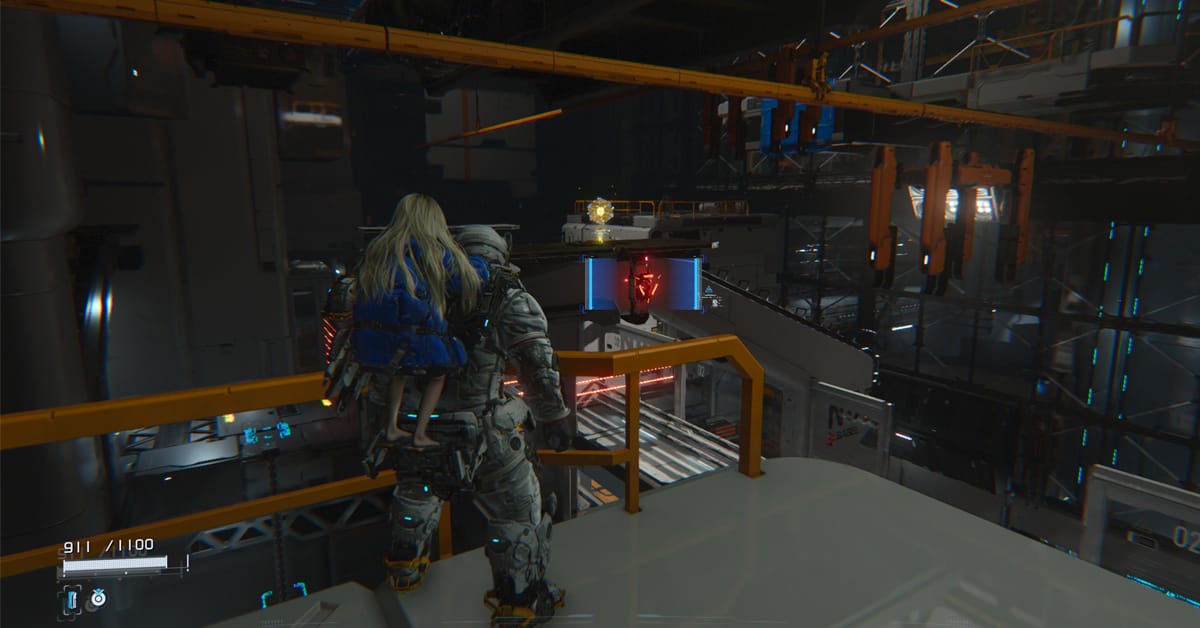
Whether or not the difficulty feels satisfying may also depend on how much effort you put into exploring your surroundings. Pragmata hides a huge amount of skill points throughout its levels, allowing you to upgrade Hugh’s weapons, increase his HP, and boost Diana’s hacking damage.
These skill points appear as glowing yellow cubes hidden across the game’s environments. Some are practically impossible to miss, while others require taking detours or carefully searching your surroundings. The same goes for Lim, the game’s currency used to purchase weapons, mods, and other upgrades, Cabin Coins that unlock lore entries, outfits, and mods, and REM Data that can be gifted to Diana.
At any moment, Diana can scan the environment with the press of a button, causing icons for nearby collectibles to appear on your screen. It’s entirely up to you how much time you want to spend chasing them down. Finding some of them requires figuring out the correct route yourself, as several collectibles are hidden in places that are not immediately obvious to reach.
“Discovering the path toward hidden upgrades always felt rewarding, useful, and worth the effort.”
These moments almost function like small environmental puzzles. Discovering the path toward hidden upgrades always felt rewarding, useful, and worth the effort. Whenever you leave your Shelter, you can choose which hub area to revisit, with each hub displaying a completion percentage and showing exactly which collectibles you still missed.
For roughly the first 70% of the game (since we’re talking percentages anyway) I obsessively hunted down nearly everything. That included Cabin Coins earned through optional training simulations. These challenges are not only a great source of resources, but are also actually really fun to play. Some involve racing through obstacle courses as quickly as possible, while others challenge you to eliminate groups of enemies efficiently.
Eventually, though, I reached a point where I had more mods than I realistically needed and shifted my focus toward simply finishing the game.
Well… with one exception.
I never stopped collecting REM Data.
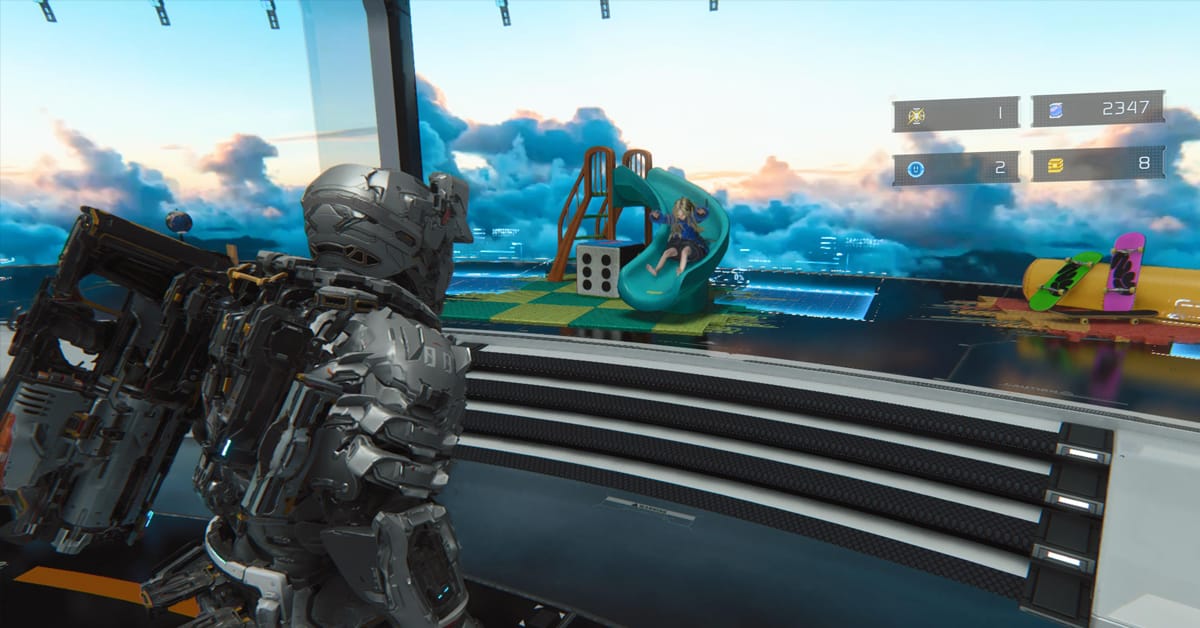
These artifacts can be gifted to Diana as toys, projecting holographic Earth objects like balloons, water guns, or playground slides. Watching her interact with them always felt surprisingly rewarding, especially because you can then talk to her about them afterward.
And to make things even sweeter, she occasionally gives you one of her drawings in return.
Honestly, what more could you want?
Some Loose Scraps

- Diana and I turned a lot of enemies into some loose scraps. Get it?
- I wasn’t particularly impressed by David Menkin’s performance as protagonist Hugh. Whether it was the cheesy dialogue or the delivery itself, something about it felt a little cheap at times.
- Menkin previously voiced characters in games such as SOMA, As Dusk Falls, and Vampire: The Masquerade – Bloodlines 2.
- Diana is voiced by Grace Saif, who previously played Ani in 13 Reasons Why, voiced Manana in Xenoblade Chronicles 3, and played Jar Bairn in Elden Ring.
- Diana originally had a much more robotic-sounding voice, which can still be heard in the original announcement trailer back when the game was targeting a 2022 release window.
- The checkpoints that return you to the Shelter display an overlay showing all currently available resources. It’s a simple feature, but it immediately lets you see whether returning is worth it or not. That may sound obvious, yet plenty of games still overlook these kinds of quality-of-life details.
Conclusion
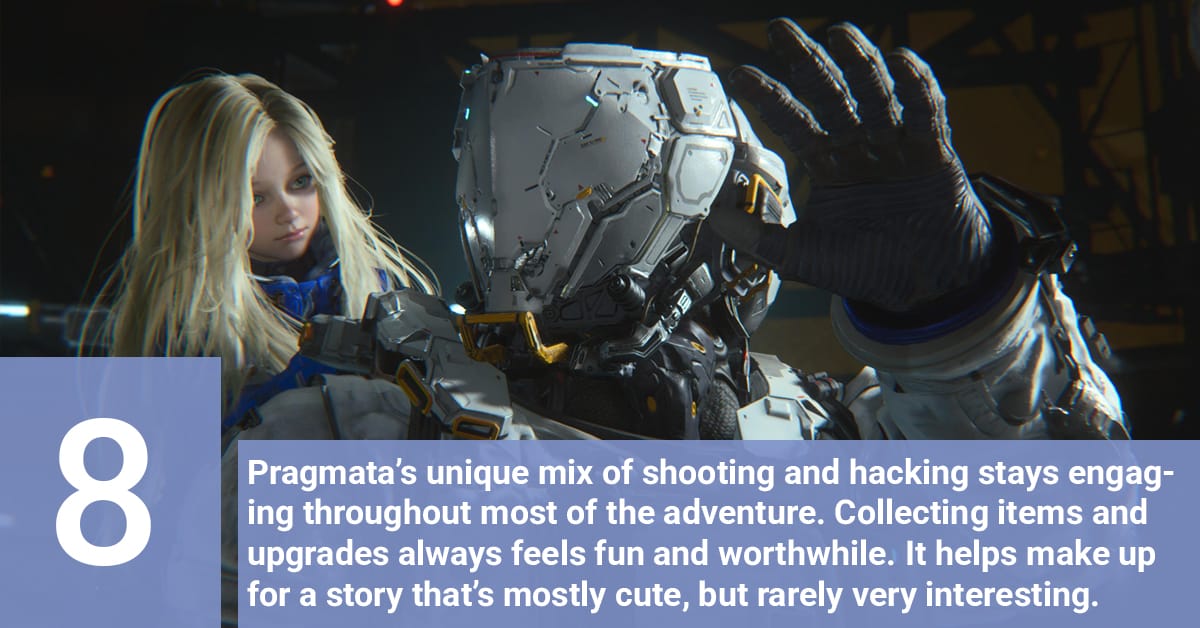
In terms of story and character interactions, Pragmata is primarily cute, cheesy, and surprisingly wholesome. The dynamic between protagonist Hugh and the android girl Diana feels warm from the very beginning and rarely encounters conflict, which does make the narrative feel somewhat one-note at times.
Thankfully, the game’s unique gameplay loop more than compensates for that. The constant interplay between gunplay and hacking feels fantastic and kept me looking forward to most combat encounters throughout the adventure.
The level design is equally enjoyable, packed with hidden items and optional detours that consistently reward exploration. There is almost always something to discover, collect, or shoot apart, giving the game a strong sense of momentum from start to finish.