To me, 2025 will go down as the best gaming year ever. Almost every month delivered another big release to look forward to, and they rarely disappointed. Even though I didn’t hand out a single 10 this year, an honor that went to Astro Bot last year, several games came very close to that perfect score.
But in the end, only one can be the best. And the truth is, spoiler alert, that the same game might end up claiming that honor more than once in this overview.
Just like last year, I will keep adding new categories to this page over time, but I am starting with the most important one: what were my absolute favorites of the year?
Here are the links for quick access to each category:
–The Best 10 Games I Played this Year
–The 5 Best Combat Systems I Played in 2025
–The Best 10 Indie Games I Played this Year
–My 5 Favorite Protagonists of 2025
Side note: I am just one simple dude with a full-time job. Sadly, that means I had to let more games pass me by than I would have liked. This list is based on the games I either finished or played enough to form a clear opinion on. All categories that follow will be based on one of the following games:
- Kingdom Come: Deliverance 2
- Eternal Strands
- Doorkickers 2
- Monster Hunter: Wilds
- Lost Records: Bloom & Rage
- Assassins Creed: Shadows
- Avowed
- South of Midnight
- Blue Prince
- Expedition 33
- The Precinct
- Oblivion: Remastered
- Doom: The Dark Ages
- The Alters
- Death Stranding 2
- Rematch
- Quantum Witch
- The Necromancer’s Tale
- Donkey Kong: Bananza
- Mafia: The Old Country
- Sword of the Sea
- Ghots of Yotei
- Dispatch
- Arc Raiders
- EA FC 26
- News Tower
- Hades 2
The Best 10 Games I Played this Year
10. Arc Raiders

I am anything but an online gamer. The only game I consistently play online is FIFA/EA FC, and that is more due to a compulsive, unhealthy, unstoppable addiction than the actual joy it brings me (this is a cry for help, who is arranging an intervention?) But something about the concept of Embark Studios’ Arc Raiders grabbed me immediately.
When I read an article about the unpredictability of the players in your lobby, whether you can trust them or whether they will stab you in the back, I thought: I need to try this. Sure, the game looks gorgeous and the gameplay is solid enough, but it was the psychological angle that really drew me in.
My first experiences were all over the place. One player finished me off while I was already downed, and the next brought me back to life. That moment, which you can read more about here, instantly left me wanting more.
Every new run in Arc Raiders feels like its own unwritten story that can go anywhere. Finding and securing rare materials and blueprints is a joy every time. The time you spend above ground searching for your next valuable piece of loot more than makes up for the less entertaining item management below the surface.
9. The Alters

Another genre that normally does not suit me all that well: the survival genre. I have tried a handful of survival games, such as Frostpunk, Subnautica and This War of Mine, and even though I fully understand their quality and appeal, they are simply too stressful for me.
The Alters balances that stress factor with an interesting story, something that is far from guaranteed in games that focus on survival. That narrative hook was enough to keep me playing, even though the survival mechanics pushed my multitasking abilities to their absolute limits.
The game, developed by 11 Bit Studios, is about Ally Corp employee Jan Dolski. The unfortunate man ends up stranded on an unknown planet and has to find a way to stay alive. He cannot do this alone, so he is forced to clone himself and form a team made up of multiple Jan Dolskis, each with their own skills, backgrounds and personalities.
I was constantly stressed during the sometimes overwhelming race against the clock, but I was also on the edge of my seat. Every aspect of the gameplay is engaging, from exploring the planet to getting to know your clones, and from base building to keeping your copies happy and motivated.
Read my full review of The Alters here.
8. Avowed

One of my most anticipated games of the year was shut down pretty quickly. Avowed did not receive the warmest reception, and many players felt the game was too small in scale and not ambitious enough.
Yet that smaller scale was one of the reasons I actually enjoyed Obsidian Entertainment’s action RPG so much. In my Avowed review I praised how manageable the RPG always felt. Some RPGs throw quest after quest at you. That can be great, but sometimes it is just as nice when a game is more compact. It depends entirely on what you are in the mood for at that moment, and for me Avowed arrived like a breath of fresh air.
I loved exploring the more contained levels, and the light platforming needed to reach certain loot boxes always hit the sweet spot. Not too drawn out, not too complicated, just right.
Switching between wildly different weapon setups felt great, and once I found my favorite combo I started appreciating the combat more and more.
Although Avowed did not come close to my top five, I definitely would not have wanted to miss out on it.
7. Blue Prince

Ah… Blue Prince. A game I never got to write a full review for, since I once promised myself I would only do that after seeing the credits roll. Instead, Dogubomb’s puzzle adventure roguelike is destined to live on in my “The Game That Got Away” section.
For weeks I sat glued to my laptop, fully addicted and determined to uncover the secrets of the mysterious manor. And even though I got far, and even managed to step inside the infamous, heavily protected Room 46, in the end it was the manor that had the last laugh.
The concept is simple. The layout of the manor changes every run. Every time you open a door, you choose from three possible rooms. Each room may contain useful items or puzzles that help you earn those items. Some rooms are almost useless, but as long as you do not hit a dead end you can continue your walk through the house.
Like a proper detective, I sat there with pen and paper at the ready. Some puzzles are genuine brainteasers, and when the solution finally clicks it feels amazing. I have a huge amount of admiration for how Dogubomb put this game together, and it is one that will stay with me for a very long time.
6. Hades II

Hades II is a tricky one to rank for me. I only started Supergiant Games’ roguelike action game a few weeks ago, and I have not yet made it to the final boss. But after my very first run it was already clear that this game improves on almost everything its already highly entertaining predecessor did, and that I was in for something special.
The art style, voice acting, soundtrack and combat are all top notch once again. Hades II adds new power moves to your standard attacks and specials, and gives you a binding circle as your cast. You can also gain powerful Hexes, and of course there are several weapons to unlock. Combined with even more variety in boons, this gives you an enormous range of possible builds to free your family members from Chronos’ grasp.
The tone is darker and more serious than that of the first Hades. This is the only downside I can mention so far. The humor and often funny interactions of the previous protagonist, Zagreus, were a big part of what kept me coming back, and their absence is definitely felt in Hades II. Luckily, the moves of his sister, the new protagonist Melinoë, make up for a lot.
Fun fact of the day: of the five games that currently make up my favorites of 2025, this is the fourth that comes from a genre that normally is not really my thing. Roguelikes, survival games and online extraction shooters are usually not among my favorites. That either means those genres were exceptionally strong this year, or perhaps my own horizons are starting to broaden. Time will tell…
5. Ghost of Yotei

Even though Ghost of Yotei absolutely does fit within one of my favorite genres, its top five position was far from guaranteed. As I have mentioned before, its predecessor Ghost of Tsushima sits lower on my personal list than it does for most players. Based on the trailers I was worried that Ghost of Yotei would be more of the same, but in the end I enjoyed the sequel far more than I expected.
I found protagonist Atsu and her story much more interesting. The world itself feels more alive than Tsushima, partly thanks to expanded structures in certain activities, such as following fox dens. The combat is more challenging, with enemies that behave more intelligently and aggressively than before.
The different weapon sets and their accompanying animations are also a major improvement. I never grew tired of the combat or the beautiful world, and I had a great time with the game for about sixty five hours.
You can read more about my experience with Ghost of Yotei in my review here, or check out my video review below.
4. Dispatch

My expectations for Dispatch were sky high, and I am beyond happy that AdHoc Studio delivered on every single one of them.
The writing in this superhero workplace comedy is fantastic. The pacing is perfect and never drags. Every character is interesting, brilliantly voiced and genuinely unique. But above everything else, it is the humor that left the biggest impression on me. Across all eight episodes I sat in front of the TV with a grin from start to finish.
The game is built mainly around pre rendered cutscenes that you can occasionally influence by making certain choices. Between them, you play the dispatch sections, where you send different superheroes out to respond to emergency calls. You need to decide which character and skillset best fits each call, and guide as many emergencies as possible to a successful outcome.
I am nowhere near ready to say goodbye to this cast. Luckily, a second season feels like only a matter of time.
You can find my written Dispatch review here, and my video review here:
3. Death Stranding 2: On the Beach

There were moments during the first Death Stranding that felt genuinely magical to me, mostly the times when that gorgeous soundtrack faded in as I approached my destination. But there were also moments where I stared at the screen completely confused. Developer Hideo Kojima is, to put it mildly, a creative mind, and I could not always follow where that mind was going.
Fortunately, I replayed the original in the lead-up to Death Stranding 2, and suddenly a lot more fell into place. I also learned to appreciate the online component more, now that I had stepped out of my hermit comfort zone and added some online friends. Seeing footsteps or signals from familiar players really added something to the experience.
The graphics are so impressive that during the intro I genuinely thought I was watching real life footage. Then the camera rotated around protagonist Sam Porter and continued seamlessly into gameplay. No live action at all, just razor sharp, ultra realistic visuals.
Add another beautiful soundtrack to the mix, along with gameplay that improves on almost every aspect of the first game, and you have a title that could easily have taken the number one spot in almost any other year. In this absurdly strong gaming year it will have to settle for bronze.
You can find my full review here.
2. Kingdom Come: Deliverance 2

Kingdom Come: Deliverance II has, in my view, raised the bar for RPGs. In my review I mentioned how deeply impressed I was by the incredibly immersive experience Warhorse Studios delivers.
The game is put together in such a clever way and is a genuine technical showcase. I will never forget looting the armory on a dark night and then parading around days later on the other side of town in my shiny new armour. The owner recognized me there and immediately called the guards. It is just one of many moments where I thought: wow, they accounted for this too?
The side quests are the best I have experienced since The Witcher 3: Wild Hunt. They can be approached in countless ways. You can go in aggressively, but you can also talk your way out of many situations with your silver tongue. It is entirely up to you how you shape protagonist Henry and how you speak to people. This also adds a lot of replayability.
For two and a half months I was convinced that this game, released in February, would be my GOTY. Whatever hoped to dethrone it would have to come from very far indeed.
“Hold my beer,” said Sandfall Interactive.
1. Clair Obscur: Expedition 33

Clair Obscur: Expedition 33 looked fantastic and full of promise from the very first trailer, but I did not expect it to be THIS good. It still feels surreal that developer Sandfall Interactive is an indie studio, because what they have achieved with such a small team is genuinely remarkable.
The mix of turn-based combat with real-time parrying and dodging never got old. You can shape your party members completely to your liking through countless pictos and skills. But as great and engaging as the combat was, it was the story, the characters and the voice performances that impressed me the most.
Even though Clair Obscur: Expedition 33 is a fantasy game, the conversations and raw emotions came incredibly close to real life. Characters interrupt each other instead of waiting for their turn to speak, which makes everything feel far more natural and believable.
And the soundtrack belongs among my all-time favorites. “Lumiere” was at the top of my Spotify Wrapped this year, and that was only one of many standout tracks the game has to offer. I already cannot wait to see what this studio creates next.
The 5 Best Combat Systems I Played in 2025
*Reminder: you can find the full list of games this ranking is based on at the top of this article.
5. Avowed

If you had told me during the opening hours of Avowed that its combat system would end up on my favorites list by the end of the year, I would’ve laughed in your face. It took a while before the combat really clicked for me. Early on, I was mostly frustrated by how enemies teleport toward you in the final few meters. It felt a bit cheap.
What I appreciated right away, though, was the sheer variety of weapons and especially how freely you can combine them. A pistol in one hand and a shield in the other? No problem. A magic wand in one hand and a sword in the other? Let’s do it. These are combinations you don’t see very often, and they open up a lot of possibilities and potential builds.
I’d already cleared a fair number of quests before I finally found the weapon I settled on. The arquebus, a two-handed weapon, is single-handedly responsible for this number five spot. I invested heavily in increasing my stun damage, which was already high with this weapon to begin with. Stunning enemies in Avowed slows down time for a bit, while you unleash destructive and visually satisfying critical hits.
By the final quarter of the game, I was chaining critical hit after critical hit, which also meant I could take on quests that were technically above my recommended level. It delivered a real sense of progression. The ability to smoothly switch between two different loadouts at the press of a button, while also weaving in some great spells without constantly diving into menus, played a huge role in the positive experience I had with the game.
4. Ghost of Yotei

Ghost of Tsushima replaces its different stances with distinct weapon sets. In Yotei, there’s an answer to every type of enemy: katana versus katana, the kusarigama against shielded foes, dual katanas for spear wielders, and the oversized odachi for enemies just as oversized.
On top of that, you can use weapons you spot in the environment. Swords lie scattered across the battlefield, ready to be picked up and hurled straight into an enemy’s body, while spears can be pulled from racks and used as throwables. With a single button press, you can toss them at the nearest enemy or take the time to line up a specific target.
These moves, along with the animations for all weapons, look absolutely fantastic, and the finishers are downright mouth-watering. Every fight is entertaining, whether it’s because you’re cutting through hordes of enemies like a total badass, or because you’ve just managed to bring a challenging boss fight under your control.
But you know what they say: the best offense is a good defense. Or was it the other way around? Either way, it certainly applies in Ghost of Yotei. Perfectly timed dodges or parries leave enemies wide open to devastating counterattacks. And yes, you guessed it, those look, and more importantly feel, brutal as well.
Thanks to a broad selection of charms, you can fully tailor Atsu to your liking, choosing bonuses that perfectly suit your personal combat style.
3. Monster Hunter: Wilds
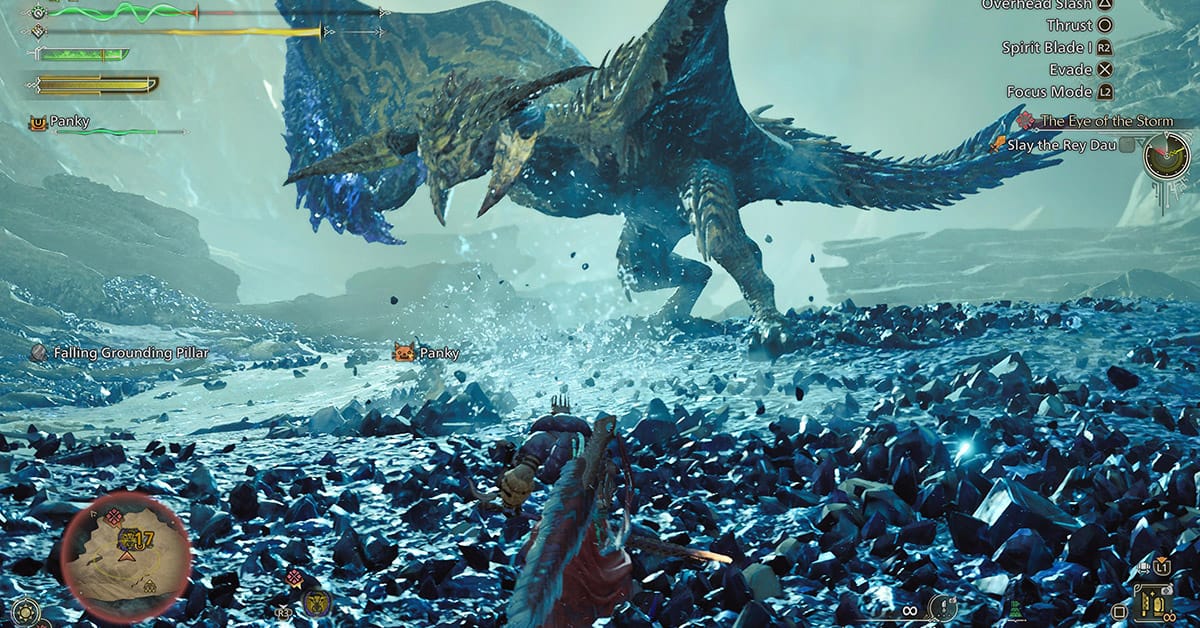
It’s been far too long since I last played Monster Hunter: Wilds. I was completely absorbed for a while, saw the credits roll, and played through most of the endgame content that was available at the time. Then other games came along, and so far I’ve let the updates pass me by.
But I’ll be returning to the Forbidden Lands soon, because I’ve been feeling the pull for a while now. Story has never really been this franchise’s strong suit. It’s the gameplay loop that has built such a fiercely dedicated fanbase, and this year I finally understood why. Combat is, unsurprisingly, a crucial part of that.
The combat is fast, spectacular, and demanding. There’s always a great sense of satisfaction in taking down one of those gigantic monsters, especially when you’re rewarded with the parts you need for your next armor or weapon set.
During fights, you constantly have to stay alert. Rather than a straight-up brawl, it feels more like a sophisticated dance with the monsters. The more often you encounter them, the better you become at recognizing their visual and audio cues, and responding to them in the right way.
You have to account for everything. Your resources, your positioning, when to go on the offensive or play defensively, and which parts of the monster to target for maximum damage or better rewards.
I’ve always gone into battle with my trusty longsword, but the fact that there are thirteen other completely unique weapons available says a lot about just how deeply you can specialize in this world.
2. Clair Obscur: Expedition 33

Clair Obscur: Expedition 33 is a near-perfect all-rounder. It excels in virtually every aspect, which is why it made complete sense to me that it walked away with Game of the Year just a few days ago.
That excellence extends to its combat. I already mentioned it in the section above: this is very much a best-of-both-worlds system. The turn-based combat gives you the breathing room to plan your next move and fully embrace the strategist within. But once it’s the enemy’s turn, time is a luxury you don’t get.
Few things feel better than perfectly timed dodges or parries. It’s a flawless risk-reward balance. You can play it safe by dodging, where the margin for error is more forgiving, or opt for the riskier parry. Successful parries regenerate your attack points and allow your party to unleash devastating counterattacks.
Builds can be fully tailored thanks to the wide range of Pictos and weapon bonuses at your disposal. Each party member brings something truly unique to the table from a gameplay perspective. Lune’s attacks, for example, generate Stains that fuel powerful abilities, while Maelle shifts between different stances after executing an attack.
You can also have party members work in service of one another. Maelle, for instance, has an attack that puts her into her optimal stance when she strikes a burning enemy. That’s why I always made sure Lune set enemies ablaze first. This is just one of many examples of how smart teamwork lets you push your damage numbers even higher.
1. Hades II

Hades II follows in the footsteps of Stellar Blade, which was my Best Combat pick of last year. So mote it be.
The combat in Hades II is an absolute joy, and it somehow seems to get better with every single run. When I first booted up the game, fresh off the original Hades, it was immediately clear that the gameplay felt faster, smoother, and simply more satisfying. I instantly clicked with Melinoë’s witch staff as a great all-round weapon, and in my very first run I made it noticeably further than I did the first time around in its predecessor.
And from there, it only got better. The more weapons and boons became available, the more everything started to fall into place. There’s an incredible amount of variety in every run. Depending on which boons the Olympian gods decide to bless me with and which weapon I’ve chosen, I’ll sometimes focus on my standard attack, and other times lean heavily into my special (alongside the cast, your three main offensive options). For now, I probably use the cast less than I should.
This roguelike moves at a blistering pace. When I first saw gameplay footage, I remember thinking: how on earth are you supposed to dodge all of that? But with every run, you start to read your enemies better and better, until you can eventually evade their attacks almost with your eyes closed.
Dashing between countless incoming attacks while dismantling your enemies feels incredible. At times, there’s so much chaos flying across the screen, but when I finally stand victorious in an empty room without having taken a single hit, I can only think: what a badass. And whether that applies to Melinoë or to me, I’ll leave up to interpretation.
Just kidding. Obviously me.
Nothing beats a run where multiple boons work together in perfect harmony. And when you also have a Hex, a fantastic new, magical addition to Hades II’s arsenal, all that’s left to do is fully enjoy yourself as you carve a path through the Underworld.
That’s it for my favorite combat systems this year! Next up: the best indie games I played in 2025. Stay tuned!
The Best 10 Indie Games I Played this Year
*Reminder: you can find the full list of games this ranking is based on at the top of this article.
10. Sword of the Sea

Sword of the Sea most likely wouldn’t have made this list if I had played more indie games. In my review, I described it as a game that mainly shines thanks to its stunning art style and strong soundtrack.
Surfing around on a sword feels great, especially in the opening hours. You guide the highly responsive Wraith through beautiful, abandoned landscapes, all while restoring the flow of water and bringing the different regions back to life.
Giant Squid’s game is almost therapeutic, offering solid, relaxed entertainment for about five hours. Still, it didn’t manage to keep me fully engaged for the entire runtime, as I felt the gameplay could have been more challenging and varied.
9. Rematch

I always need my football fix. With Football Manager skipping a year and my brave (but ultimately failed) attempt to stay away from EA FC, Rematch came along at just the right time.
When we first saw footage of the game, I was highly skeptical. But the moment I played my first match, I was immediately convinced: this was so much fun to play. It felt liberating to play a football game that didn’t feel scripted. With its high tempo and matches that sometimes stayed exciting until the very last second, I always felt the urge to jump straight into the next game.
While the gameplay truly shined, the game modes didn’t manage to hold my attention in the long run, though. You could play to unlock a few skins, but beyond that, I didn’t feel enough pull to keep coming back for months on end. The player community doesn’t help either when it comes to letting Sloclap’s game reach its full potential. If I got paid every time a teammate decided to pass the ball, I’d be sleeping under a bridge.
8. The Necromancer’s Tale

Most of my hours on Steam this year went into The Necromancer’s Tale, and every single one of them was well spent. This narrative-driven, top-down gothic RPG, developed by PsychicSoftware, puts you in the shoes of a nobleman or noblewoman from the Van Elstrik family as you search for answers surrounding the mysterious death of your father.
When a sinister spellbook falls into your possession, you’re drawn onto a dark path that forces you to turn to the forbidden art of necromancy. The game’s excellent writing, which is just as well given the sheer amount of text, fully immerses you in a story that constantly had me eager to uncover the next deciphered page of the spellbook, and to see just how far the protagonist would go to solve the mystery.
Through your skill set and the many choices you make during this grim adventure, you have a direct influence on how certain events unfold. Outside of the dialogue windows, the story would have been perfectly suited for epic combat encounters, but unfortunately, this is where the game falls short.
Curious about The Necromancer’s Tale? You can read more about my experiences here.
7. Doorkickers 2: Task Force North
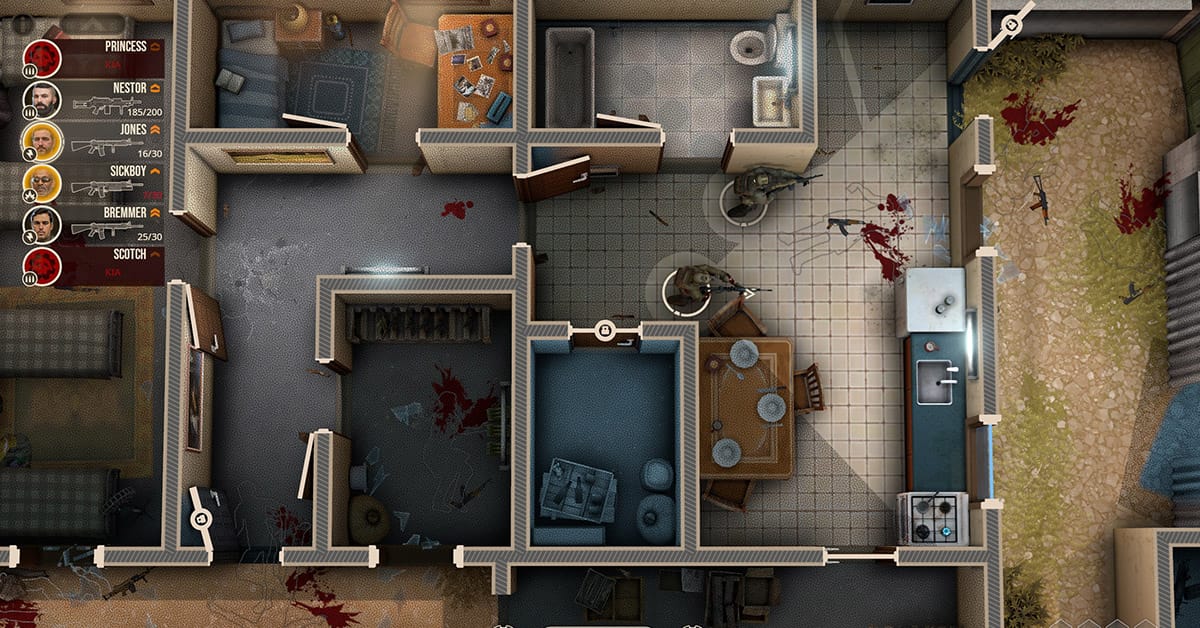
Developer KillHouse Games kept Door Kickers 2: Task Force North in Early Access for four years and three months, before officially releasing it earlier this year. I had virtually no experience with tactical top-down strategy games, but this turned out to be an introduction I immediately enjoyed.
The game puts you in command of a special ops team and throws a wide range of missions at you, tasking you with neutralizing hostile bases or rescuing hostages from the hands of terrorists.
Using a top-down perspective, you plan your team’s routes and give detailed instructions, such as where they should peek around corners. It very much embodies an “easy to learn, difficult to master” design philosophy. The number of possibilities and options is extensive, but especially early on, far from all of them are strictly necessary.
Once you’ve mapped out your plan and unpause the game, you get to watch your soldiers follow your commands to the letter. It’s incredibly satisfying to see a smooth infiltration unfold: doors being kicked in, one soldier covering while another pulls the trigger and takes out an unsuspecting terrorist. An absolute recommendation for fans of the genre.
You can find my Door Kickers 2: Task Force North review here.
6. Lost Records: Bloom & Rage
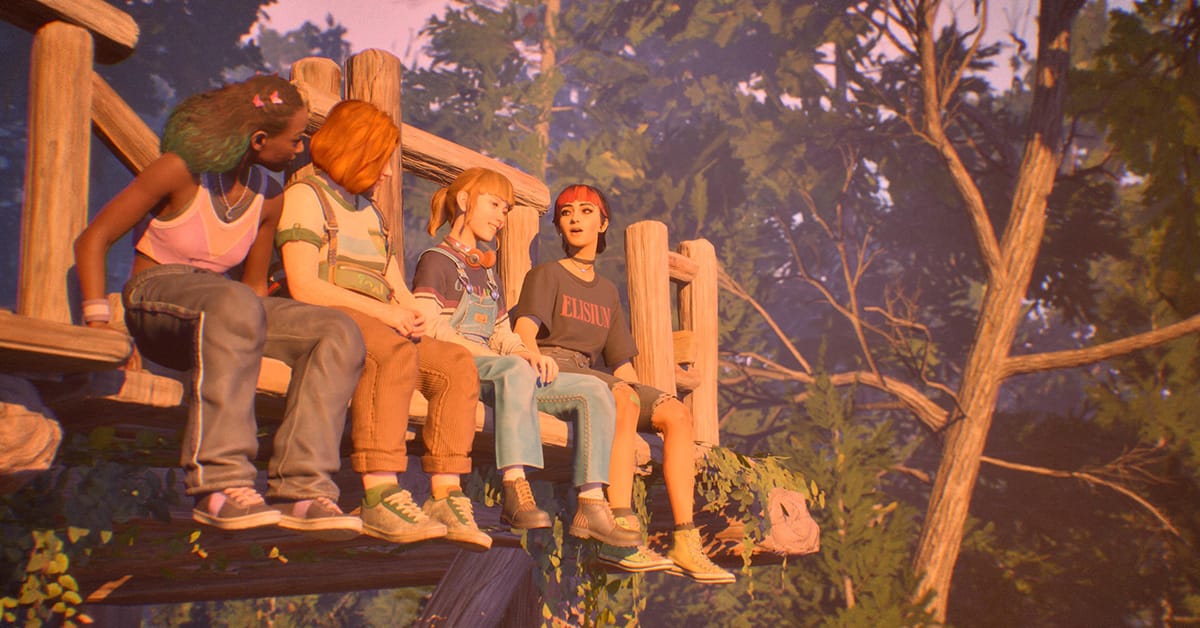
Developer DON’T NOD is one of my absolute favorites in the industry, so I was incredibly excited for their new game, Lost Records: Bloom & Rage.
The game shifts between two timelines. One takes place in 2022, where old friends reunite after 27 years without contact when they receive a mysterious package. The other timeline is set in the summer of 1995, where we witness how that friendship began, and what ultimately led them to make a pact never to see each other again all those years ago.
The story surrounding the abrupt end of the friendship and the mysterious package completely pulled me in. I couldn’t wait to see the mystery resolved. As they often do, DON’T NOD once again manages to portray a friendship that feels convincing and, at times, genuinely moving.
Still, I wasn’t entirely satisfied with the answers I eventually received to my burning questions. I hope those answers will come in the future, because one thing is certain: I’ll be buying every game this developer puts out.
For more on this game, check out my review here.
5. The Alters

You already saw The Alters appear earlier in my top 10 favorite games of the year, so a high ranking in this indie list was inevitable.
4. Blue Prince
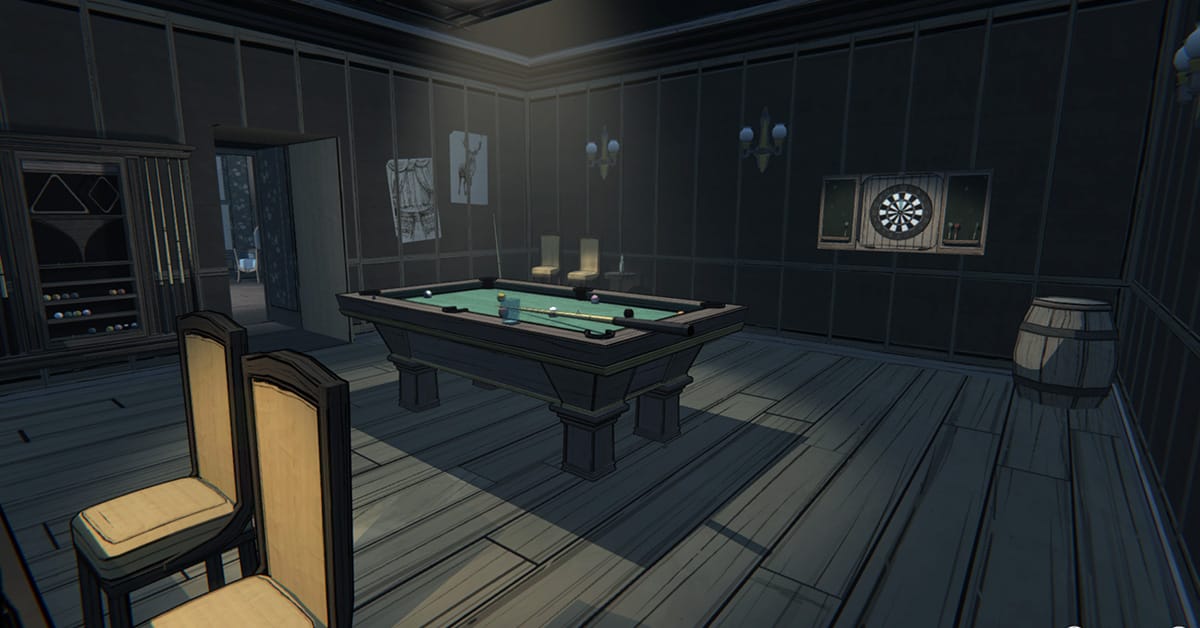
For the full write-up on Blue Prince, I’ll point you back up to where the game appeared at number 7 in my favorite games of 2025.
3. Hades II

Since writing my top 10 favorite games of the year, where Hades II landed in sixth place, I’ve sunk many more hours into it. And with every run I play, it continues to grow in my estimation. It still has to settle for third place here, though, and I don’t see that changing.
2. Dispatch
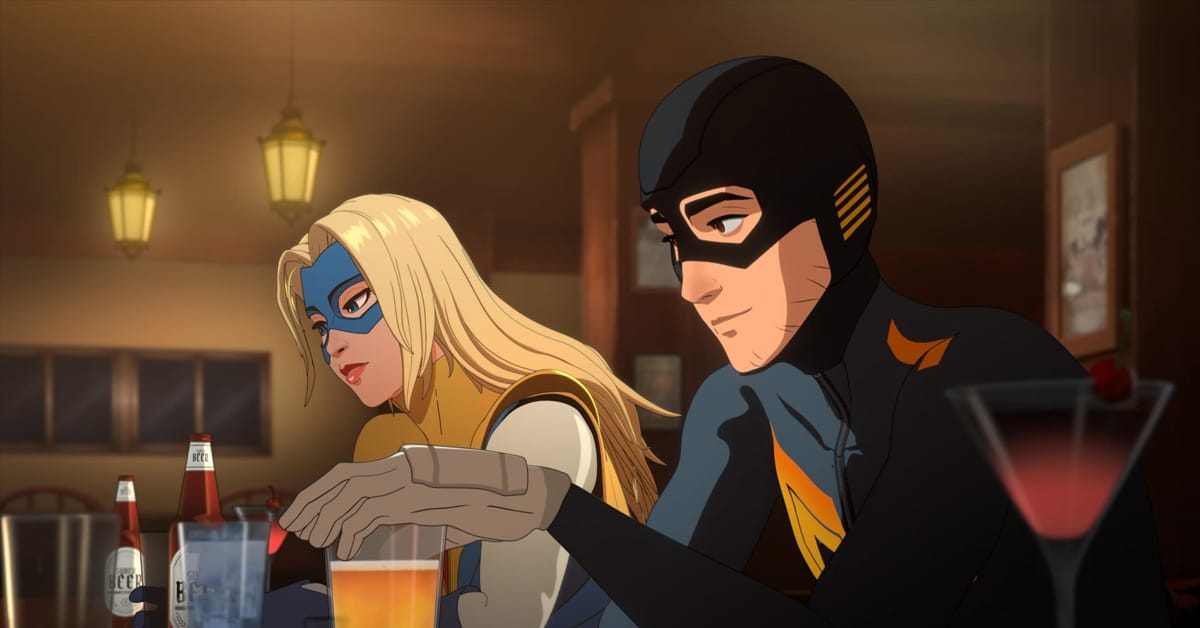
Silver for Dispatch this time, after taking fourth place in my favorite games of the year. It’s a game I would happily give gold to. Maybe I should just create a separate category for it. Unfortunately, here too, it has one truly unbeatable competitor.
1. Clair Obscur: Expedition 33

It’s almost starting to feel boring. This marks its second number one ranking, after already taking gold in my top 10 of the year. Have I mentioned how wild it is that this game was made by such a small team?
The next category will be online soon: my favorite protagonists of the year.
My 5 Favorite Protagonists of 2025
This category sounded better in my head than it does on paper. When I gave it some proper thought, I realised there actually weren’t that many truly memorable protagonists this year. That’s striking, especially since I previously called 2025 the best gaming year ever. This time around, it was mostly collective efforts that set the tone, rather than clear standout leads.
It also raises an awkward question. Who is even the protagonist of Clair Obscur: Expedition 33? If only it were Esquie, this list would have been a lot easier to put together.
Still, there was one character who clearly rose above the rest for me. Here’s my top 5.
5. Melinoë (Hades II)

When I first moved from Hades to Hades II, I really missed Zagreus. He was a fantastic protagonist, always ready with a dry remark. Because of that, Melinoë started at a 1–0 disadvantage, and during my early runs I constantly felt that absence.
Now that I’m nearing the end of the game, I’ve grown to genuinely appreciate the Princess of the Underworld. I’ve accepted that humor isn’t really her thing. That’s not what earns her a spot on this list. It’s her perseverance.
It fits the roguelike structure perfectly, where dying over and over again is simply part of the experience. Whenever you, as a player, are tempted to throw in the towel, the dedication and optimism of this new protagonist make sure you don’t. No matter what obstacle stands in Melinoë’s way, she faces it head on. And whenever others doubt her abilities, she responds with an inspiring line that, time and again, pushed me into starting another run with renewed confidence.
The Princess has been prepared her entire life for her mission to bring down Chronos. Training and combat are all she’s ever known. That’s why, at this stage, I’m especially curious about what else lies beneath the surface. What does her life look like once her goal is achieved? There’s clearly much more to this character than what we’ve seen so far, or may ever get to see.
By the way, voice actress Judy Alice Lee doesn’t just convey Melinoë’s believable determination. She also voices the mother of the next protagonist on this list. A completely accidental, but rather fitting bridge.
4. Atsu (Ghost of Yotei)
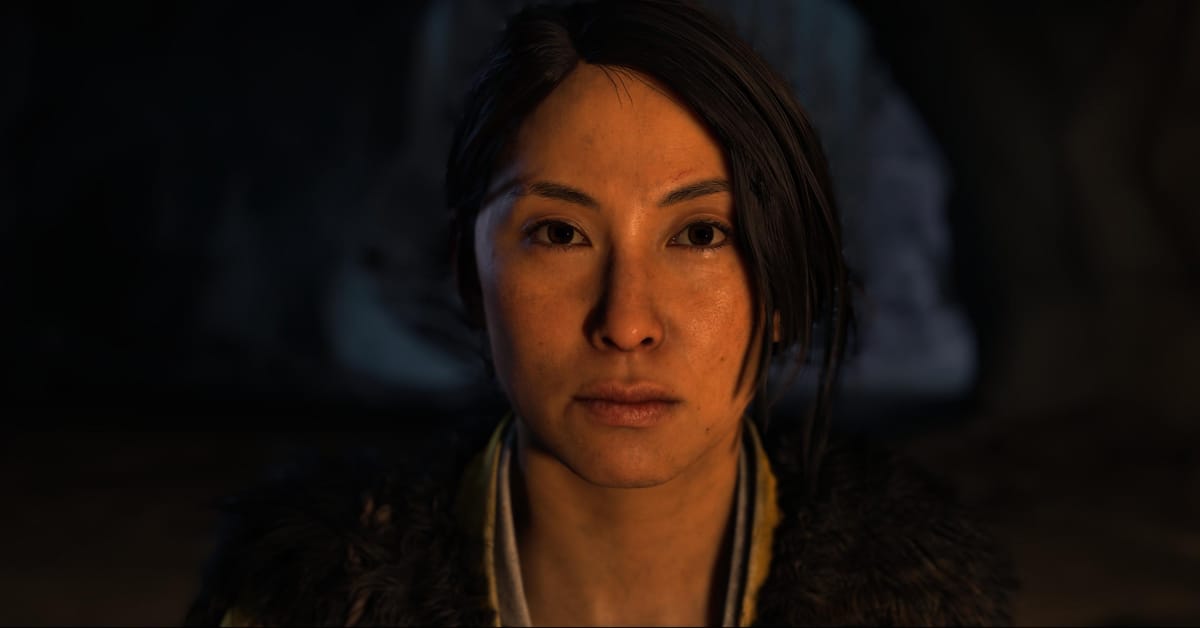
Ghost of Yotei makes a smart choice by moving forward with a protagonist who isn’t bound by a rigid samurai code. Atsu writes her own rules, and that freedom makes her a far more relatable lead.
A slaughtered family and a woman driven by revenge. It won’t win any originality awards. But it does work in Ghost of Yotei. Not just because of the storytelling, which uses well-timed flashbacks to keep its cards close to the chest, but also thanks to the convincing performance by voice actress Erika Ishii.
Mercenary Atsu has a lot in common with Melinoë. Like her, Atsu is a determined woman who refuses to be pushed off her path by anyone. And like Melinoë, she’s spent almost her entire life preparing for a single, ultimate goal. In Atsu’s case, this goal is to cross the names of those responsible for the murders off her bloody checklist.
Throughout her journey, she’s regularly underestimated by both allies and enemies. As a player, it feels incredibly satisfying to prove them wrong. The way Erika Ishii delivers Atsu’s cold-blooded, self-assured one-liners feels both believable and inspiring.
At times, though, vulnerability slips through as well. The balance between emotions is spot on. You can tell Atsu doesn’t let people get close easily, something that feels entirely understandable after everything she’s been through.
3. Verso (Clair Obscur: Expedition 33)

If only I could include the entire cast of Clair Obscur: Expedition 33. One of the reasons this game works so well is that every character is interesting and fantastically voiced. But since we assume Verso’s role during our time at camp, it feels fair to treat him as the protagonist.
That said, honesty demands I admit that Verso wasn’t my favourite character in the game. That honor goes to Maelle, largely thanks to the incredible performance by voice actress Jennifer English. I wanted to mention that here, since I don’t really have a separate category for it. Anyway, back to Verso.
Verso is introduced as an intensely mysterious character, and he remains one almost all the way to the end. I kept wondering what his true motivations were, and only in the final stretch are those cards fully laid on the table.
Voice actor Ben Starr has been one of my industry favourites ever since his role as Clive Rosfield in Final Fantasy XVI, and he was one of the main reasons this game immediately caught my attention. He doesn’t disappoint here either, delivering another convincing and layered performance.
Despite his spectacular powers, Verso’s true strength doesn’t lie in combat. It’s his humanity, his moral dilemmas, that really define him. They’re deeply relatable, and at times genuinely affecting.
2. Henry of Skalitz (Kingdom Come: Deliverance 2)
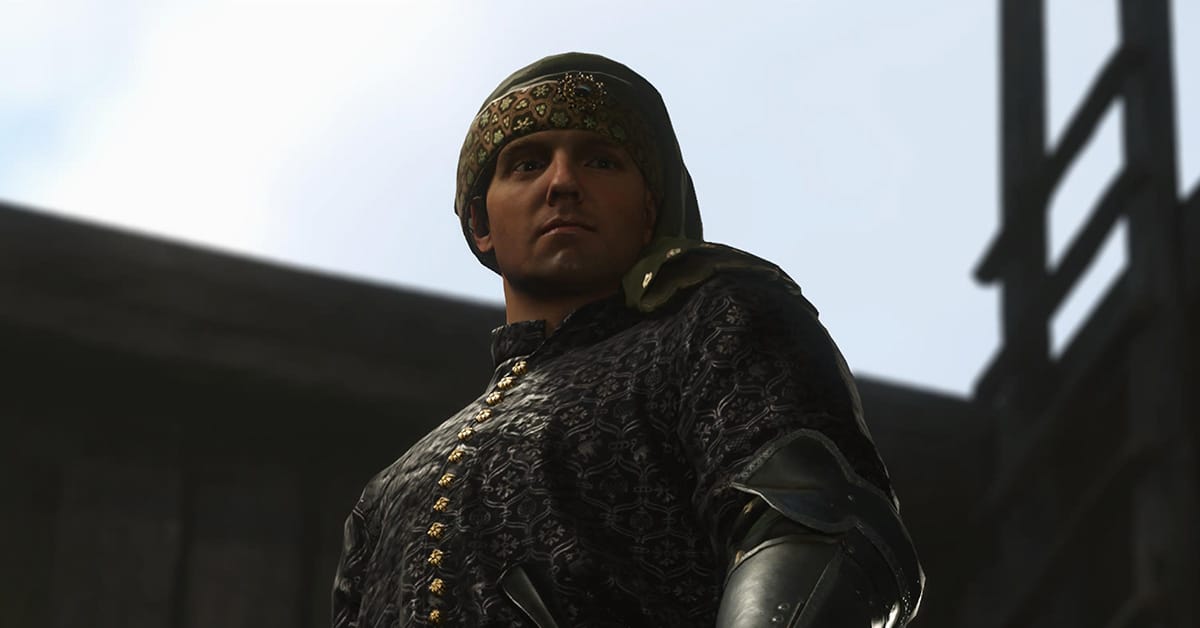
I love Henry. Henry is like all of us. In fact, he’s barely a protagonist at all. Henry could be your neighbour. You could be Henry. He’s a simple country bumpkin with no superpowers. Just the son of a blacksmith, as far as he knows.
Where Henry’s strengths lie is largely up to you as the player. You decide whether he’s smooth with words or prefers to let his fists do the talking. Do you intimidate, or do you charm? That choice is yours. And whatever path you take, voice actor Tom McKay brings it to life with remarkable conviction.
With all due respect, he even sounds… simple. And it’s exactly that simplicity that makes Henry the character I found easiest to relate to on this list. He has to work for his abilities instead of receiving them through some supernatural twist of fate.
Henry’s progression comes from experience. The more you fight with your sword, the better you become. The more you read, the more intelligent you get. This character proves that a protagonist without bells and whistles can still work beautifully, something that’s increasingly rare in the modern game landscape.
Once again, this is a character driven by revenge. It’s been a constant thread running through his story since Kingdom Come: Deliverance, and while it’s a familiar setup, it remains an effective one every single time.
1. Robert Robertson (Dispatch)

With a name like that, you HAVE to be number one on this list, right? Robert Robertson, voiced by Aaron Paul, is one of the stronger protagonists of recent years, and hopefully one we’ll be welcoming back many more times in the years to come.
Like Henry, Robert doesn’t have any superpowers of his own. Yes, he’s the superhero Mecha Man, but his abilities come entirely from his mech suit. Without it, he’s just like anyone else. Dispatch deliberately chooses that powerless phase as the foundation for its story, and the game benefits greatly because of it.
Dispatch does occasionally return to his mech days, and part of the story revolves around repairing the destroyed suit. Ironically, those were the moments that appealed to me the least. Robert truly shines when he’s allowed to let his personality take center stage. His inspirational speeches to a group of misfits he’s tasked with pushing beyond their own limits never failed to give me goosebumps. Robert is a born leader.
Aaron Paul nails the performance. At times, Robert sounds completely burned out. He doesn’t always sound as motivated as he actually is, and can come across as sceptical. Exactly how I often feel on the work floor myself. Yet with a single speech, he’s able to light a fire under his team. Those moments were consistently among my favourites in Dispatch.
On top of that, Robert has a wonderfully dry sense of humor. He’s quick-witted and shares perfect chemistry with the rest of the cast. I’m far from done with Robert, and luckily, Aaron Paul seems to feel the same way.
The next category is Best Antagonist. You’ll find that one here soon!