The wind rushing through whatever hair I’ve got left on my head, the cutting, stinging cold against my bare skin, the scrapes on my bleeding, aching fingertips as I once again try to pull myself up by a small, sharp outcrop of rock; Cairn, developed by The Game Bakers, brought me closer to the experience of mountaineering than any other medium ever has.
And it is an experience I would not have wanted to miss. It is one filled with a wide range of emotions and sensations. At times frustration and hopelessness, but above all struggle, resilience, and beauty. Cairn will stay with me for a long time.
This review contains no spoilers.
Aava Wants to Become the First Human to Successfully Reach the Summit of Mount Kami

Traditionally, I begin my reviews by discussing the story, but this is not what Cairn lives or dies by. Protagonist Aava aims to be the first person to reach the summit of Mount Kami. And Aava is exactly what you would expect from someone on such a mission: relentlessly driven, single-mindedly focused on her goal.
Through your mechanical companion, the climb bot, you occasionally receive messages from the small home front you have left behind. These offer a little insight into who Aava is as a person. It is all fairly cliché, and I couldn’t help but feel there was far more potential here in terms of character and narrative development.
Years from now, very little of this story will stay with me. The experience itself, on the other hand, is an entirely different matter.
The Most Unique Gameplay I Have Ever Experienced
Many games, no matter how different they may seem, share the same underlying skeleton dressed up in a different coat of paint. Walking, jumping, shooting, parrying, even climbing; the visuals, timing, and surrounding mechanics may vary wildly, but at their core they often amount to the same thing.
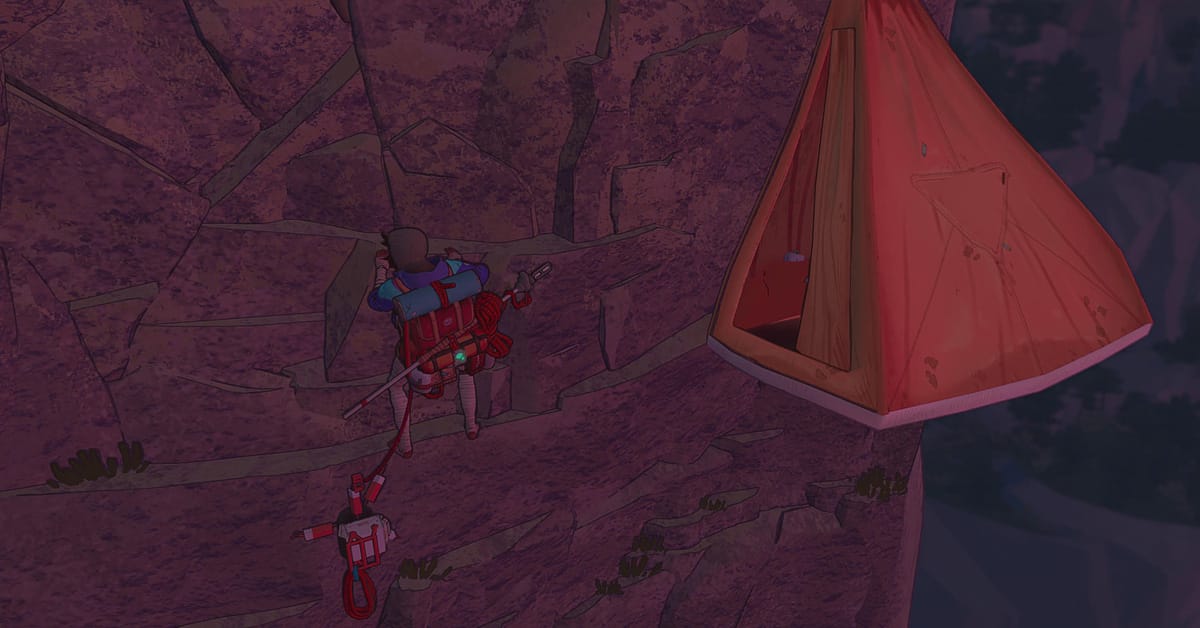
In many adventure games, protagonists can effortlessly scale walls or mountains, like in Uncharted or the Tomb Raider games. But in how many games do you control four separate limbs of the protagonist, step by step? As of now, I can think of… one.
Of course, in Cairn you can also move around like you would in other games, exploring its beautiful environments and scavenging for resources that will help you on your journey. But the real joy begins the moment you stand at the foot of a mountain, press square, and the actual climbing starts.
From that point on, Aava is effectively “split” into four limbs. You control the position of her hands and feet one by one. Everything in between moves along with them (often, though not always) in a fairly natural way, taking into account your weight distribution and the surfaces you are clinging to or standing on.
Shaking Legs and Groaning Can Be a Good Sign In Some Situations, but Not in Cairn

When your weight distribution or the support beneath you is off, Aava starts sending clear signals. It is crucial to pay attention to her posture, breathing, and limbs. If you maneuver the climber into an unfavorable, overstrained position, the limb under the most stress will begin to tremble.
At that point, you need to act as quickly as possible and stabilize Aava’s position. It is obvious when you are about to lose your grip. You can hear and see her struggling, while the screen slowly fades and dulls. Within five seconds or so, it can be over, and you come crashing down with all the consequences that entails.
“Within five seconds or so, it can be over.”
Before that happens, you can press triangle a few times, at small intervals, to recover some stamina and hold your position a little longer, buying time to look for a proper solution. All of this happens under intense pressure, because a fatal fall means you have to pick things up from your last save point, which may have been quite some time ago (the longest stretch of progress I lost in a single fall was around forty five minutes).
The game automatically selects the limb with the least amount of grip at that moment, but this works better in theory than it does in practice. In many situations, it is more effective to manually select the limb you want to stabilize as quickly as possible. As the game went on, I found myself doing this more and more often, since the automatic selection put me in life threatening situations more than once. That could be a bit frustrating at times.
Planning Your Route Ahead of Time Can Save You a Lot of Misery

It is not only essential to keep an eye on Aava’s visual cues. It is just as important to carefully read the mountain itself. Cairn is absolutely not a linear experience. There are countless routes and options to reach your goal, and they vary widely in difficulty.
By thoroughly exploring the environment, you may get lucky and come across maps that show which routes are easiest within a given area. For most of the expedition, however, I did not find these maps, which means you have to chart your own path with care. After all, you do not want to realize halfway up the mountain that you suddenly have no viable holds around you, while a few meters to your left there are several perfect points of support.
Those supports make the difference between life and death. Through lighting, shadows, surface detail, and clearly defined rocks or ledges, Cairn communicates whether a surface offers reliable grip. When you move Aava’s hands or feet toward such a spot, you can see the limb rotate slightly as it recognizes the hold. Press square and it effectively clicks into place. It feels satisfying every single time. Each ledge or small outcrop you reach is another step closer to solid ground.
The Mountain Is the Final Boss, and the View Is Your Reward

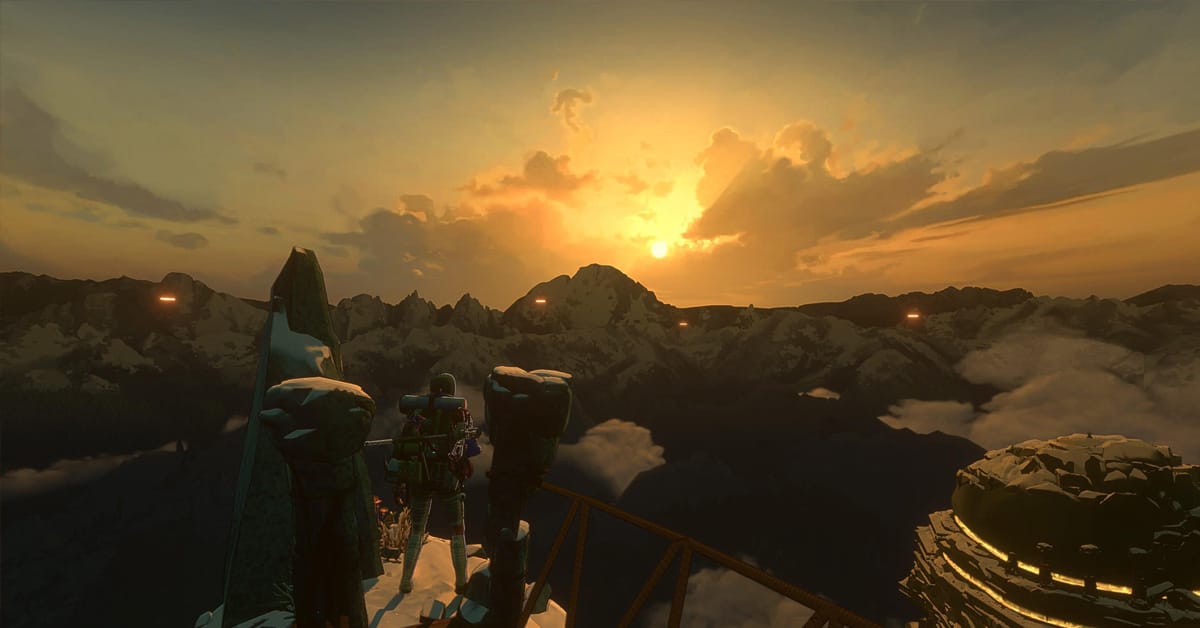
Reaching solid ground after a grueling climb, during which you have slipped multiple times and narrowly avoided a catastrophic fall, feels incredibly rewarding. Not just because you finally get a moment to catch your breath, but also because you can turn around and take in the stunning view you earned.
No XP, no new levels, no coins. The view is your reward in Cairn, and it makes every climb worth it. I often used the photo mode, which is fantastic and almost unrestricted, to slowly pan back toward where I had come from. It was always satisfying to see how much distance I had covered and how many dangers I had survived.
Cairn’s striking art style enhances this feeling even further. The environments and viewpoints are consistently spectacular, whether you are climbing in broad daylight, during a glowing sunset, or beneath a star filled night sky.
And once you are done taking it all in, there is hopefully a save point nearby, giving you a place to set up your bivouac and prepare for what comes next.
The Bivouac Genuinely Feels Well Earned and Gives You the Chance to Restock Essential Supplies Like Food, Water, and Pitons
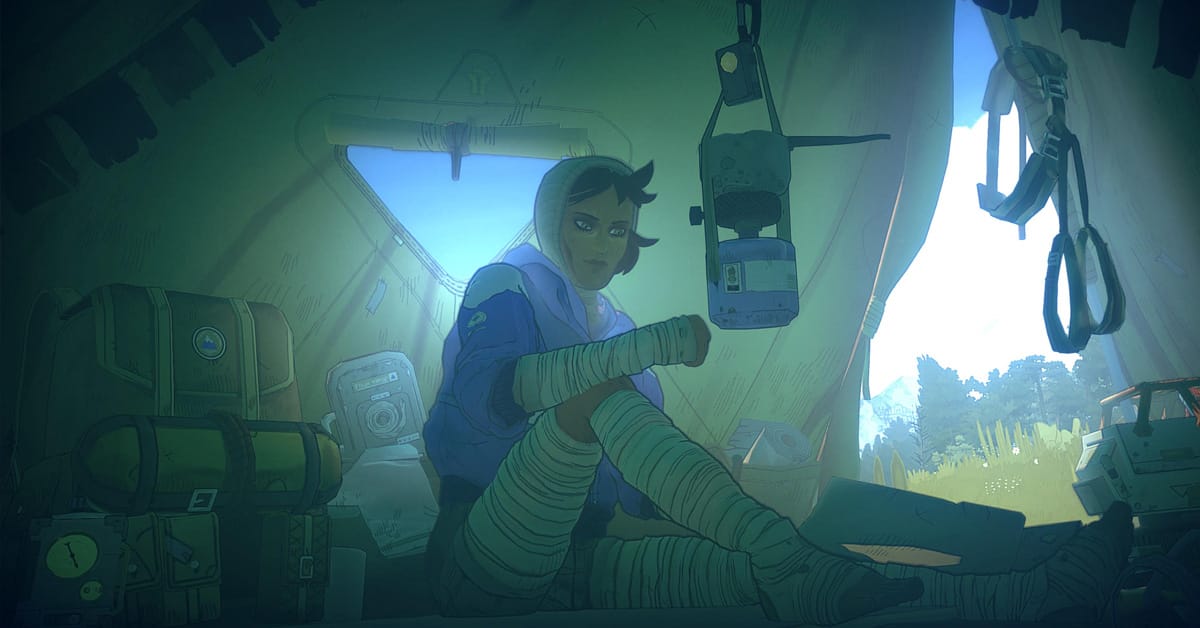
Sitting down in your bivouac always feels like a well earned break. Cairn does an excellent job of conveying the sense that you are locked in a life or death struggle against the elements, and taking a moment to warm up and refuel in the safety of your bivouac gives not only Aava a chance to catch her breath, but you as the player as well.
Inside your tent, there are several things you can do to prepare for the rest of your journey. One of the most important is cooking. Cairn does not just challenge you to climb a massive mountain successfully, it also asks you to keep track of hunger, thirst, and warmth. These three meters are constantly draining, with the third only active in cold environments, and if you fail to replenish them in time, Aava will start to suffer from reduced stamina regeneration and will eventually die.
“Sitting down in your bivouac always feels like a well earned break.”
By roaming the flatter areas of Cairn, you can collect a variety of items. Water, certain plants, coffee beans, noodle packs, and more. You can either consume these on the spot for a small but immediate boost, or bring them back to your tent and combine them there to cook proper meals.
For example, adding water to your noodles turns them into a filling, warming meal that provides much stronger and more meaningful boosts than the individual ingredients ever could on their own.
Pitons Are Your Best Friends

Inside your tent, you can also repair your pitons, as long as you have the required materials. And pitons truly are your best friends. You can carry a maximum of six at a time, and they function as soft checkpoints during every climb, though they are certainly not save points. Whenever the mountain allows it, since some surfaces are simply too hard, you can drive a piton into the wall at almost any moment. It will catch you if you fall, and the spot where you placed it also allows you to go off belay and fully recover your stamina.
When you hammer a piton into the wall, a short timing window appears that you need to stop at the right moment to secure a perfect placement. If you manage to do this, you can sometimes have the piton retrieved by your climb bot once you reach solid ground. If you mistime the placement, however, there is zero chance of recalling it intact. All the bot will recover for you are piton scraps. You can also occasionally find these scraps scattered throughout the environment.
Back in your tent, you can turn two piton scraps into a functional piton. And trust me, there are few things more unsettling than heading out with too few pitons, especially as you move closer to the end of the game. They are literal lifesavers.
Good Preparation Is Half the Work

In the tent, just like on solid ground or while off belay, you can also sort through your backpack. You can consume or compost items to free up space, because once it is full, it is full. Composted items eventually turn into chalk, which temporarily improves your grip while climbing.
Speaking of grip, you can also reapply tape to your fingers to ensure your hold stays firm.
Finally, you can check the time of day and the weather forecast, and decide when it is best to head out again. Personally, I tried to avoid climbing in the dark as much as possible, since good handholds are much harder to spot. Rain is something you want to avoid altogether, as it makes Aava far more likely to slip.
You may have noticed by now that there is a lot to keep track of in Cairn. Perhaps just a little too much, at times.
Turning off the Survival Mechanics Helped My Own Survival

I am not a fan of survival games. Last year, The Alters was one of the few exceptions to that rule, but in general, they stress me out far too much. On the one hand, I appreciate realism, and I do enjoy having to take things like hunger, thirst, and sleep into account. It is also one of the reasons I enjoyed Kingdom Come: Deliverance II so much, which I consider the most immersive game I have ever played.
In true survival games, however, essential meters tend to drain faster than I would like, and Cairn is no exception. During the first half of the journey, I actually appreciated it. It added an extra layer of realism and gave me more incentive to carefully scan environments in search of food and water. Finding key ingredients, cooking meals, and consuming them at the right moments definitely added something to the overall experience.
“Turning off the survival systems brought a sense of calm back into my head.”
As I moved into the final hours of my climb, though, that appreciation began to fade. This was mainly because I was already dealing with an intense and demanding ascent, since this game is anything but easy, and I ended up blacking out because Aava froze before I could reach solid ground.
At that point, I was already struggling enough with the core challenge of not falling to my death, and I did not want to juggle the additional pressure of the survival mechanics on top of that. The meters drained too quickly, creating a sense of urgency that pushed me to rush, which in turn caused mistakes to pile up.
Turning off the survival systems brought a sense of calm back into my head, and more importantly, it made the spectacular final stretch enjoyable again. The mechanic also introduces another drawback from the very start. I noticed that it discouraged me from exploring the environment or pursuing certain side objectives. The risk of starving simply did not outweigh the potential reward of straying from my main objective.
Some Loose Scraps
- Some Loose Scraps is one of my favorite sections to include in reviews. Ironically enough, loose piton scraps in Cairn are the worst.
- The game tells you that analyzing your route using L1 is the best approach. I did not like how this view zooms and almost always used the photo mode to plan my route instead. In my experience, that worked much better.
- The framerate is not always great. Not necessarily distracting, but definitely noticeable.
- Cairn’s art style reminded me of Telltale Games.
- Cairn has a lot of missable content, entirely dependent on the route you choose. Because of that, it offers a solid amount of replay value.
- It would have been cool if there had been some sort of community feature, where you could see which routes other players, including your friends, had taken.
- Cairn knows exactly when to deploy its beautiful soundtrack. Specific moments hit harder because the music is used so sparingly.
- The sound design itself is also impressive. The wind howling around you or battering your tent adds a lot to the sense of isolation at high altitude.
- Shaking your backpack just enough to squeeze in one last item is something I enjoyed far more than I care to admit.
Conclusion
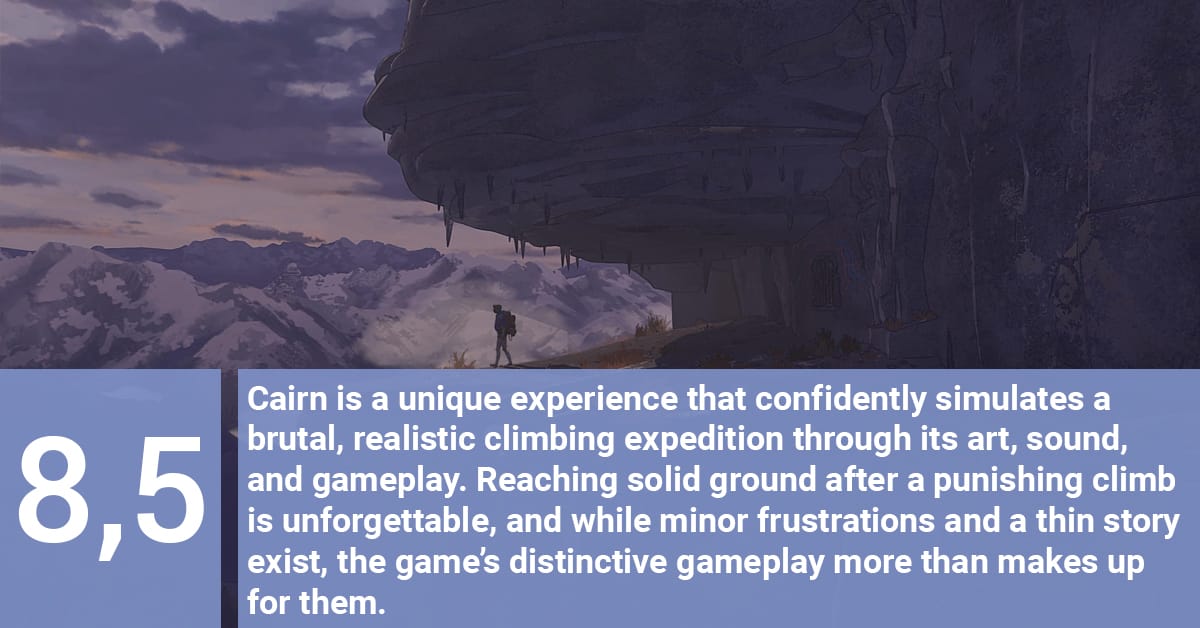
Cairn is a unique experience. Its art style, sound design, and gameplay all point in the same direction: simulating a realistic, seemingly impossible climbing expedition, and it succeeds at that goal with confidence.
The feeling of reaching solid ground after a brutal climb, one where the difficulty can be genuinely punishing, is indescribable and something you simply have to experience for yourself.
Minor frustrations, such as the automatic selection of the wrong limbs or the rapid drain of the survival meters, can thankfully be mitigated through the settings. The thin story cannot, but the game’s unique gameplay more than makes up for it.