
It’s over. After four weeks of looking forward to every Wednesday, knowing I’d be treated to two new episodes of Dispatch, the episodic superhero workplace comedy has come to an end. Dispatch was one of my most anticipated games this year. Maybe even the one I looked forward to the most. But was that hype justified?
This review contains no spoilers.
Superhero Stories Are Often More of the Same. Luckily, That’s Not the Case With Dispatch

Robert Robertson (I know… he knows… everyone knows), a.k.a. Mecha Man, owes his superpowers to his mech suit. When his arch-nemesis Shroud outsmarts him and destroys the suit, Robert (Aaron Paul) is forced into early superhero retirement.
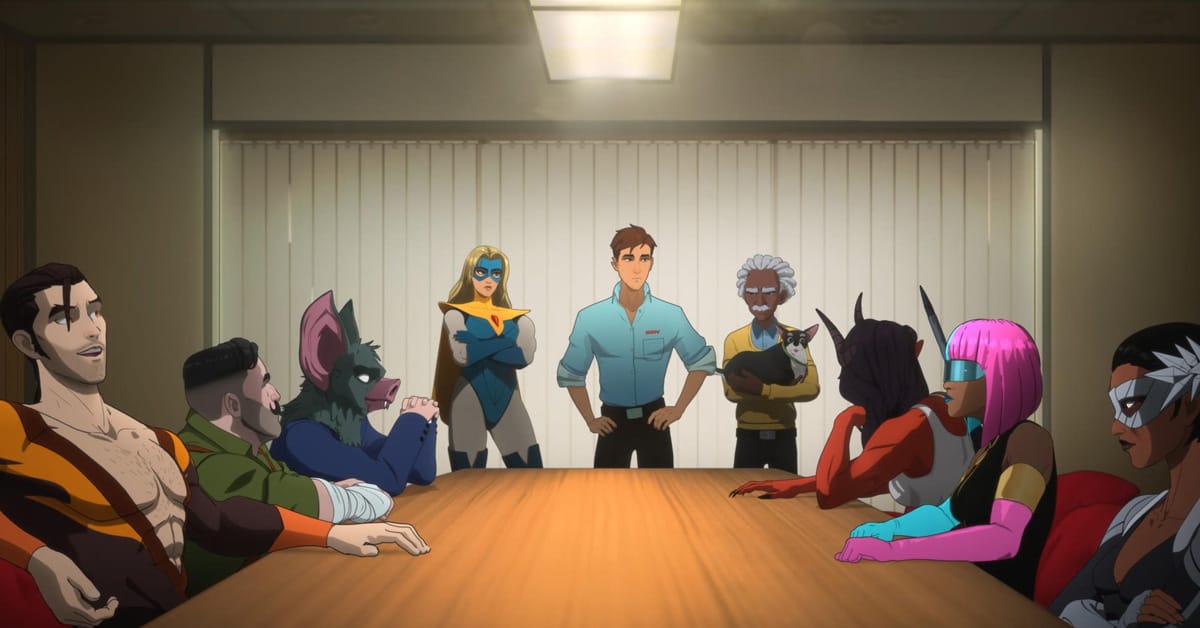
Before long, he’s approached by superhero Blonde Blazer (Erin Yvette). She offers him a chance to repair the suit, as long as he agrees to work for the Superhero Dispatch Network. She wants him to use his knowledge and experience to train and dispatch a team of rehabilitating supervillains.
It’s an opportunity our protagonist can’t pass up, so he takes charge of a squad of misfits who, to put it mildly, need a lot of work.
Pretty Much Everything Hits the Mark, Starting With the Visuals and the Individual Performances
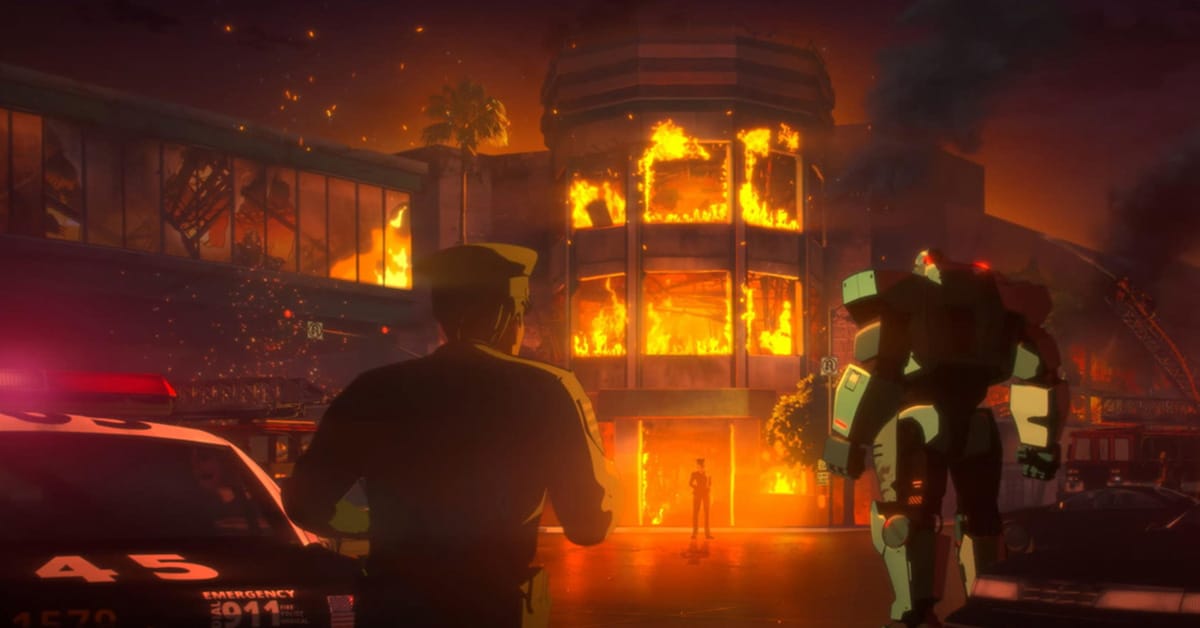
Dispatch, developed by AdHoc Studio, is built almost entirely around interactive cutscenes, so it’s essential that the game grabs your attention. Luckily, it looks stunning from start to finish. I already mentioned it in my First Impressions article: I’m not usually an anime fan or anything close to this style. But if Dispatch ever became a TV show (DO IT), I’d be glued to my screen every week.
The animations, character models, and environments are all brought to life beautifully. The fights look cool and dynamic, while shadows and lighting effects make the already well-designed characters and settings stand out even more. Whether you’re watching an intense battle or a simple office conversation, scenes always pop off the screen.
On top of that, every voice actor nails their role. Aaron Paul, known to many as Jesse Pinkman in Breaking Bad, gives Robert an understated but irresistible charm. He sounds a bit worn-out, sarcastic, and dry at times, but he’s also ambitious, inspiring, and quick-witted. You’d almost think the cast recorded their lines in the same room, because his chemistry with the rest of the so-called Z-Team is incredibly convincing.
And the cast includes even more big names. Laura Bailey (Abby in The Last of Us Part II, Mary Jane in Spider-Man) voices team member Invisigal, while Jeffrey Wright (Bernard Lowe in Westworld, Isaac in The Last of Us Part II) lends his voice to Chase. I could go on, but the core is simple: there’s not a single weak link. Every character, big role or small, feels authentic.
One of the Funniest Games I’ve Ever Played; Maybe Even the Funniest

The banter between Robert and pretty much everyone he crosses paths with is endlessly entertaining. Dispatch’s humour is adult, dry, crude, packed with swearing, razor-sharp and almost always right on the edge; the perfect combo if you ask me.
And it fits the story perfectly. You’re dealing with a team of supervillains here. They’re not exactly sweethearts. They’re quick to blow up (Flambae quite literally), they go for each other’s throats at the slightest provocation, and they’d honestly prefer not to be part of working life at all. Basically how I feel at the office, but that’s beside the point.
The eight episodes each run for about an hour, and every single time I watched them with a big grin on my face from start to finish. A lot of the humour is painfully relatable too. Comments about colleagues who don’t wash their hands after going to the bathroom, the unbearable people who wear sunglasses indoors and at night; even though the world is fictional and filled with heroes and villains, it sometimes gets very close to reality.
“Even though the world is fictional and filled with heroes and villains, it sometimes gets very close to reality”
On top of the relatable jokes, the different superpowers are used brilliantly to tap into an even stranger, but just as hilarious, kind of humour. I lost it when Sonar, who can transform into a giant bat, tried to storm out of the office in a rage but didn’t manage to grab the doorknob with his oversized claw.
And when Coupé sliced open her own hand to squeeze out some “ketchup” for her snack, I found myself shaking my head laughing, thinking: how do they come up with this stuff?
At this point you might be wondering where the actual gameplay comes in. Don’t worry: the game surprises there too.
Dispatching Is Surprisingly Fun
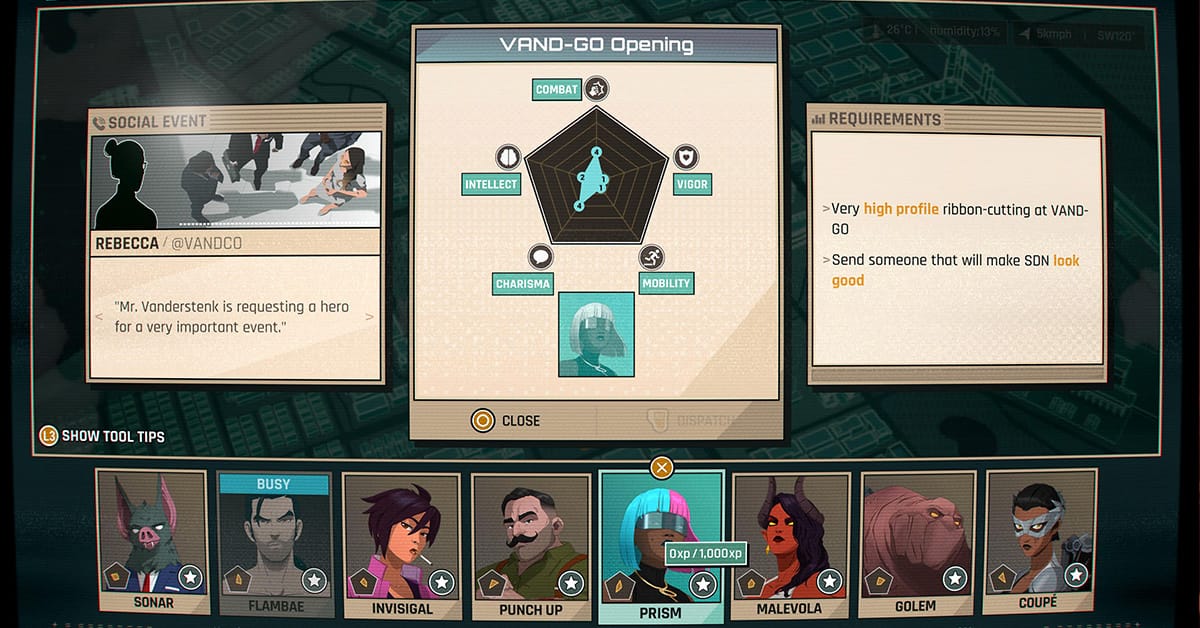
Between the cutscenes, you’ll be dispatching your team (shocking, I know). The interface switches to a computer screen where, for about ten minutes, different calls come in with emergency requests. It’s up to you to decide which team member to send out for each job.
The calls vary wildly. Think helping an old lady cross the street, giving a presentation to a group of kids, or stopping an armed robbery. Every supervillain — or at this point, technically every superhero — has their own specific strengths. The five main stats are combat, vigor, mobility, charm and intelligence.
You pick the character whose stats match the situation best. For preventing a robbery, combat and vigor are the obvious picks, while helping someone cross the street or leaving a good impression is better suited to a charming team member.
Sometimes you need to look beyond the stats. Each superhero has a dossier you can check at any time, giving you insight into their special abilities. Knowing Invisigal can turn invisible makes her a smart choice for avoiding camera surveillance. Flambae’s fire resistance can help him clear out a burning building (although his love for fire means this can easily backfire, pun intended).
You Really Need to Think Through Your Choices
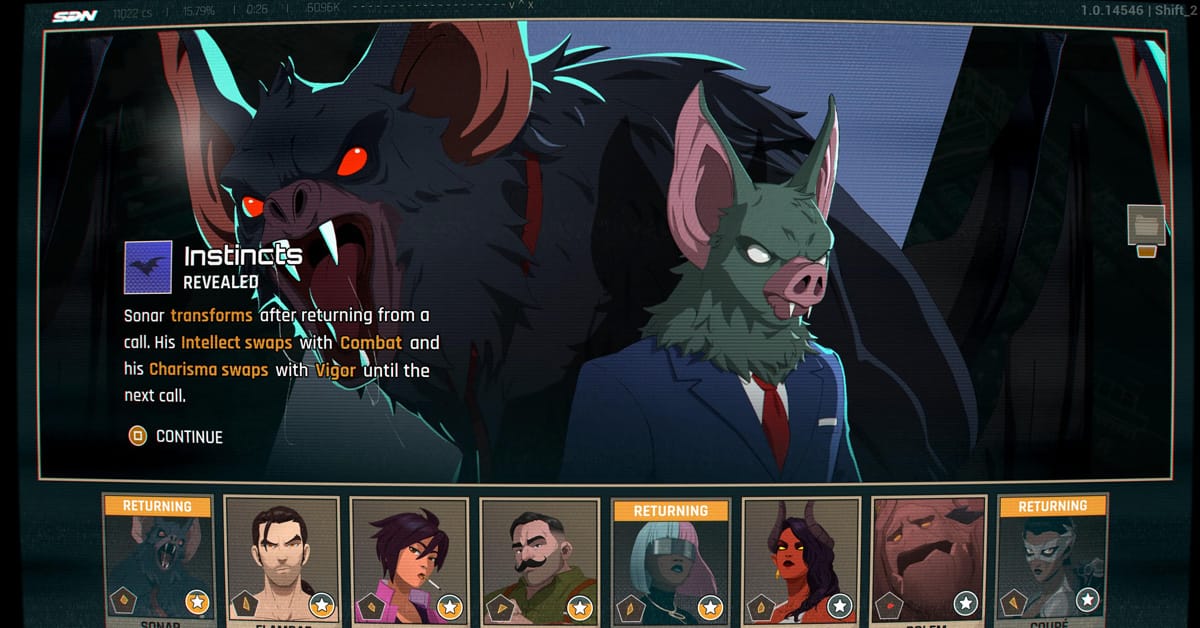
When you send a hero out, they obviously won’t be available for any other jobs for a while. Even after they finish the task (or fail it), they go into a short rest period. This means you can easily accept a new call that needs a hero whose skillset you temporarily no longer have access to.
Some jobs only allow you to dispatch one hero, while others let you send two, three or even four. That doesn’t mean you have to fill every available slot. If you think one hero’s individual stat is high enough, you can choose to leave the remaining slots empty. It lowers your overall chance of success, but it also keeps more team members free for other calls.
At the end of a job, you’ll see whether your chosen hero succeeded. Based on your decisions, the hero’s stats and their special abilities, you get a certain percentage chance of success. Sometimes you can be so overpowered that success is guaranteed, but most of the time the percentage still leaves room for chance. So even with a success rate of 70 percent or more, you can still fail if luck turns against you.
The superheroes can also level up after completing a call successfully. You can assign one extra skill point to one of their five main stats. Additional bonuses can also be unlocked, like a temporary stat boost after a successful mission or a faster completion time when you send a hero out alone.
Leveling requires careful thought too. You can choose to push certain heroes to excel in one specific stat, or make them more well-rounded. Too much of one and too little of another can easily come back to bite you later on.
Calls Become Less Obvious as the Game Progresses, Which Keeps Things Fresh and Interesting
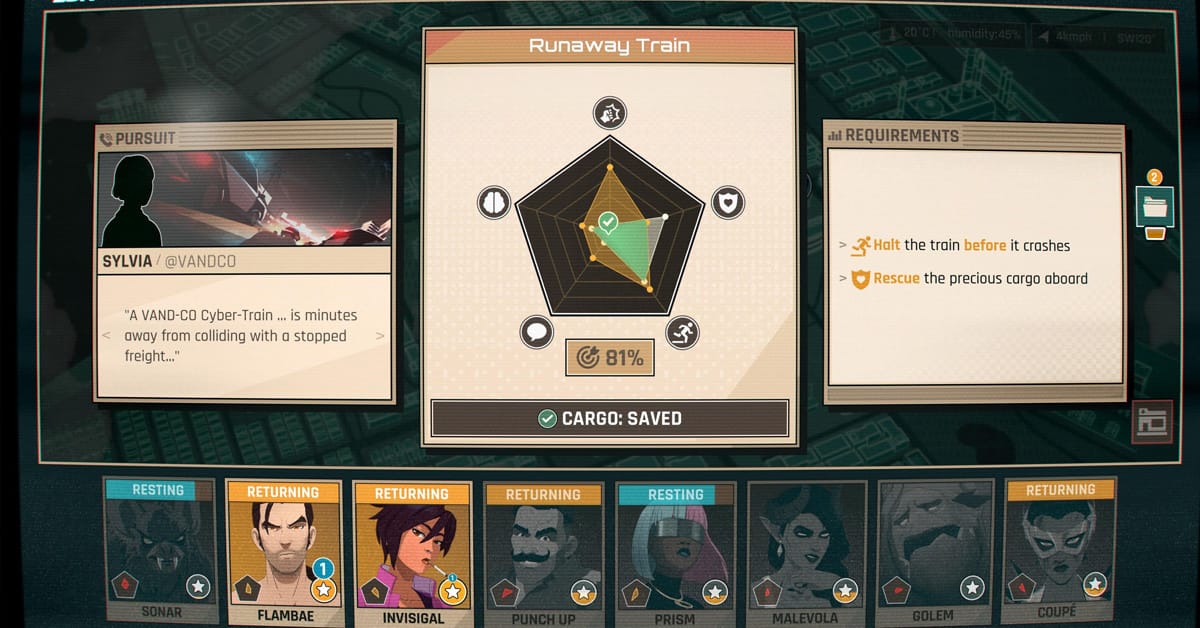
The challenge ramps up gradually. Where the required stats are easy to guess in the early episodes, later calls become more cryptic in how they’re described. You’ll need to pay more attention to each hero’s special abilities instead of relying blindly on their stats.
Calls come in so frequently that things can get pretty hectic, and you’ll often find yourself with only a few heroes left to deploy. It fits the job of a dispatcher well, where chaos is undoubtedly part of daily life. You have to answer calls within a certain timeframe, and more than once I missed them entirely.
Part of that was my own lack of oversight in the moment, but at other times I genuinely struggled to reach the right call in time. It wasn’t always clear what I had selected or which direction I needed to navigate to get to the correct call as quickly as possible. It could be a bit frustrating, especially when I knew I could have answered the call on time if the interface had cooperated. ‘Luckily,’ the result of your workday doesn’t matter much anyway.
There Are No Real Consequences to How Good (Or Bad) You Are at Dispatching, nor to Many of the Choices You Make Outside of It

The fact that your performance during dispatching has little to no impact can be seen as both a strength and a weakness. There’s less at stake, and players might feel less pressure to perform. This can take away some of the tension during dispatching.
On the other hand, it also saves you from unnecessary frustration. The small annoyance I mentioned above is never punished, which is nice. There were also moments where I failed the hacking minigame several times in a row (which gets slightly harder each episode). At one point I had to hack open a safe in the heat of the moment. After failing three times, I genuinely thought the character I was trying to protect might pay for my mistakes with her life.
But the safe just popped open anyway. The only difference between a successful hack and my failure streak was Robert sounding surprised, saying he didn’t do anything. Part of me was disappointed to see confirmed that nothing I did actually mattered, but another part was relieved that messing up the minigame wouldn’t derail the story.
“The illusion of choice is very present, which is a common issue in many games of this type. Only a handful of decisions have real impact; the rest is negligible”
The same largely applies to the choices you make during dialogue. Often there’s a subtle difference in tone or the specific words Robert uses, but the outcome is the same nine times out of ten. Early in the game, when I witnessed a robbery, I chose to intervene during my first playthrough. In my second playthrough I decided to do nothing, but Robert ignored my command and confronted the robbers anyway.
If I had to name one downside to the game, it would be this. The illusion of choice is very present, which is a common issue in many choice-driven games. Only a handful of decisions have real impact; the rest is negligible.
But because the rest of the game is so well-crafted, I didn’t mind. I was more than happy to be pulled along by the story, even if I didn’t have much control over it.
Dispatch Season 2 When?
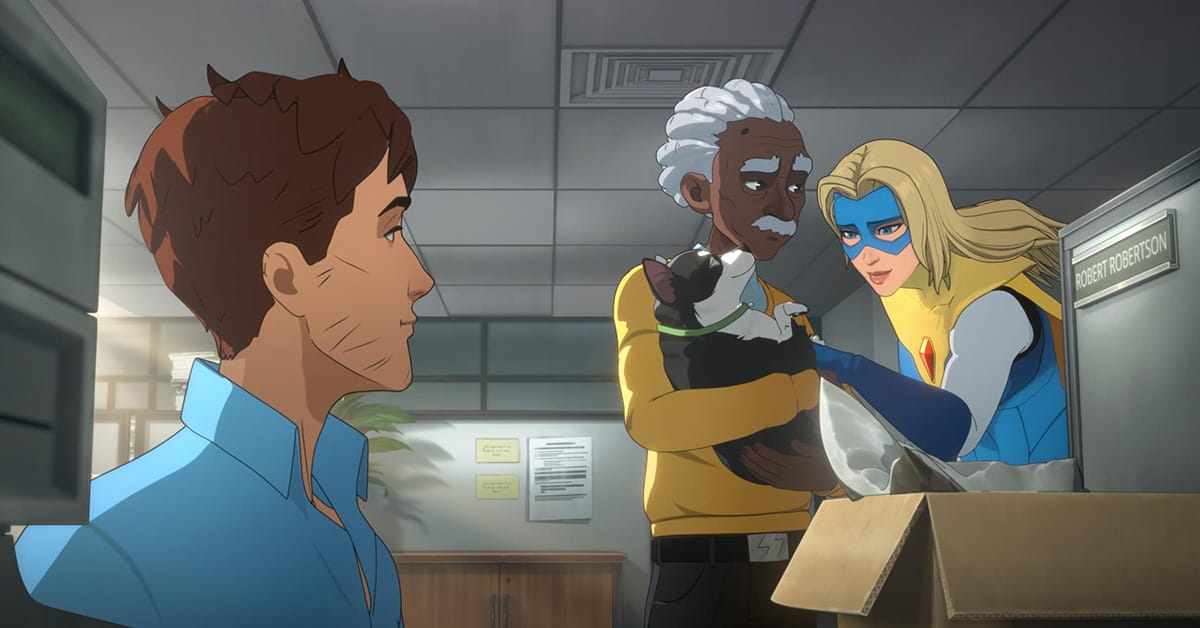
Alright, one more drawback: Dispatch is too short. Dispatch will always be too short, even if it had twenty episodes. I don’t think I’ll ever get enough of this cast or the writing. Every week I looked forward to Wednesday, and right on time I’d sit down to download the two fresh episodes and play through them immediately.
Wednesdays won’t feel the same anymore. The episodic release took me right back to the days when I’d wait week after week for new episodes of my favourite show. Close enough together to stay invested in the story, far enough apart to build up hype and anticipation again.
I’ll accept only two outcomes: either Dispatch becomes an actual TV series, or we get more seasons. Preferably both.
Some Loose Scraps

- Aside from the big roles, The Last of Us’ Ashley Johnson (Ellie) also has a small part; she plays Brainbook, a hero you briefly supervise during the first Dispatch tutorial
- Both Aaron Paul and the developers have already said they’d love to make more seasons. With the game’s success, it feels inevitable..
- If that happens, I’d love to learn more about the other heroes. At times the focus was a bit too narrow on a small portion of the cast.
- It’s rare for me to immediately replay a choice-driven game, but I’m already halfway through my second playthrough.
- I always love seeing how my choices compare to those of other players. At the end of each episode you see whether you’re in the majority or minority.
- One character’s appearance actually changes based on a decision you make in episode 1.
- Episodic releases should always use this format: weekly drops. It keeps the momentum going and the storylines stay fresh in your mind.
- Flambae’s version of Meredith Brooks’ “Bitch” in episode 5 is the only version I want to hear from now on.
Conclusion

Dispatch was one of my most anticipated games this year, and despite my already high expectations, it managed to surpass every single one of them. The game sets itself apart from others in the genre with its unique humour, stylish art direction, and memorable characters and performances.
Unlike many choice-driven games, the gameplay here is more original than simply walking around looking for interactable objects. Dispatching was always fun to do and could easily work as a standalone game.
There are few real consequences tied to the choices you make during dispatching or outside of it. But once you temper your expectations around that and focus on the wonderful pacing of an incredibly entertaining story, you end up with a game that belongs to the crème de la crème of 2025. And that’s a fantastic achievement.


